Production

The AI and Remote Work Shift: Reshaping Global Film Production

The film industry is undergoing a profound transformation, driven by the integration of AI and the widespread adoption of remote work. This shift is reshaping how films are conceived, created, and staffed globally.

VR
Victor Ren

April 1, 2026 · 8 min read

Diverse film crew members collaborating remotely on a global production, using AI tools and holographic screens to edit footage and discuss creative decisions across different time zones.

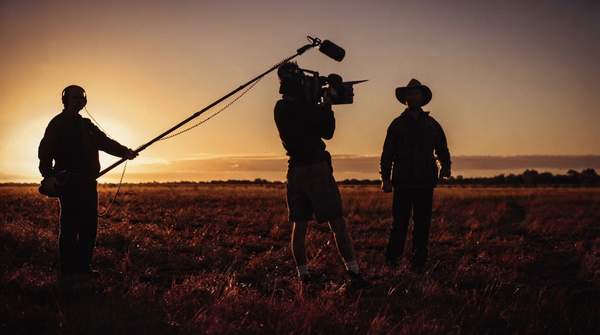
A decade ago, the idea of a major film production involved a bustling, centralized set—a physical hub where hundreds of crew members collaborated in close proximity. Today, the landscape of film production is undergoing a fundamental transformation, driven by the integration of Artificial Intelligence and the widespread adoption of remote work. Key creative decisions are now made across continents on secure networks, while AI-powered tools perform initial editing passes autonomously. This shift is not merely a technological upgrade; it represents a structural change in how films are conceived, created, and staffed, with the movie industry both affected by and actively exploring the potential uses of generative AI.

What Changed: The Dual Catalysts of Global Transformation

The global pandemic and evolving workforce expectations accelerated filmmaking's evolution. The pandemic forced film production, traditionally an in-person activity, to innovate, rapidly developing and accepting virtual production and remote collaboration tools. This necessity created a more distributed filmmaking model. By 2026, remote work reportedly overtook pay as the number one job perk, according to a Yahoo Finance study, signaling a permanent cultural shift.

The second catalyst is the explosive advancement and accessibility of generative Artificial Intelligence. While AI has been used in visual effects for years, the new wave of generative models offers capabilities that extend across the entire production pipeline. From script analysis to final color grading, AI tools are now capable of executing complex creative and technical tasks. As detailed in a paper on the industry's future from ScienceDirect, the movie industry is in a phase of active exploration, testing and integrating these technologies to enhance efficiency and augment creative possibilities. These dual forces—a decentralized workforce and intelligent automation—are now converging to reshape the industry's economic and operational foundations.

How is AI Integrated into Film Production Workflows?

AI's integration into filmmaking is a series of targeted applications across pre-production, production, and post-production. Each phase is impacted distinctly, moving tasks from manual execution to automated or AI-assisted processes. The most significant changes are currently concentrated in post-production, where data-intensive tasks are ripe for optimization.
In pre-production, AI is being explored for its analytical capabilities. Tools can now analyze scripts for character screen time, dialogue distribution, and potential budget implications, giving producers data-driven insights before a single frame is shot. Generative AI is also used to create concept art and storyboards, allowing directors and production designers to visualize scenes with incredible speed. Instead of waiting days for an artist to render a concept, a director can use text prompts to generate dozens of visual ideas in minutes, dramatically accelerating the creative feedback loop.

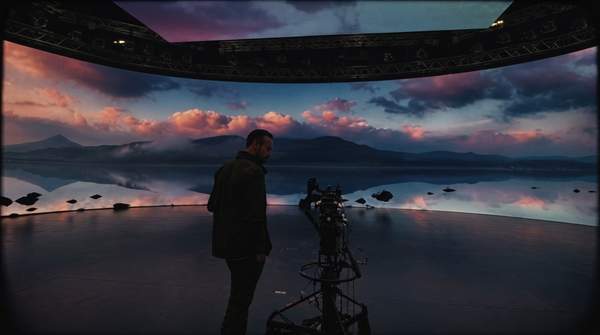
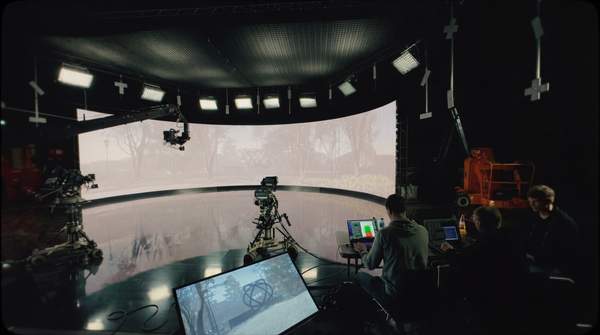
During the production phase, AI's role is more subtle but growing, particularly with the rise of virtual production. AI-powered camera tracking systems can improve the realism of digital environments displayed on LED walls, adjusting for perspective and lighting in real time. On-set, AI can assist with data management, automatically logging metadata for shots, which saves countless hours for digital imaging technicians and prepares assets for a smoother post-production handoff. This creates a more efficient and data-rich production environment, crucial for complex, effects-heavy films.

Post-production is where AI makes its most profound and immediate impact. A YouTube report on AI's changing role in film production highlights that AI tools significantly impact filmmaking and videography, particularly in video editing. Artificial intelligence, according to the report, enhances a video production company's capabilities, manifesting in several concrete ways:

  1. Automated Rough Cuts: AI can analyze hours of raw footage, identify the best takes based on parameters like actor performance or stable camera work, and assemble a preliminary edit. This "rough cut" provides a starting point for a human editor, saving significant time.
  2. Advanced Visual Effects (VFX): Tasks that once required painstaking manual labor, such as rotoscoping (isolating objects frame by frame), can now be largely automated. AI can also be used for de-aging, object removal, and creating photorealistic digital assets, freeing up VFX artists to focus on more complex creative challenges.
  3. Intelligent Color Grading and Sound Design: AI tools can analyze footage and suggest an initial color grade based on the scene's mood or by matching it to a reference image. In audio, AI can automatically remove background noise, balance dialogue levels, and even generate temporary music scores that match the emotional arc of a scene.

AI in post-production is not about replacing the creative professional but augmenting their workflow. It handles repetitive, time-consuming tasks, allowing editors, artists, and designers to dedicate more energy to storytelling and creative refinement.

The Remote Workforce: Benefits and Challenges in Filmmaking

The normalization of remote work has unlocked access to a global talent pool. A director in Los Angeles can now seamlessly collaborate with a visual effects supervisor in New Zealand and an editor in London. This decentralization allows productions to hire the best talent for a specific role, regardless of geographical location. It also presents opportunities for cost savings, as companies can reduce their physical footprint and overhead associated with large, centralized office spaces. For many creative professionals, the flexibility of remote work has become a non-negotiable perk, allowing for a better work-life balance and the ability to live outside of traditional, high-cost industry hubs like Hollywood or New York.

However, this new paradigm is not without its challenges. Maintaining creative cohesion and a unified vision across distributed teams requires robust communication protocols and sophisticated project management tools. The spontaneous collaboration that occurs on a physical set—an impromptu conversation between a director and a cinematographer that sparks a new idea—is harder to replicate over scheduled video calls. From a management perspective, some industry leaders express concern over the model's long-term effects.

According to a report from Fortune, JPMorgan’s Jamie Dimon has stated that remote work can breed ‘rope-a-dope politics’ and, more critically for an industry reliant on apprenticeships, that it stunts young workers' growth. In filmmaking, junior crew members have historically learned their craft through direct observation and on-set mentorship. The remote model can create a deficit in this hands-on training, making it more difficult for the next generation of talent to gain the practical experience needed to advance. Balancing the benefits of a globalized workforce with the need for effective training and cohesive teamwork remains a central challenge for modern productions.

The Impact of AI on Film Industry Jobs and Skills

The integration of AI and remote work is inevitably reshaping the film industry's job market. Certain roles, particularly those centered on repetitive and technically precise tasks, are being transformed. For example, the work of a roto artist or a dailies colorist may be significantly reduced as AI tools become more proficient at these functions. This does not necessarily mean mass job elimination, but rather a fundamental shift in the skills required. The focus is moving away from manual execution and toward creative oversight, technical direction, and quality control of AI-generated work.

Conversely, this technological shift is creating new roles and empowering others. The demand for Virtual Production Technicians, who manage the complex interplay of physical sets and digital LED volumes, is growing rapidly. A new discipline of "Prompt Engineering" for visual arts is emerging, where the artist's skill lies in their ability to craft precise text and image prompts to guide generative AI models toward a desired creative outcome. Data scientists and AI specialists with an understanding of filmmaking workflows are also becoming invaluable assets to major studios.

The "winners" in this transition will be those who adapt. Artists and technicians who embrace AI tools as powerful assistants rather than competitors will find themselves in high demand. They can produce higher quality work more efficiently, taking on more complex projects. Independent filmmakers and smaller production houses also stand to benefit, as accessible AI tools can help them achieve production values that were previously only possible with large studio budgets. The "losers" may be those who resist upskilling and whose jobs are most susceptible to automation. The challenge for the industry as a whole is to invest in training and education to help the existing workforce navigate this transition successfully.

Expert Outlook: A Future of Human-AI Collaboration

As the industry grapples with these changes, a consensus is emerging among analysts and insiders: technology will augment, not replace, human creativity. An opinion piece from Bloomberg suggests that AI will not kill movies, arguing that the core of filmmaking—storytelling, emotional nuance, and directorial vision—remains a uniquely human domain. The future is not one where AI directs, writes, and edits a film from start to finish. Instead, it is a future of sophisticated collaboration, where a director's vision is executed with the help of intelligent tools that accelerate the process and expand the creative palette.

This perspective is reinforced by market analysis. A report from GlobeNewswire on the United States Video Production Market notes that innovation in areas like AI continues to drive opportunities and expansion. This suggests a growth trajectory where technology creates new economic value rather than simply cannibalizing existing jobs. The next decade will likely be defined by the establishment of best practices for these new hybrid workflows, including the development of ethical guidelines for AI use and new standards for remote collaboration to ensure both creative integrity and the sustainable development of new talent.

Key Takeaways

  • The convergence of generative AI and remote work is fundamentally altering film production workflows, shifting the industry from a centralized, manual model to a distributed, technologically-augmented one.
  • Post-production is the area most immediately and profoundly impacted by AI, with tools for automated editing, VFX, and audio processing enhancing efficiency and augmenting creative capabilities.
  • The rise of a global, remote workforce offers access to a wider talent pool but introduces significant challenges related to team cohesion, secure communication, and the mentorship of junior crew members.
  • The future of filmmaking points toward a collaborative model where human creativity remains central. Success in this new era will depend on the ability of professionals to adapt their skills and leverage AI as a powerful tool for storytelling.