Content Creation

New AI Video Creation Tools Gain Users, Shifting Market for Creators

New AI video creation tools are rapidly gaining users and integrating into popular apps, fundamentally shifting the market for content creators. Understanding these platforms is now essential for staying competitive and efficient.

TC
Tara Collins

April 1, 2026 · 5 min read

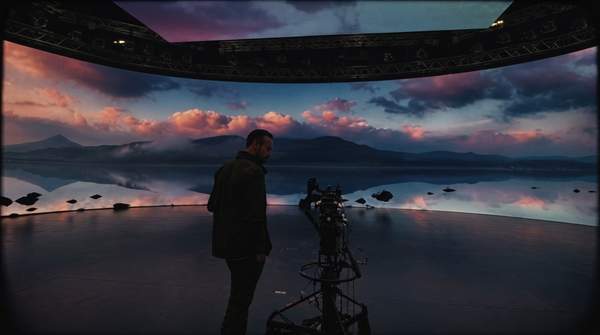
Diverse content creators collaborating in a high-tech studio, surrounded by holographic displays of AI-generated video content and editing timelines, symbolizing the shift in the creator market.

New AI video creation platforms are gaining millions of users and integrating into popular apps, directly affecting content creator workflows. This rapid evolution follows a market shift where established players are stepping back as specialized services capture audience attention, making understanding these new capabilities essential for competitive creative professionals.

Who Is Affected by These AI Video Advancements?

Accessible AI video tools are directly impacting the roles, responsibilities, and business models of several key groups across the creative industry. As these platforms integrate into standard professional practice, your own work may change. The primary groups affected include:

  • Independent Content Creators and Freelancers: This group stands to gain the most from the increased accessibility. According to TrendHunter, the integration of tools like Dreamina into existing apps means faster turnaround times and lower production costs. This allows you to produce more consistent and scalable video content without the need for large teams or expensive equipment, leveling the playing field against larger production houses.
  • Social Media Managers and Digital Marketers: The rise of specialized tools directly targets your need for high-velocity content. Platforms like Short.ai are designed specifically for creating vertical videos for TikTok, Instagram Reels, and YouTube Shorts, according to a report from AIjourn.com. These tools automate the inclusion of "virality hooks," potentially streamlining the most time-consuming part of social video strategy.
  • Traditional Video Editors and Production Studios: While not a replacement for high-end creative work, AI is augmenting the traditional toolkit. Platforms such as Veed.io are integrating AI features like "magic cut" and "clean audio" directly into a familiar timeline-based editor. This shifts the editor's role from tedious manual tasks to one of creative oversight and refinement, requiring an adaptation of skills.
  • Major Technology Platforms: The rapid, large-scale generation of synthetic media is creating new moderation and policy challenges. For instance, Bloomberg reports that Google is now facing calls to prohibit AI-generated videos targeted at children on its YouTube platform, highlighting the growing pressure on tech giants to police this new form of content.

Market Impact of New AI Video Generators

OpenAI recently announced it would shutter its artificial intelligence video generator, Sora, according to a report from the East Bay Times. This decision has led to rival AI video tools gaining ground, marking immediate consequences in user metrics and strategic business decisions.

The same report details a significant shift in user engagement toward other platforms. Kling AI, owned by Kuaishou Technology, reportedly saw its global weekly active users jump 4% to an average of 2.6 million last week. This follows a strong performance in March, where Kling AI was leading in global monthly active users, averaging 7.8 million compared to Sora's 4.7 million, according to the East Bay Times. In that same week, competitors RunwayML and Vidu each notched a 1% increase in their weekly active users, suggesting a broader distribution of the market.

The popular video editing app CapCut has integrated Dreamina Seedance 2.0, allowing high-quality video generation directly within its interface using text prompts, reference images, or existing clips. This deep integration into creative ecosystems shifts workflows toward automated, all-in-one content creation, enabling creators to handle generation, editing, and audio syncing within a single platform.

Intense competition is fostering market consolidation and innovation as platforms race to offer intuitive, comprehensive solutions. This benefits end users with more powerful tools at potentially lower costs. The focus is shifting from standalone generators to integrated features that enhance existing workflows, benefiting creators who value efficiency and simplicity.

Latest AI Video Creation Tools and Platforms

Understanding the specific AI tools available and the unique problems they solve is crucial. The current landscape features specialized platforms designed for different creative needs, whether your focus is cinematic quality, social media virality, or simple utility. Here is a breakdown of key platforms making an impact.

For frictionless, everyday content, a tool named VEME is designed with an intuitive text-to-video workflow. AIjourn.com describes it as being built for creators who need ready-to-publish aesthetics without a steep learning curve. This type of tool is ideal for generating quick marketing updates, explainers, or simple narrative content where speed is the priority.

If your work demands more artistic control and a hyper-stylized look, Leonardo AI is positioned as a cinematic powerhouse. It reportedly excels at image-to-motion generation and offers deep style customization. This makes it a better fit for artists, animators, and filmmakers who want to use AI to create visually distinct and high-fidelity short films or concept art.

For those of you focused squarely on the vertical video that dominates social media, Short.ai specializes in content for platforms like TikTok and Instagram Reels. Its main value proposition is its use of automated "virality hooks," aiming to optimize content for algorithmic discovery. This tool is less about open-ended creation and more about producing content engineered to perform on specific platforms.

Veed.io augments traditional editing by integrating AI into a standard timeline, offering utility features like a "magic cut" tool for automatically removing silences and a "clean audio" function for noise reduction. This speeds up tedious post-production without changing core editing habits.

Even established software is adapting. According to SLR Lounge, the video processing tool VideoProc is now aiming to simplify the creation of holiday and event videos with its own suite of AI-powered tools. This shows that AI features are becoming a standard expectation across all levels of video software, from professional suites to consumer-grade applications.

Ultimately, these advancements have significantly lowered the barrier to entry for video creation while simultaneously increasing the potential quality of the output. The key takeaway for you as a creator is to identify the specific bottlenecks in your current workflow and find the specialized AI tool designed to solve that exact problem. The era of a one-size-fits-all video tool is giving way to a more modular, purpose-built approach.