AI's Growing Role in Film Production Challenges Traditional Roles

Pinewood Studios, a historic center for traditional film production, has secured permission to construct an artificial intelligence (AI) datacentre.

VR
Victor Ren

May 14, 2026 · 5 min read

A futuristic AI datacenter being built on the grounds of a historic film studio, symbolizing the integration of technology into traditional filmmaking.

Pinewood Studios, a historic center for traditional film production, has secured permission to construct an artificial intelligence (AI) datacentre. This facility will occupy land originally designated for new sound stages, marking a profound shift in filmmaking's foundational infrastructure. This decision reorients resources towards data processing power, initiating a new era for content creation technologies by 2026.

The film and TV industry rapidly adopts AI for production efficiency and novel content creation, yet simultaneously establishes strict rules to exclude AI-generated content from its highest artistic accolades. This tension creates a complex environment for filmmakers and technologists. The industry grapples with integrating advanced AI tools while preserving established notions of human artistry and authenticity.

The film and TV industry will likely evolve into a dual landscape, where AI-driven efficiency dominates technical production, while a protected sphere for human-led creative endeavors maintains artistic and historical integrity. This bifurcation challenges traditional definitions of artistic achievement and the value of human authorship in media production.

The Rise of Digital Twins and AI-Generated Content

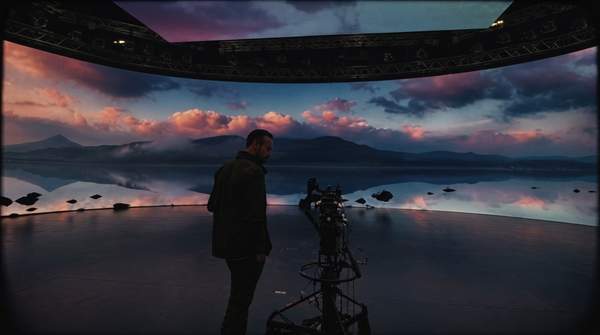
The core infrastructure of film and television production undergoes a radical reorientation, moving from physical studio spaces to sophisticated data centers. This change is complemented by a surge in AI-generated media, exemplified by outfits like Gossip Goblin. This AI film-making entity, led by Zack London, has garnered over 500 million views, according to The Guardian. This massive commercial appeal for AI-generated content establishes a significant commercial divide.

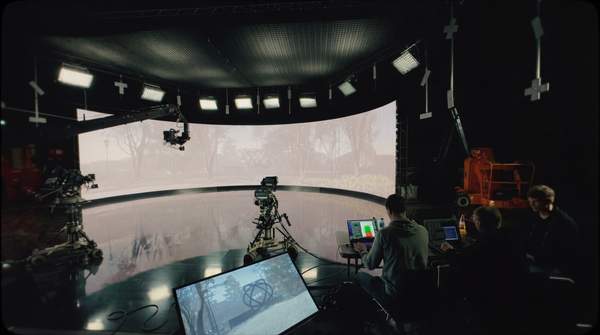
JP Allard's company, MirrorMe, demonstrates how AI directly transforms production workflows, offering new creative possibilities and efficiencies. MirrorMe now uses AI to create 'digital twins' and entirely AI-generated advertisements, effectively replacing traditional videography with lower overheads, increased speed, and reduced costs, according to the BBC. This shift enables unprecedented customization and automation in content creation, directly challenging traditional roles and production timelines. The AI talent studio Xicoia further illustrates this trend, having unveiled an AI actress named Tilly Norwood. This digital performer can be modified in terms of hair color, skin color, eyes, or accent with a button push, as reported by Forbes. Such technological advancements empower creators with tools for rapid iteration and personalized content at an unprecedented scale.
Major Investments and Mainstream Integration

  • $400 million — Marvel directors Joe and Anthony Russo plan to invest this sum to craft AI tools for filmmakers, according to the BBC.
  • 2023 — Disney's Marvel Studios division used Generative AI to create the opening sequence for its Disney+ show 'Secret Invasion' in this year, according to Forbes.

Significant investments from influential figures like the Russo brothers and generative AI's use in high-profile productions, such as Disney's 'Secret Invasion', confirm AI's growing acceptance and strategic importance within the mainstream industry. These commitments mark a clear pivot towards AI-centric production models. The financial backing and practical application in major studio content confirm AI's impact on film and TV production technologies is not a niche trend but a core strategic direction. This integration suggests that major players view AI not just as a tool for efficiency but as a fundamental component of future content creation, further solidifying the dual landscape where AI-driven content thrives commercially.

Drawing Lines: Awards, Authenticity, and the Human Element

The film industry's gatekeepers actively define boundaries to protect human creativity, creating a clear distinction between AI-assisted and AI-generated content. The Academy of Motion Picture Arts and Sciences has released updated rules for the 98th Academy Awards regarding AI, according to The Times of India. These regulations specify that AI-generated performances and scripts will not be eligible to win Academy Awards. This stance attempts to preserve a traditional definition of artistry, despite AI's increasing prevalence in production workflows.

While AI offers efficiency and novel creative possibilities, the Academy's explicit ban on AI-generated content for awards creates a significant tension. This decision exposes a fundamental conflict between the pursuit of viral, high-volume content, as seen with Gossip Goblin's success, and the preservation of factual integrity and human artistic contribution. The industry's official stance on artistic integrity appears at odds with AI's practical, accepted integration in award-winning productions, posing a definitional challenge for artistic achievement in the age of AI. This creates a two-tiered industry where commercially successful AI-generated content thrives outside the traditional, human-centric awards system.

Navigating Ethical Dilemmas and Best Practices

The industry faces an escalating crisis of authenticity and trust, particularly in documentary and historical storytelling.

  • The Archival Producers Alliance (APA), a group of about 300 documentary producers and researchers, was formed to develop best practices for using generative AI in factual storytelling, according to Theguardian.
  • The APA published an open letter warning against 'forever muddying the historical record' through generative AI and released a draft set of guidelines, according to The Guardian.

The industry proactively addresses the ethical dilemmas of AI, seeking to establish guidelines that balance innovation with the preservation of historical truth and artistic nuance. The APA's efforts underscore a critical need to maintain integrity as AI subtly integrates into various production stages. This push for best practices acknowledges that while AI offers immense capabilities, unchecked use could erode trust and compromise content authenticity, especially in genres relying on factual accuracy. The dialogue around these guidelines suggests a collective effort to define responsible AI usage, even as the commercial viability of AI-generated content continues to grow.

AI as an Enhancement, Not Just a Replacement

  • Two films honored at the Oscars have already used AI technology, according to the BBC.
  • AI was used to fine-tune Adrian Brody's accent when he spoke Hungarian in The Brutalist, according to the BBC.

Despite concerns about full AI replacement, these examples confirm AI already subtly enhances human-led productions. The utilization of AI to fine-tune an actor's accent in an Oscar-honored film exposes a practical acceptance of AI's role in production that contradicts stated artistic purity standards. This implies a future where AI serves as a powerful, behind-the-scenes assistant, rather than solely a replacement for human talent. The Academy's attempt to draw a hard line against AI in awards, while simultaneously acknowledging its use in Oscar-honored films, reveals a desperate, likely futile, effort to preserve a traditional definition of artistry that the industry has already begun to dismantle. This integration confirms AI's impact on film and TV production technologies extends beyond full generation to sophisticated augmentation of human performance.

By late 2026, it is projected that the ongoing tension between AI's commercial success and its exclusion from traditional artistic recognition will likely intensify, forcing entities like the Academy to further refine their definitions of 'artistic achievement' in a rapidly evolving technological landscape. The dual industry structure, with AI-driven content and human-led artistry, will continue to solidify, impacting production budgets and creative strategies across the entertainment sector.