Behind the Scenes

How a Film Crew Works: A Complete Guide to Professional Set Dynamics

A film set may look like chaos, but it's a highly structured, collaborative machine. Discover the specialized departments and clear communication channels that turn a script into cinema.

VR
Victor Ren

April 1, 2026 · 9 min read

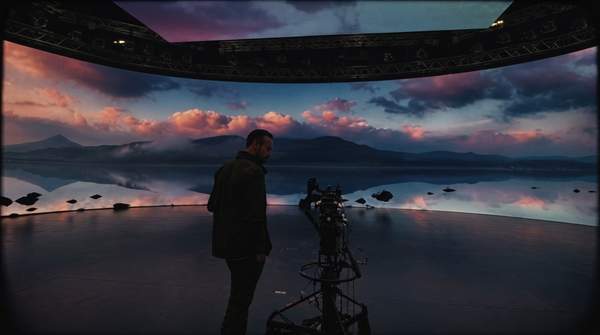
A bustling film set with diverse crew members collaborating, including a director, cinematographer, grip, and sound engineer, surrounded by professional equipment.

The final cut of a film presents a seamless story, but the set where it was filmed often looks like controlled chaos. Understanding how a film crew works reveals that this apparent disarray is actually a highly structured, collaborative machine. Every member, from the director to the production assistant, has a specific role in a complex hierarchy designed for maximum efficiency. This system of specialized departments and clear communication channels is the engine that turns a script into cinema.

What Is a Film Crew? (Quick Overview)

A film crew is the collective group of technicians, artists, and managers hired during the production phase of a film to execute the creative vision. This group is organized into distinct departments, each with its own responsibilities, such as camera, sound, art, and lighting. The structure ensures that every aspect of the filmmaking process, from capturing the image to recording dialogue, is handled by a dedicated specialist. This departmentalization is crucial for managing the immense complexity of a professional shoot.

From a technical standpoint, crew positions are often categorized as either "Above the Line" or "Below the Line." According to the industry resource Indie Film Hustle, this distinction is primarily budgetary. "Above the Line" roles—like the director, producer, and principal actors—are typically those with significant creative or financial input, whose salaries are often negotiated before principal photography begins. "Below the Line" encompasses the vast majority of the crew, the hands-on technicians and artists in every department who are responsible for the physical production of the film.

How a Film Crew Works: From Script to Screen

The journey from a written concept to a finished film is a methodical process. A professional film crew operates through a series of structured phases, ensuring that the creative vision is translated into a tangible product efficiently and on budget. Let's dive into the specifics of this workflow.

  1. Step 1: Development and Pre-ProductionThe creative process often begins with the Screenwriter, who, according to a guide from 125px.com, creates the initial script. During this phase, the Producer and Director enter the picture. The Producer is the project's logistical and financial architect, responsible for securing funding, managing the budget, and hiring key personnel. The Director is the creative authority, responsible for shaping the film's artistic identity. According to a guide from Screenwest, the director plays a key role in choosing actors and shaping the production design, in addition to guiding script edits and planning shot composition.
  2. Step 2: Assembling the Department HeadsWith a vision and budget in place, the Director and Producer hire the key "Below the Line" department heads who will lead the technical execution. The Director of Photography (DP), also known as the Cinematographer, is hired to translate the director's vision into a visual language of light, shadow, and camera movement. The Production Designer is brought on to create the physical world of the film, overseeing the construction of sets, selection of locations, and sourcing of props. A crucial hire at this stage is the 1st Assistant Director (1st AD), who will become the logistical commander of the set.
  3. Step 3: The Line Producer Creates the Battle PlanWhile the Producer oversees the entire project, the Line Producer is responsible for the day-to-day budget and schedule. This individual meticulously breaks down the script into a scene-by-scene analysis of required resources—cast, locations, props, and equipment. From this breakdown, the Line Producer generates the full production budget and a preliminary shooting schedule. Their primary objective is to ensure the film is completed on time and within the allocated budget, making them a vital link between the creative ambitions of the director and the financial realities of the production.
  4. Step 4: The 1st Assistant Director Takes Operational CommandOnce production begins, the 1st Assistant Director (1st AD) is responsible for keeping the set running smoothly. This role is purely operational. The 1st AD manages the day-to-day operations, creates and distributes the daily call sheet (a schedule detailing who and what is needed for the day's shoot), and supervises the shooting to ensure it stays on schedule. They are the primary point of contact for all department heads, acting as a buffer between the director's creative focus and the crew's logistical needs. The 1st AD's voice is often the one heard calling for "quiet on the set" and "action."
  5. Step 5: On-Set Execution and CollaborationDuring a take, the film crew operates as a synchronized unit. The Director communicates their desired performance to the actors and discusses the shot's framing with the DP. The 1st AD ensures all departments are ready and cues the action. The Camera Department, led by the DP and Camera Operator, physically captures the image. Simultaneously, the Sound Department, led by the Production Sound Mixer, records clean dialogue and ambient sound. The Art Department stands by to make adjustments to props or set dressing, while the Grip and Electric departments adjust lighting and camera support between takes. This constant, fluid collaboration is essential to capturing all necessary elements for a scene.
  6. Step 6: The Post-Production HandoffWhen principal photography is complete (a moment known as "the wrap"), the crew's work is largely done. The raw footage, sound recordings, and the Script Supervisor's detailed notes are handed over to the post-production team. This team, which includes the Editor, Sound Designer, Colorist, and Visual Effects Artists, works closely with the Director and Producer to assemble the film. The Director guides the editing process to ensure the final cut aligns with their original vision, while the Producer oversees the post-production budget and deadlines, guiding the film to its final delivery.

Understanding the Hierarchy of a Film Crew: Common Pitfalls

The complex structure of a film crew can be confusing for those outside the industry. Misunderstanding key roles and their functions can lead to an inaccurate perception of how films are made. Correcting these common mistakes is essential for a true appreciation of the collaborative process.

  • Mistake: Confusing the Producer with the Director. Many people use these terms interchangeably, but their roles are distinct. The Director is the primary creative force, making decisions about performance, cinematography, and editing. The Producer is the project's chief executive, responsible for the budget, schedule, and all business-related aspects. While they collaborate closely, the Director's domain is the art, and the Producer's is the logistics and finance. As Indie Film Hustle notes, the producer often has the final say on decisions that impact the budget and final delivery.
  • Mistake: Underestimating the 1st Assistant Director. It's a common assumption that the Director is shouting orders and managing the crew's every move. In reality, the Director is focused on the creative elements—the performance and the shot. The 1st AD is the on-set field marshal, managing the schedule, coordinating the departments, and ensuring the production machine runs efficiently and safely. They are the logistical hub of the entire set.
  • Mistake: Believing "Above the Line" means "more important." This terminology is a relic of old studio budget sheets and refers only to how and when a person is paid. "Below the Line" crew members—the gaffers, grips, camera assistants, and sound technicians—are the highly skilled craftspeople who physically create the film. A project's success is just as dependent on their technical expertise as it is on the vision of the Above the Line talent.
  • Mistake: Assuming the plan is rigid and unchangeable. While pre-production involves meticulous planning, the reality of a film set is unpredictable. Weather changes, equipment malfunctions, or unexpected creative opportunities require constant adaptation. A professional crew is defined by its ability to problem-solve on the fly, with the 1st AD and department heads working together to adjust the plan without compromising the schedule or the director's vision.

Key Roles and Responsibilities in a Film Production: An Advanced Look

Beyond the basic hierarchy, the effectiveness of a film crew lies in the nuanced relationships and communication flows between key departments. Understanding these dynamics reveals the true collaborative artistry at play. From a technical standpoint, these partnerships are what allow for complex cinematic language to be created.

The Director-DP PartnershipThe relationship between the Director and the Director of Photography (DP) is arguably the most important creative partnership on set. The Director articulates the mood, tone, and emotional intent of a scene. The DP then translates those abstract ideas into concrete choices about lighting, lens selection, and camera movement. This dialogue is constant. A director might say, "I want this scene to feel claustrophobic," and the DP will respond with a suggestion for a wider lens placed close to the actor and a high-contrast lighting scheme. This synergy defines the visual soul of the film. For more on this, our guide to a director's artistic vision offers a deeper look.

The G&E (Grip and Electric) TandemWorking directly under the DP are the Grip and Electric departments, often referred to as G&E. The head of the Electric department is the Gaffer, who is responsible for executing the lighting plan. The Gaffer's team places the lights, runs power, and sets exposure levels. The head of the Grip department is the Key Grip. Their team does not touch the lights themselves but is responsible for all the equipment that supports and modifies the light—stands, flags, nets, and silks. They also manage all camera support equipment, such as dollies, cranes, and car mounts. The Gaffer creates the light, and the Key Grip shapes it, a perfect example of specialized, interdependent work.

On a professional set, communication flows through a strict chain of command to prevent chaos. For instance, an order rarely goes directly from the Director to a lighting technician; instead, information follows a clear hierarchy.

OriginatorInformation PathExecutor
Director→ 1st AD → Department Heads (e.g., Key Grip)→ Grip Team
Director→ Director of Photography (DP) → Gaffer→ Electric Team
Director→ Director of Photography (DP) → Camera Operator→ Camera Team
1st AD→ All Department Heads (via radio)→ All Departments

Walkie-talkies are the primary tool for this communication structure, with different departments operating on designated channels. This ensures instructions are clear, consistent, and delivered only by an authorized source, keeping lines open and organized.

The Unsung Hero: The Script SupervisorOne of the most critical but least understood roles is the Script Supervisor. This individual is the guardian of continuity for the entire film. Because films are shot out of chronological order, the Script Supervisor meticulously tracks every detail: which hand an actor used to pick up a prop, what line of dialogue was altered, the length of a cigarette, or the level of liquid in a glass. They take detailed notes on every single take, which are essential for the editor to piece together a seamless and coherent final sequence. Without their sharp eye, jarring continuity errors would be commonplace.

Frequently Asked Questions

Who is in charge on a film set?

There are different leaders for different domains. The Director has final creative authority over everything that appears on screen. However, the 1st Assistant Director is in charge of the set's day-to-day operations, schedule, and safety. The Producer holds the ultimate financial and logistical authority over the entire project, from start to finish.

What is the difference between "Above the Line" and "Below the Line"?

This is a budgetary distinction. "Above the Line" refers to roles with significant creative or financial control whose costs are typically fixed before production, such as the director, screenwriter, producers, and principal cast. "Below the Line," as described by sources like Indie Film Hustle, refers to the technical crew responsible for the physical production, such as the camera, grip, electric, and art departments. Their costs are part of the daily operational budget.

How do film crew departments communicate?

Communication follows a strict chain of command to maintain order. The Director and 1st AD communicate primarily with department heads (e.g., Director of Photography, Production Designer). Those department heads then relay instructions to their own teams. This hierarchical system prevents conflicting orders and ensures everyone receives clear, relevant information. Walkie-talkies, with specific channels for each department, are the standard tool for instant communication.

What does a 1st AD actually do all day?

The 1st Assistant Director is the engine of the film set. Their day starts before anyone else arrives and ends after everyone else leaves. They are responsible for creating the daily call sheet, ensuring all departments are ready for each shot, managing background actors, keeping the production on schedule, and serving as the primary enforcer of on-set safety protocols. They are constantly problem-solving to keep the complex machinery of the film shoot moving forward.

The Bottom Line

A film crew functions as a purpose-built organism, combining a rigid hierarchy with intense, moment-to-moment collaboration. It is a system where hundreds of specialists work in concert, each trusting the others to execute their specific function flawlessly. The technical success of any film production hinges on this delicate balance of clear leadership, departmental expertise, and effective communication.