How Virtual Production Workflows Are Transforming Filmmaking

The USC School of Cinematic Arts recently received a $25 million donation from the Blavatnik Family Foundation to establish a virtual production center, according to the Los Angeles Times .

VR
Victor Ren

May 15, 2026 · 4 min read

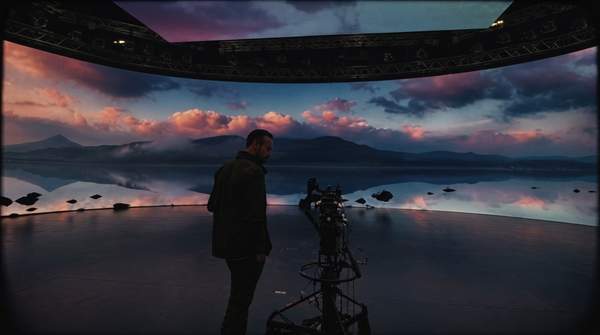
Filmmakers utilizing advanced virtual production technology with LED screens and motion capture on a modern film set.

The USC School of Cinematic Arts recently received a $25 million donation from the Blavatnik Family Foundation to establish a virtual production center, according to the Los Angeles Times. The $25 million donation redefines what it means to be a filmmaker, signaling a current trend where education prioritizes mastering complex real-time digital ecosystems over traditional craft, fundamentally transforming filmmaking workflows.

Virtual production offers immense creative and logistical efficiencies, but it also necessitates a significant re-skilling of the traditional film workforce. Studios will desperately seek a new breed of tech-savvy filmmakers, while a substantial portion of the traditional workforce faces obsolescence without radical re-skilling.

Based on rapid investment and technological advancements, virtual production is poised to become the dominant method for visual storytelling. It will make high-quality content more accessible while redefining industry roles and demanding a new generation of hybrid technical-creative talent.

What is Virtual Production and How Does It Work?

Virtual production integrates different technologies like CGI, motion capture, and Augmented Reality (AR) into one platform. This process is commonly achieved through the Unreal Engine and software such as ILM’s Stagecraft, according to Studiobinder. The integration of these technologies allows for dynamic, interactive environments that empower filmmakers.

Using an LED wall in virtual production allows directors to make instant changes to a scene, eliminating the need to wait for set designers or prop changes, as reported by Studiobinder. The new 15,000-square-foot center at USC will feature two stages equipped with LED walls, camera tracking, and real-time 3D design software, according to the Los Angeles Times. The new 15,000-square-foot center at USC, with its two stages equipped with LED walls, camera tracking, and real-time 3D design software, directly facilitates the dynamic, real-time environment described by Studiobinder, supporting the creation of sweeping vistas, vast landscapes, and convincing creatures directly from imagination without physical construction delays.

The integration of cutting-edge digital technologies provides filmmakers with unprecedented real-time creative control and imaginative scope, marking the industry's pivot towards digitally-driven production environments.

The Virtual Production Workflow: From Concept to Screen

A typical virtual production workflow involves several structured stages, beginning with pre-production and development. This is followed by the Virtual Art Department (VAD) phase, where digital assets are created, according to CGSpectrum. Visualization, including asset creation, virtual scouting, and previs, forms a crucial part of this early process.

The typical virtual production workflow emphasizes early digital asset creation and visualization, fundamentally shifting traditional production timelines and collaboration points. The focus moves from physical construction to digital pre-visualization, streamlining the entire creative process.

Navigating the Challenges: The Impact on Traditional Roles

Virtual production can help studios create high-quality content with smaller crews, according to Newscaststudio. The efficiency of creating high-quality content with smaller crews contrasts with the boom in virtual production, which has created new job opportunities for various film and TV professionals, including cinematographers and environmental artists, as the Los Angeles Times reports. This simultaneous rise of 'new job opportunities' and the capacity for 'smaller crews' suggests a coming talent crunch.

The shift to virtual production requires significant adaptation from traditional film professionals. While new, technologically-focused positions emerge, some existing roles may diminish, leading to a net shift in labor demand rather than pure growth. The net shift in labor demand necessitates proactive training programs and career transitions for a workforce accustomed to conventional production paradigms.

Making Virtual Production Accessible: Tools and Techniques

Advancements in specialized tools are simplifying the technical complexities of virtual production. Pixotope's automated calibration tools, for example, reduce manual guesswork and the need for specialized optical knowledge, according to Pixotope. Pixotope's automated calibration tools are counterintuitive given the perceived complexity of virtual production.

These automated tools account for radial distortion, tangential distortion, and other optical aberrations, as Pixotope explains. Advancements in software democratize virtual production by automating complex technical processes, making it more feasible for a broader range of productions and skill levels. These advancements simplify highly technical aspects of the workflow.

Frequently Asked Questions About Virtual Production

Can smaller productions benefit from virtual production?

Yes, smaller-budget films and television series can leverage virtual production. While bigger productions often integrate it directly into filming, independent projects can utilize more affordable pre and post-production workflows, according to CGSpectrum. This tiered approach allows for high-quality content creation without requiring the same upfront investment as a blockbuster.

The Future is Virtual: Efficiency, Creativity, and Cost Savings

Virtual production fundamentally restructures resource allocation by eliminating the physical construction of sets, directly reducing the time and cost associated with traditional filmmaking, as reported by Studiobinder. The efficiency gained from eliminating the physical construction of sets extends to creative iterations, allowing directors to make instant scene adjustments. Companies that cling to traditional set-building and physical production workflows will operate at a significant cost and time disadvantage against competitors embracing this digital shift.

Studios that invest in real-time digital infrastructure, mirroring USC's $25 million commitment, will likely dominate high-end visual storytelling, fundamentally reshaping content creation and industry employment.