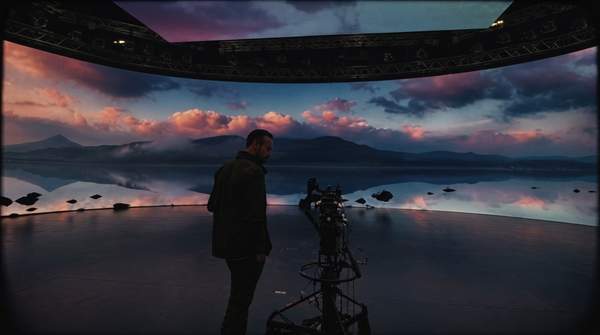
Filmmakers can now generate multiple concept frames for a scene in just 5-10 seconds using AI, dramatically accelerating early-stage visual development. Tools like SEELE enable directors and cinematographers to explore numerous visual ideas for a single shot in minutes, not days. This rapid iteration empowers creative teams to refine their vision with unprecedented agility. Sophisticated film pre-visualization, once exclusive to high-budget productions, is now widely accessible and affordable. Yet, many filmmakers still rely on slower, traditional methods, despite the clear advantages in speed and cost. This diminishing barrier to entry for professional-grade film planning suggests a future where even micro-budget productions achieve highly refined visual storytelling before shooting a single frame, potentially reshaping industry pre-production standards.
Beyond Storyboards: The Rise of Virtual Pre-Viz
Virtual pre-visualization extends traditional storyboarding into dynamic, interactive environments. FrameForge offers 3D camera simulation, providing accurate lens and lighting models for detailed film pre-visualization, according to Seeles Ai. This allows filmmakers to virtually frame shots and block scenes with precision, moving beyond static sketches. Complementing this, a prototype for collaborative previsualization in virtual reality enables dynamic, interactive scene planning, as assessed by Diva-portal. These tools together redefine pre-production, enabling teams to visualize complex camera movements and character interactions in simulated spaces with unprecedented depth, fundamentally altering how cinematic narratives are initially conceived and refined.
Immersive Worlds and Collaborative Planning
Virtual tools now enable filmmakers to physically enter their planned scenes. FrameForge includes VR support for immersive scene blocking, allowing directors to virtually 'walk through' sets and adjust staging, according to Seeles Ai. This provides a direct, spatial understanding of the cinematic environment. Furthermore, a collaborative pre-visualization prototype allows multiple filmmakers to be present simultaneously in a virtual environment, as reported by Diva-portal. This real-time interaction offers unprecedented creative freedom and problem-solving during pre-production, fundamentally reshaping how geographically dispersed teams collaborate on visual storytelling.
Democratizing Pre-Production: Cost and Speed Advantages
Modern pre-visualization tools significantly lower the financial barrier for filmmakers. FrameForge, priced at $299 for a one-time purchase, makes sophisticated 3D camera simulation available at a moderate cost, according to Seeles Ai. This contrasts sharply with historical pre-production expenses. Further enhancing accessibility, SEELE offers a free tier for its AI-powered rapid prototyping tool, as stated by Seeles Ai. The availability of powerful, low-cost or free tools removes significant financial barriers, making sophisticated pre-visualization accessible to independent and low-budget productions. Companies like SEELE, by offering free, AI-powered rapid prototyping that generates concept frames in 5-10 seconds, are not just democratizing pre-visualization but are fundamentally accelerating the creative ideation phase, forcing traditional studios to adapt or risk being outpaced by agile independent productions.
Your Questions Answered About Virtual Filmmaking Tools
What skills are becoming essential for filmmakers adopting virtual pre-production?
Filmmakers will increasingly need proficiency in 3D software navigation, virtual camera operation, and real-time environment manipulation, driven by tools like FrameForge and collaborative VR environments. This demands a blend of traditional cinematic understanding with technical aptitude in virtual interfaces.
How does AI rapid prototyping influence early creative decision-making?
AI-powered rapid prototyping, exemplified by SEELE's 5-10 second frame generation, allows directors to quickly test numerous stylistic and compositional choices. This rapid feedback loop enables faster elimination of less effective ideas and quicker refinement of promising concepts, leading to more informed creative decisions earlier in pre-production.
Can virtual pre-visualization reduce the need for physical location scouting?
While not entirely eliminating physical scouting, the precise 3D simulation capabilities of tools like FrameForge and the ability to virtually "walk through" scenes can significantly reduce physical location visits. Filmmakers can evaluate potential locations and plan camera placements virtually, minimizing travel and associated costs.
The Future of Film Planning is Virtual
The integration of AI and VR tools into film pre-production is a strategic advantage. These technologies enable higher fidelity planning, faster iteration, and broader creative exploration. Embracing these virtual tools is no longer a luxury but a strategic necessity for filmmakers aiming to stay competitive and creatively agile. The combination of affordable, accurate VR simulation like FrameForge, priced at $299, and the proven potential for collaborative VR environments, such as the diva-portal prototype, suggests future film sets will increasingly be planned and rehearsed virtually. This trend will demand new skill sets from filmmakers and could reduce costly physical location scouting and early-stage crew involvement by 2026.