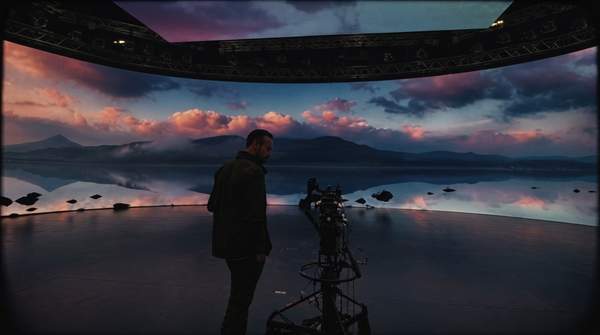
The film director's vision, the invisible architecture supporting every shot, line of dialogue, and cut, transforms a script from words on a page into a living, breathing world on screen. This singular creative mind imprints itself so profoundly onto the collaborative art form that a film can be identified in a single, silent frame. This capacity sits at the heart of cinematic authorship, highlighting a crucial element of filmmaking.
We speak not just of seeing a film, but of "a Christopher Nolan film" or "a Wes Anderson film," acknowledging the distinct signature of the artist at the helm. In an industry where hundreds of artists contribute, the director’s vision serves as the unifying principle, guiding every creative decision to ensure a cohesive, resonant experience rather than a mere sequence of images. This concept is essential to appreciating the difference between a competently made movie and a true work of cinematic art.
What Is a Film Director's Vision?
According to The Independent Film School, a director quite literally sees the movie in their head before a single frame is shot. This internal film becomes the reference point for the entire production process, serving as the comprehensive artistic blueprint that guides a movie's creation from concept to screen. It encompasses the film's thematic core, aesthetic style, and emotional tone—the director’s unique interpretation of the story translated into the language of cinema.
Like an architect's design for a grand cathedral, the director’s initial design and overarching philosophy dictate a film's final form, atmosphere, and the experience it imparts. Though they don't lay every stone, this vision provides a framework. It harmonizes every department's contributions into a singular, purposeful whole. The key components of this artistic blueprint typically include:
- Thematic Core: The central idea, question, or message the film seeks to explore. It is the "why" behind the story.
- Visual Language: The specific choices in cinematography, color grading, lighting, and composition that create the film's look. This includes everything from camera movement to lens selection.
- Sonic Landscape: The intentional use of sound, including the musical score, sound effects, and the quality of dialogue, to build the film's world and mood.
- Pacing and Rhythm: The editing style that dictates the film's flow and tempo, controlling the audience's emotional and intellectual journey through the narrative.
- Performative Tone: The style of acting the director coaxes from the cast, ensuring that all performances feel as though they belong in the same universe.

What Are the Key Elements of a Director's Vision?
A director's vision manifests on screen through deliberate choices that solidify into a recognizable style. As noted by MovieWeb, these unique visual trademarks range from specific techniques to recurring shot compositions echoing across a director's filmography. These are not mere stylistic tics, but the external expression of the director's unique way of seeing the world, becoming part of their cinematic identity.
Zack Snyder, for instance, expresses his vision through a single, powerful technique: slow-motion. MovieWeb reports he employs it in nearly all his films, excluding Man of Steel, to underline dramatic moments with a spectacular, almost mythic quality. This choice is a core part of his vision of action and heroism as a modern-day epic, rendering characters as figures moving through a grand, operatic tapestry.
For other directors, the vision is a more complex synthesis of technical discipline and thematic obsession. Christopher Nolan has cultivated a reputation for assembling intricate, layered plots that honor the audience's intelligence, according to a profile by Indie Film Hustle. His vision is one of intellectual rigor married to exhilarating escapism. This philosophy was present from his earliest work; he self-financed his debut feature, FOLLOWING, for just six thousand dollars, shooting on weekends with friends. His insistence on using celluloid film, even for this low-budget project, signaled a deep commitment to a particular aesthetic and texture—a commitment that has defined his entire career. After the record-shattering success of The Dark Knight Trilogy, Nolan was able to harness the full power of the Hollywood studio system to execute this vision on an epic scale, but the foundational principles remained the same.
At the other end of the cinematic spectrum, a director’s vision can be about deconstructing the medium itself. The late experimental filmmaker George Landow used his work to retrain the viewer's eye. According to an analysis in Artforum, his films are described as a form of "popular hermeneutics"—guides for our perceptual organs. His 1966 work, Film In Which There Appear Edge Lettering, Sprocket Holes, Dirt Particles, Etc., is considered his first "exercise" film. The vision here is not to tell a story, but to make the viewer hyper-aware of the physical material of film. By foregrounding the mechanics of the medium, Landow’s vision challenges the very nature of cinematic illusion.
How Does a Director Communicate Their Vision?
A brilliant vision is useless if it remains locked inside the director's mind. The director's primary job is to be the chief communicator, translating abstract ideas into concrete instructions for a vast team of specialists. This process of communication is constant, evolving through each stage of production.
In pre-production, the director's vision is codified through documents and conversations. They work with a storyboard artist to visualize key sequences, a production designer to create a "lookbook" of colors, textures, and architectural styles, and a cinematographer to develop a shot list detailing the camera's every move. These tools become the shared language of the production. Casting is also crucial; chosen actors must embody the performative tone central to the director's interpretation.
During production, the director is the on-set anchor. They work intimately with the cinematographer to frame the action, ensuring the visual language remains consistent. They guide the actors' performances, not by dictating every emotion, but by creating an environment in which the actors can discover the truth of the character within the vision's parameters. Snyder’s choice to shoot slow-motion sequences with the appropriate high-speed cameras on set, rather than manipulating the footage in post-production, is a prime example of executing a vision during the filming process. It affects how the scene is lit, staged, and performed in the moment.
In post-production, the vision guides the final assembly. The director sits with the editor for weeks or months, shaping the raw footage into a cohesive rhythm. They collaborate with the composer to ensure the score enhances the emotional core of the film, rather than overwhelming it. They oversee the sound design and color grading, making meticulous adjustments to perfect the film's atmosphere. It is in these final stages that the thousands of individual decisions, all guided by the director's initial concept, coalesce into the final film the audience experiences.
Why a Director's Vision Matters
In an era of franchise filmmaking and content-driven production, a singular, uncompromising director's vision is more important than ever. It elevates a film from a commercial product to a lasting piece of art, providing its identity and creating an immersive, coherent world for the audience to inhabit. Every element within this world feels purposeful and interconnected.
Christopher Nolan’s name alone promises a certain kind of cinematic journey—grand in scale, intellectually challenging, and meticulously crafted—building an audience's trust and anticipation. We seek out films by such directors because their previous work offers unique, rewarding experiences. This authorial brand is built film by film, through the consistent, ambitious execution of a personal vision.
Furthermore, a strong vision pushes the boundaries of the art form itself. While Landow's experimental films may not reach a mass audience, their influence on other artists and filmmakers is significant, expanding the possibilities of cinematic language. Even in the mainstream, a director’s bold vision can reshape cultural trends. The thematic depth and gritty realism of Nolan’s Batman films redefined the potential of the superhero genre, while the visual flair of directors like Snyder has left an indelible mark on the aesthetic of the modern blockbuster. Ultimately, the director's vision is what ensures that cinema remains a dynamic and evolving art form, one capable of surprising, challenging, and moving us in profound ways.
Frequently Asked Questions
What's the difference between a director's vision and a director's style?
A director's vision refers to the specific artistic blueprint for a single film—its unique themes, tone, and aesthetic. A director's style, on the other hand, is the collection of recurring techniques, thematic preoccupations, and visual signatures that are recognizable across their entire body of work. In essence, a consistent vision applied over multiple films is what creates a director's signature style.
Can a film succeed without a strong director's vision?
Films driven by popular properties or star power can achieve commercial success without a singular vision, yet often lack artistic identity, appearing disjointed or generic. A strong director's vision anchors a film, ensuring artistic coherence and contributing to critical acclaim and long-term cultural resonance.
How does a new director develop their vision?
A director's vision develops over time through a combination of influence, study, and practice. It often begins with early inspirations, such as Christopher Nolan being moved to make stop-motion films after seeing Star Wars at age seven. It is then honed through studying the work of other filmmakers, collaborating with other artists, and, most importantly, through the hands-on process of making films—whether they are small, self-funded projects or larger productions.
The Bottom Line
A director's vision transforms a screenplay into cinema, guiding every choice from grand set pieces to the smallest frame details. This singular artistic consciousness shapes the collaborative medium into a coherent, resonant experience, acting as the vital authorial signature across blockbusters and experimental shorts alike.