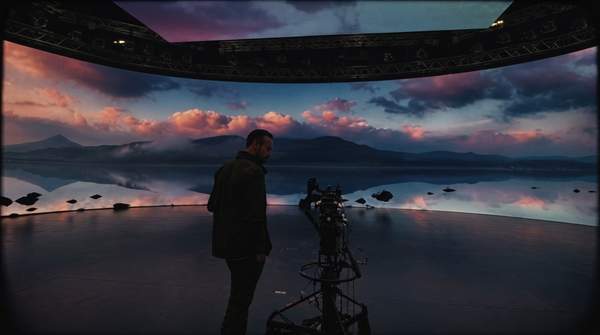
This guide explores seven contemporary films that demonstrate innovative directing techniques, pushing the boundaries of visual storytelling. Each film, from groundbreaking animation to reality-bending narratives, is evaluated for its technical ingenuity, seamless integration of techniques into the narrative, and lasting impact on cinema. For cinephiles, aspiring filmmakers, and curious viewers, understanding the craft behind films like Ne Zha 2, which captivated global audiences, is vital to appreciating the artistry beyond the plot.
Ranking considered technical innovation, narrative impact, and influence on contemporary filmmaking.
1. Spider-Man: Into the Spider-Verse (2018) — Best for Visual Revolution
The opening frames of Spider-Man: Into the Spider-Verse feel like a jolt to the system—a vibrant, kinetic explosion of color, text, and colliding art styles that announces its intentions immediately. This is not just another animated film; it's a moving comic book, a visual symphony that redefines what the medium can achieve. The directors—Bob Persichetti, Peter Ramsey, and Rodney Rothman—don't simply animate a story; they craft a visual language that is the story. By blending the polished sheen of 3D CGI with the raw, tactile energy of 2D comic art, complete with Ben-Day dots and action captions, they create a multi-layered aesthetic that mirrors the film's multiverse theme. The film’s visual prowess was recognized with a Best Animated Feature Academy Award, according to GoodHousekeeping.com. Each frame purposefully stutters, animated "on twos" to mimic the stop-motion feel of flipping through a comic book, a daring choice that imbues every movement with a distinct, stylized rhythm.
For animators, graphic designers, and those fatigued by mainstream animation's aesthetic homogeneity, this film's innovation is deeply thematic, not cosmetic. It ranks above peers because clashing art styles of characters like Spider-Gwen, Spider-Man Noir, and Peni Parker visually represent their disparate realities colliding, making narrative emotional stakes tangible. Its sheer density, however, can overwhelm some viewers with relentless visual information and frenetic pacing, potentially detracting from nuanced character work. Yet, for those surrendering to its audacious vision, it offers an unparalleled cinematic experience influencing new animated storytelling.
- Directors: Bob Persichetti, Peter Ramsey, Rodney Rothman
- Key Innovation: Fusion of 2D comic book aesthetics with 3D animation.
- Rating: PG
2. Children of Men (2006) — Best for Immersive Cinematography
A pall of gray hangs over Alfonso Cuarón’s dystopian masterpiece, a world drained of hope and color, where the cry of a newborn baby has not been heard in eighteen years. The film's power lies not in its speculative premise but in its terrifying proximity to our own reality, a feeling achieved through a directorial style that prizes immediacy above all else. Cuarón’s deft touch is most evident in his now-legendary use of the long take, or "oner." As noted by the publication No Film School, the film features several famous single-shot sequences, including a harrowing car ambush and a breathtaking final battle where blood literally splatters onto the camera lens. This technique is not a gimmick; it’s a profound storytelling choice. By refusing to cut away, Cuarón traps the audience within the protagonist's perspective, forcing us to experience the chaos, fear, and fleeting moments of grace in real-time. The camera becomes a fellow refugee, a silent, terrified witness to the collapse of civilization.
Aspiring cinematographers and audiences appreciating visceral, grounded science fiction will find this film essential viewing. It surpasses other dystopian films by grounding its high-concept premise in chillingly plausible, documentary-style realism. Long takes create an unbroken chain of cause and effect, making violence consequential and un-glamorized. Its unrelenting bleakness is the only significant drawback; the grim subject matter offers little respite and can be emotionally taxing. Yet, this commitment to its desolate vision, executed with breathtaking technical precision, cements its place as a landmark of 21st-century directing.
- Director: Alfonso Cuarón
- Key Innovation: Use of extended long takes ("oners") to create documentary-style immersion.
- Rating: R
3. The Grand Budapest Hotel (2014) — Best for Meticulous World-Building
To enter the world of a Wes Anderson film is to step inside a meticulously crafted diorama, where every frame is a perfectly composed painting. The Grand Budapest Hotel stands as the zenith of his singular aesthetic, a confection of pastel colors, precise symmetry, and whimsical nostalgia. The director’s vision is one of total control. No Film School highlights the film's use of complex camera moves, elaborate sets, and engaging visual elements to construct its world. Anderson employs whip pans and precise tracking shots that guide the eye with the confidence of a seasoned magician, while his use of varying aspect ratios (1.37:1, 1.85:1, and 2.35:1) cleverly delineates the story's different time periods. This is not just stylistic flair; it is a form of visual grammar that communicates the fading elegance of a bygone era. The film's visual language speaks of a world built on fragile, beautiful order, a world constantly under threat from the chaos of history rumbling just outside the frame.
This film is best for lovers of auteur theory and viewers who delight in detailed production design and witty, literary dialogue. It ranks above other stylized comedies for the sheer density and purposefulness of its design; every prop, costume, and color choice serves the narrative and its themes of memory, loss, and civility. The primary critique often leveled against Anderson's style, and one that could be applied here, is that its meticulousness can sometimes create a sense of emotional distance. The characters can feel like exquisitely designed puppets in their dollhouse world, potentially keeping the audience at arm's length. However, beneath the pristine surface of The Grand Budapest Hotel beats a profoundly human heart, making it a masterclass in how a director's obsessive attention to detail can create a world that is both fantastical and deeply resonant.
- Director: Wes Anderson
- Key Innovation: Symmetrical framing and controlled mise-en-scène as a narrative tool.
- Rating: R
4. Flow (2024) — Best for Independent Vision
There is a quiet revolution happening in animation, far from the multi-million dollar budgets of major studios, and Gints Zilbalodis's Flow is its stunning manifesto. A wordless, meditative journey following a cat navigating a flooded world, the film is a testament to the power of pure visual storytelling. According to GoodHousekeeping.com, what makes its direction so innovative is the fact that it was crafted largely by Zilbalodis himself using consumer-grade animation software. This resourceful approach results in a film that feels deeply personal and handcrafted. The camera moves with a fluid, dreamlike quality, often tracking the cat at a low angle, fully immersing the audience in its precarious perspective. The absence of dialogue forces the director to rely entirely on composition, light, and movement to convey emotion and narrative, a challenge Zilbalodis meets with astonishing grace. The film's triumph at the Academy Awards, where it reportedly won for Best Animated Feature, validates this independent, artist-driven approach to filmmaking.
For admirers of minimalist storytelling and independent animation, Flow demonstrates how technological limitations foster immense creativity, proving powerful stories don't require massive resources. Its narrative simplicity allows emotional and thematic undercurrents—survival, companionship, the awesome power of nature—to resonate with profound clarity. The deliberate, meditative pacing and lack of dialogue, while a strength, may not engage viewers accustomed to mainstream animated features' rapid-fire action and humor. It demands patience, but for those willing to drift along, Flow offers a uniquely serene and moving cinematic experience.
- Director: Gints Zilbalodis
- Key Innovation: Feature-length, award-winning animation created with accessible, consumer-grade software.
- Rating: PG
5. Inception (2010) — Best for Narrative Complexity
Christopher Nolan builds worlds out of ideas. His films are intricate narrative puzzles, and Inception is perhaps his most audacious construction—a thriller set within the architecture of the mind. Nolan, who is known for his cerebral and often nonlinear storytelling, directs not just actors and cameras, but time and perception itself. The film's central innovation is its visual and structural representation of nested realities. As the team of dream thieves descends deeper into the subconscious, the editing becomes more complex, cross-cutting between multiple layers of action where time moves at different speeds. The famous zero-gravity hallway fight is not just a stunning set piece; it is the physical manifestation of a sleeping mind losing its equilibrium. Nolan’s direction is rigorously logical, even at its most fantastical, ensuring the audience can follow the labyrinthine plot without getting lost. He uses filmmaking techniques—slow motion, parallel editing, sound design—to make abstract concepts like time dilation and shared consciousness feel visceral and immediate.
Audiences enjoying intellectual, high-concept blockbusters and puzzle-box narratives will find this film a perfect fit. It ranks above other complex thrillers because its narrative ambition is matched by visual execution, creating a seamless fusion of mind-bending ideas and exhilarating action. Its main drawback is heavy exposition; the film dedicates significant time to explaining intricate rules, which can feel more like a lecture than a story. Nevertheless, Inception remains a towering achievement, demonstrating how a director can use cinema's tools to challenge an audience's perception of reality.
- Director: Christopher Nolan
- Key Innovation: Structuring a blockbuster narrative around complex, multi-layered timelines and realities.
- Rating: PG-13
6. Ne Zha 2 (2025) — Best for Global Spectacle
China's Ne Zha franchise is at the forefront of international animation's rise. Its 2025 sequel follows a predecessor that became a global smash-hit, reportedly the fifth highest-grossing movie worldwide of all time, according to GoodHousekeeping.com. Director Jiaozi (Yang Yu) innovatively fuses ancient Chinese mythology with hyper-modern, blockbuster animation techniques, crafting action sequences with a scale and kinetic energy rivaling Hollywood productions. Martial arts choreography blends with elemental magic in a whirlwind of color and light. The film’s unapologetically bold visual language, designed for the biggest screen, represents a powerful new direction in global filmmaking: culturally specific stories as universally thrilling cinematic spectacle.
For fans of epic fantasy, mythological storytelling, and international animation, this film proves a non-English animated film, rooted in a specific cultural tradition, can achieve staggering global commercial success. Its innovation is one of synthesis and scale. While the deep-seated cultural context from the 16th-century novel Investiture of the Gods may be unfamiliar to some Western audiences, the director ensures universal core themes of destiny, rebellion, and acceptance, allowing visual storytelling to transcend cultural barriers.
- Director: Jiaozi (Yang Yu)
- Key Innovation: Blending traditional mythology with cutting-edge blockbuster animation for a global audience.
- Rating: Not Yet Rated
7. KPop Demon Hunters (2025) — Best for Genre-Bending Energy
The upcoming Netflix film KPop Demon Hunters exemplifies a new breed of film emerging in streaming, one that gleefully smashes genres together. According to GoodHousekeeping.com, it centers on three girls fighting demons while navigating life pressures, all set to a fun soundtrack. The directorial innovation is tonal, requiring a deft hand to balance high-energy action, comedic beats, stylized K-pop music video aesthetics, and a sincere story about self-acceptance without collapsing into chaos. This filmmaking reflects a modern sensibility shaped by internet culture, demanding nimble direction that shifts from slick, choreographed fight sequences to heartfelt character moments with seamless agility.
For viewers enjoying genre-fluid stories, K-pop fans, and audiences seeking energetic, contemporary fables, this film integrates a specific, globally popular musical aesthetic directly into its narrative and visual DNA. It stands out from traditional action-comedies because it moves and breathes with K-pop's rhythm and style, not just featuring pop songs. Its primary challenge, and potential drawback, will be maintaining that delicate tonal balance; if the blend feels forced or the emotional core gets lost amidst stylistic flourishes, the film could feel superficial. However, successfully executed, this directorial approach creates a uniquely joyful and dynamic viewing experience speaking directly to a new generation.
- Director: TBD
- Key Innovation: Tonal fusion of K-pop aesthetics, action-comedy, and coming-of-age drama.
- Rating: Not Yet Rated
| Film | Directing Innovation | Key Metric | Best For |
|---|---|---|---|
| Spider-Man: Into the Spider-Verse | Visual Style Fusion | Best Animated Feature Oscar Winner | Animators & Comic Book Fans |
| Children of Men | Immersive Long Takes | Significant Cinematographic Influence | Viewers Seeking Visceral Realism |
| The Grand Budapest Hotel | Symmetrical Production Design | Meticulous World-Building | Admirers of Auteur-Driven Style |
| Flow | Independent Animation | Best Animated Feature Oscar Winner | Aspiring Independent Filmmakers |
| Inception | Nonlinear Narrative Structure | Cerebral, High-Concept Storytelling | Lovers of Complex, Puzzle-Box Narratives |
| Ne Zha 2 | Global Mythological Spectacle | Predecessor was 5th Highest-Grossing Film Worldwide (per Good Housekeeping) | Fans of Epic Animated Blockbusters |
| KPop Demon Hunters | Genre & Tonal Fusion | Netflix Streaming Release | Audiences Seeking High-Energy, Modern Fables |
How We Chose This List
In selecting these seven films, we prioritized works from the 21st century that demonstrated a distinct and influential directorial approach. Our criteria focused on how a director's techniques served the story, rather than just existing as aesthetic flourishes. We looked for films that either pioneered a new visual style (Spider-Man: Into the Spider-Verse), reimagined a classic technique for the modern era (Children of Men), used narrative structure as a primary tool (Inception), or achieved remarkable results through resourceful, independent vision (Flow). We intentionally excluded many revered classics from earlier eras to maintain a sharp focus on contemporary filmmaking and the techniques that are shaping the cinema of today and tomorrow. Each film on this list represents a unique answer to the question of what a director can, and should, do to engage an audience.
How do unique directing styles enhance storytelling?
Alfonso Cuarón’s relentless, unbroken takes in Children of Men generate a suffocating, documentary-like anxiety, making the film's dystopian world terrifyingly real. This demonstrates how a director's unique style is more than a signature; it is the fundamental engine of emotional and thematic resonance. Similarly, Wes Anderson’s famously symmetrical compositions in The Grand Budapest Hotel create a world of pristine, fragile order, a visual metaphor for the fleeting civility the characters desperately cling to. Christopher Nolan’s nonlinear, dream-layered plot in Inception immerses the audience directly into the disorienting, time-bending experience of its characters. Ultimately, a director's style bridges script and audience, translating words and ideas into a sensory experience that moves, thrills, and provokes.
The Bottom Line
The landscape of modern cinema is rich with bold, innovative voices who are actively redefining the art of visual storytelling. For those seeking a pure revolution in aesthetics, Spider-Man: Into the Spider-Verse is the undeniable starting point. If you desire a masterclass in building tension and immersion through camerawork, Children of Men remains an essential, visceral experience. And for a powerful reminder that groundbreaking vision isn't confined to big budgets, the quiet brilliance of Flow provides both inspiration and awe.