If you're looking for the best emerging filmmaking technologies for independent film production, this ranked guide breaks down the top tools and workflows set to redefine creative possibilities. This list is for independent filmmakers, from solo creators to small production houses, who need to understand which new technologies offer the most significant advantages in efficiency, visual quality, and storytelling innovation. Items were evaluated based on their accessibility to independent budgets, potential for creative impact, and current market readiness.
This list was compiled by evaluating emerging technologies based on their accessibility to independent budgets, potential for creative transformation, and current industry adoption rates.
1. Virtual Production — For blockbuster visuals on an indie budget
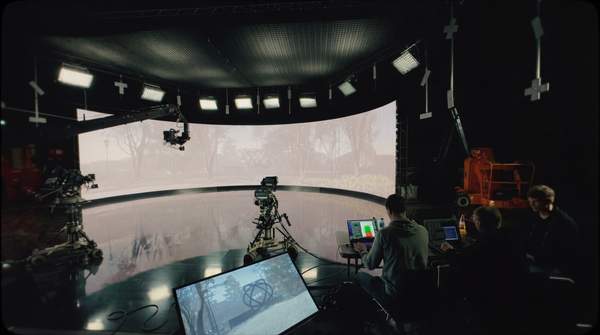
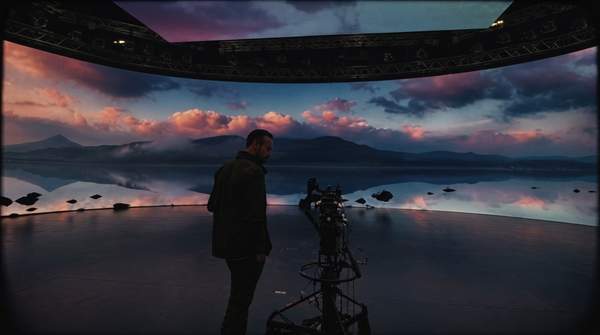
Virtual production is a technique that merges physical and digital filmmaking elements in real-time. From a technical standpoint, this is most commonly achieved using large LED video walls, known as "volumes," that display computer-generated backgrounds behind physical sets and actors. The camera's movement is tracked, allowing the digital background to shift its perspective in perfect sync with the camera, creating a seamless and photorealistic illusion. This process allows filmmakers to capture complex visual effects in-camera, significantly reducing the time and expense typically associated with green screen compositing in post-production.
This technology is best for independent filmmakers aiming to create visually ambitious projects, particularly in genres like science fiction or fantasy, without the budget for extensive location shooting or post-production VFX. According to a report from ANG Studio LV, virtual production is transforming filmmaking by enabling new creative possibilities while cutting post-production costs. It ranks above other visual technologies due to its direct impact on production efficiency, allowing for greater creative control on set. The primary drawback is the high initial cost and technical expertise required to set up and operate an LED volume, though rental studios are making it more accessible.
2. AI-Powered Production Tools — For workflow optimization and data insights
Artificial Intelligence (AI) is being integrated into various stages of the filmmaking process to automate tasks and provide data-driven insights. These tools are not a single technology but a collection of applications, including AI-powered script analysis software that can break down characters and plot points, automated editing tools that can generate rough cuts, and predictive analytics platforms that analyze market data to gauge potential audience preferences. ANG Studio LV notes that these tools are making production processes both faster and smarter.
These systems are best for producers and directors focused on maximizing efficiency and making informed decisions during pre-production and distribution. The technology ranks highly for its ability to streamline tedious tasks, freeing up creators to focus on the artistic aspects of their project. For example, an AI can log and tag hours of footage, a task that would take a human assistant days to complete. The most significant limitation involves the ongoing ethical debate surrounding AI in creative fields, a topic of discussion at a recent FilMart Forum, as reported by Variety. There are also concerns that over-reliance on predictive analytics could lead to formulaic and less innovative storytelling.
3. Advanced Aerial Cinematography — For accessible, high-impact aerials
Modern drone technology has democratized aerial cinematography, once the exclusive domain of big-budget productions requiring helicopters and specialized camera crews. Today's advanced drones are equipped with high-resolution cameras, sophisticated gimbal stabilization systems, and automated flight modes that allow for smooth, cinematic shots. According to ANG Studio LV, advanced drone technology is making aerial cinematography more accessible than ever for independent filmmakers. These devices can capture everything from sweeping establishing shots to complex, low-altitude tracking shots.
This technology is ideal for independent directors and cinematographers who need to add significant production value to their films with dynamic aerial perspectives. It ranks over more niche technologies due to its immediate and quantifiable impact on a film's visual scale and its relatively low cost of entry compared to traditional methods. A professional-grade cinematography drone can be purchased or rented for a fraction of the cost of a single day of helicopter filming. The key drawback is the regulatory environment; operating drones for commercial purposes often requires certification and adherence to strict airspace rules, which vary by location. Battery life also imposes limitations on flight time, requiring careful planning for longer sequences.
4. AI-Generated Digital Performances — For recreating and augmenting human actors
A specialized application of artificial intelligence involves the creation or recreation of human performances. This technology uses machine learning models trained on an actor's voice and likeness to generate new dialogue or even a full digital performance. A prominent example, reported by abc7.com, is the planned posthumous appearance of an AI-rendered Val Kilmer in an upcoming film. This goes beyond simple de-aging or digital makeup, representing a new frontier in character creation and preservation.
This technology is best for productions that need to feature a deceased actor (with estate permission), de-age a current actor for flashback scenes, or create a digital character based on a real person's likeness. It ranks on this list for its revolutionary, albeit controversial, potential to overcome biological limitations in casting. The key takeaway here is its ability to solve specific, previously insurmountable production challenges. However, the drawbacks are substantial. The ethical implications are immense, touching on issues of consent, identity, and the nature of performance itself. Furthermore, the technology is computationally intensive, expensive, and requires a high level of specialized technical artistry to achieve convincing results.
5. Extended Reality (XR) Storytelling — For creating deeply immersive narratives
Extended Reality (XR) is an umbrella term that encompasses virtual reality (VR), augmented reality (AR), and mixed reality (MR). In filmmaking, XR is used to create interactive and immersive narrative experiences that go beyond the traditional 2D screen. According to ANG Studio LV, XR is revolutionizing storytelling by allowing audiences to step inside the world of the film. This can range from a 360-degree VR film that places the viewer at the center of the action to an AR application that overlays story elements onto the real world.
XR is best suited for experimental filmmakers and creators in the science fiction and fantasy genres who want to push the boundaries of narrative and build deeply engaging worlds. It ranks for its sheer innovative potential and its ability to offer an experience that traditional cinema cannot replicate. The primary limitation is the fragmented and still-developing distribution ecosystem. Unlike a traditional film, an XR experience requires a specific headset or device for viewing, which significantly narrows the potential audience. The technical and creative learning curve for producing compelling XR content is also considerably steep for independent creators.
6. Immersive Event Cinema — For premium, location-based experiences
A specific and emerging application of immersive technology is "immersive event cinema," which uses spatial computing to create shared, location-based narrative experiences. One company in this space is MUS immersive, which, according to The Hollywood Reporter, aims to use its proprietary Celeste Immersive Engine to "create a new cinematic language and format." This technology, validated in defense training, merges physical and digital worlds to create experiences that surround the audience.
This approach is best for intellectual property owners and filmmakers who want to create a premium, ticketed event that extends the life of their content. It ranks on this list as a forward-looking example of new monetization and distribution models for independent content. The Hollywood Reporter notes that MUS immersive sees itself as a partner for IP owners to extend content lifecycle and monetization. The most significant drawback is its current inaccessibility. The model relies on a network of dedicated venues, with a flagship lounge planned for New York in 2026. For now, it remains a highly specialized and future-facing technology rather than a tool available to the broader independent film community.
7. Ultra-High-Definition (8K) Acquisition — For future-proofing and post-production flexibility
While 4K has become the industry standard, 8K resolution is an emerging technology that offers four times the number of pixels. According to ANG Studio LV, 8K is leading the charge for ultra-high-definition visuals. Acquiring footage in 8K provides filmmakers with an extraordinary level of detail and clarity. This not only prepares the content for the next generation of displays but also offers significant practical advantages in post-production.
Shooting in 8K is best for cinematographers and directors who want maximum control over their final image. The immense resolution allows for significant reframing, cropping, and stabilization in post-production without any loss of 4K quality. For instance, a single wide shot in 8K can be used to generate multiple medium shots and close-ups, offering creative options that would otherwise require additional camera setups on set. It ranks last on this list because its benefits are more incremental than revolutionary for storytelling. The primary limitation is the massive data workflow; 8K files are enormous, requiring substantial investment in high-capacity storage and powerful computer hardware for editing and color grading.
| Technology | Category/Type | Key Metric | Best For |
|---|---|---|---|
| Virtual Production | Real-Time VFX | Reduced Post-Production Time | Indies needing sci-fi/fantasy visuals |
| AI-Powered Production Tools | Software/Automation | Increased Workflow Efficiency | Producers optimizing budget and schedule |
| Advanced Aerial Cinematography | Camera/Hardware | Cost per Aerial Shot | Filmmakers seeking high production value |
| AI-Generated Digital Performances | AI/VFX | Likeness Accuracy | Projects with unique casting challenges |
| Extended Reality (XR) Storytelling | Immersive Media | Audience Immersion Level | Experimental and genre storytellers |
| Immersive Event Cinema | Location-Based Experience | Monetization per Viewer | IP holders seeking new revenue streams |
| Ultra-High-Definition (8K) Acquisition | Camera/Hardware | Post-Production Flexibility | Filmmakers wanting to future-proof content |
How We Chose This List
This list ranks technologies for independent filmmakers based on their potential to significantly reduce production costs, dramatically enhance visual storytelling, or open new narrative possibilities outside the traditional studio system. Prioritizing documented use cases and emerging services over theoretical concepts, the ranking balances transformative potential with current accessibility. Technologies offering immediate, practical benefits to a wider range of indie productions, such as advanced drones and AI workflow tools, ranked higher. More niche or future-facing technologies like immersive event cinema were included for their forward-looking importance but ranked accordingly.
The Bottom Line
Technology presents independent creators with distinct pathways. Filmmakers focused on maximizing production efficiency and achieving a polished final product can leverage AI-powered tools and Virtual Production for immediate, tangible benefits. For those pushing narrative boundaries, Extended Reality and Immersive Cinema offer new, albeit challenging, frontiers for storytelling.