This ranked guide to the top 5 emerging filmmaking technologies breaks down the tools and workflows currently shaping production, evaluating items based on their reported potential for cost reduction, documented creative applications, and industry forum discussion. It targets independent filmmakers, producers, and students of cinema seeking to understand the technical shifts impacting the industry.
The ranking methodology involved analyzing technologies based on their capacity to improve production efficiency, enable new creative possibilities, and their reported adoption or discussion in professional filmmaking contexts.
1. AI-Driven Post-Production Tools — Best for Workflow Efficiency
AI-driven post-production tools use machine learning algorithms to automate or assist tasks such as editing, color grading, sound mixing, and visual effects. These software applications analyze footage to perform automated cuts, identify and tag clips based on content, or streamline complex rotoscoping tasks that would otherwise require extensive manual labor. Their core function is to accelerate repetitive and time-consuming aspects of the post-production pipeline.
These tools are best suited for editors, post-production supervisors, and independent filmmakers operating under tight deadlines and budgets. They rank at the top for efficiency because their primary, documented benefit is a direct enhancement of existing workflows. According to a report from SAE Institute, developments in film technology have helped filmmakers increase the speed of film creation. The acquisition of an AI startup from Ben Affleck by Netflix, as reported by Inc., also points to corporate interest in this area. AI's role in production was a central topic at a recent FilMart forum, where its rapidly expanding application was debated, according to Variety.
A significant limitation involves the ongoing debate around creative control and ethics. The same Variety report notes that establishing ethical frameworks is considered critical to guide the use of these tools. One source quoted in the report stated that "Traditional filmmaking and AI technologies are not inherently compatible," highlighting a potential friction between automated processes and established creative methods. This tension suggests that while efficiency is gained, a careful balance must be struck to maintain artistic intent.
2. Cloud-Based Production Pipelines — Best for Accessibility and Collaboration
Cloud-based production pipelines utilize remote servers and internet infrastructure to manage the entire filmmaking process, from pre-production to final delivery. This involves storing raw footage, editing project files, collaborating on visual effects, and distributing the final product using cloud platforms instead of local, physical hardware. This approach enables decentralized teams to access and work on the same project files simultaneously from different geographic locations.
This technology is best for independent film crews and international co-productions where team members are not in the same physical space. It ranks highly for accessibility because it fundamentally lowers the barrier to entry for professional-grade workflow management. The SAE Institute confirms that filmmakers can now shoot, edit, preserve, and store digital content, with cloud storage being "more cost-effective and easier to manage than physical storage." This shift away from expensive on-premise servers and hard drive logistics creates more opportunities for filmmakers with smaller budgets to manage complex projects efficiently.
The primary drawback is its dependency on high-speed, stable internet connectivity. For teams working in remote locations with poor internet infrastructure, accessing and transferring large high-resolution video files can become a significant bottleneck, negating the efficiency gains. Furthermore, reliance on third-party cloud providers introduces considerations around data security and long-term archival integrity that must be carefully managed.
3. Generative AI for Digital Actors & Voices — Best for Creative Restoration
Generative AI uses deep learning models to create or modify visual and audio assets, including generating photorealistic human faces, replicating voices, and de-aging actors. These tools are trained on vast datasets of images and sounds to produce new media often indistinguishable from authentic recordings. This technology moves beyond simple visual effects into the realm of synthetic media creation.
This emerging technology is most relevant for studios, VFX houses, and producers dealing with intellectual property where an actor may be deceased, unavailable, or needs to be depicted at a different age. It wins in the category of creative restoration for its unique ability to solve complex casting and performance challenges. A prominent example reported by The New York Times is the expected appearance of an A.I. replica of actor Val Kilmer in a future film. The largest AI Film Competition also highlights emerging trends in this specific area of filmmaking, according to a release on PR Newswire.
The most significant limitation is the complex web of ethical and legal issues it presents. The use of an individual's likeness and voice without their direct involvement raises questions of consent, ownership, and intellectual property. Variety reported that South Korea is already actively discussing these issues and legally protects performers’ image rights, indicating that regulatory frameworks are still evolving globally. The technology's potential for misuse necessitates a robust ethical approach, which is a key point of discussion in academic settings, such as the new master’s program in Creative AI and Filmmaking launched by The University of Hong Kong.
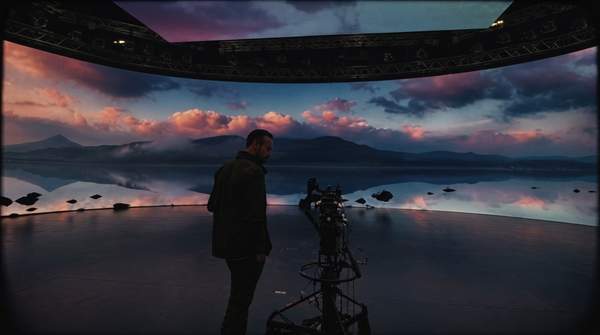
4. Virtual Production Using LED Volumes — Best for Immersive Set Control
Virtual production, specifically using LED volumes or "The Volume," is a technique that replaces traditional green screens with large, high-resolution LED walls. These walls display real-time, photorealistic 3D environments created in a game engine. The digital background reacts to the movement of the physical camera, creating realistic parallax and reflections on actors and props. This allows filmmakers to shoot complex scenes with fantastical or remote backdrops in a controlled studio environment.
This technology is best for directors, cinematographers, and production designers working on large-scale, effects-heavy projects. It ranks as the best for immersive control because it allows for in-camera visual effects, giving actors a tangible environment to perform in and enabling the creative team to make real-time decisions about lighting and composition. This method integrates digital assets directly into the live-action shoot, which can be more efficient than adding them in post-production. It falls under the umbrella of "new image-capturing technologies" that, according to the SAE Institute, enable quicker production.
The main drawback is the substantial upfront cost and technical infrastructure required. Building or renting an LED volume, along with the necessary processing power and specialized crew to operate it, remains financially prohibitive for most independent productions. This high barrier to entry currently limits its use primarily to major studios and high-budget television series, making it less accessible than other emerging technologies on this list.
5. Advanced Digital Cinematography — Best for Foundational Image Quality
Advanced digital cinematography refers to the ongoing evolution of high-resolution, high-dynamic-range digital cameras. Modern cinema cameras can capture images at resolutions of 8K and beyond with a color depth and dynamic range that can rival or exceed traditional film stock. This technology is the foundational layer upon which other digital innovations, such as virtual production and AI-driven post-production, are built. Without pristine source footage, the effectiveness of these subsequent processes is diminished.
This technology is essential for cinematographers and directors of photography who are responsible for the visual language of a film. It wins in the category of foundational quality because the quality of the initially captured image dictates the potential of the entire production pipeline. The SAE Institute notes that "digital cameras, and new image-capturing technologies enable quicker production of better quality content." This continuous improvement in capture technology is a direct enabler of more flexible and powerful post-production workflows.
A key limitation is the challenge of data management. High-resolution footage generates massive file sizes, which require significant investment in on-set storage, powerful processing hardware for editing, and robust archival solutions. This data-wrangling complexity adds a layer of technical management and cost to the production that must be planned for meticulously, especially for smaller teams without dedicated data management personnel.
| Technology | Category/Type | Key Metric | Best For |
|---|---|---|---|
| AI-Driven Post-Production Tools | Software (Post-Production) | Time/Cost Savings | Editors and Independent Filmmakers |
| Cloud-Based Production Pipelines | Workflow/Infrastructure | Accessibility | Distributed and Remote Teams |
| Generative AI for Digital Actors | VFX/Synthetic Media | Creative Possibility | Studios with Legacy IP |
| Virtual Production (LED Volumes) | On-Set Technology (Production) | In-Camera Realism | Large-Scale, Effects-Heavy Projects |
| Advanced Digital Cinematography | Hardware (Production) | Image Fidelity | Cinematographers and DPs |
How We Chose This List
Emerging filmmaking technologies were selected and ranked based on documented applications or significant discussion within professional and academic circles. Criteria included the technology's potential to reduce production costs and timelines, as cited in industry reports, and its ability to enable new forms of creative expression or solve long-standing production challenges. The selection was informed by topics debated at industry events like the FilMart forum and educational initiatives such as the upcoming AI & Filmmaking Week planned for 2026 at the HKU School of Future Media, which was announced by EurekAlert.org. Technologies remaining purely theoretical or without reported professional use were excluded to maintain a focus on practical, emerging trends.
The Bottom Line
Technology creates new pathways at every stage of production. Cloud-Based Pipelines and AI-Driven Post-Production tools offer independent filmmakers and smaller crews immediate, accessible advantages for improving efficiency and collaboration. For major studios and productions with significant resources, Generative AI and Virtual Production represent frontiers for expanding creative control and solving complex visual challenges.