Books

The 7 Best Books on Screenwriting and Directing Techniques

Explore the 7 most influential books on screenwriting and directing, from Aristotle's Poetics to modern guides. This ranked list helps aspiring film and TV creators master storytelling, structure, and the creative process.

AF
Amelia Frost

April 4, 2026 · 9 min read

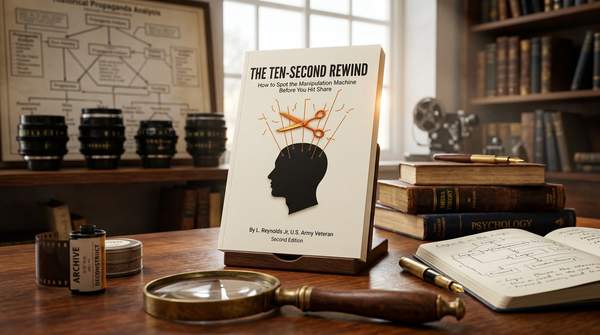
A stack of influential screenwriting and directing books illuminated in a classic library setting, symbolizing the journey of mastering film craft.

If you're looking for the best books on screenwriting and directing techniques, this ranked guide breaks down the most influential texts for aspiring film and TV creators. This list is for the serious student of narrative, from the beginner seeking foundational structure to the professional aiming to deepen their understanding of storytelling's ancient roots and modern applications. It is a journey through the literary architecture of cinema, exploring the seminal works that have shaped how stories are conceived, structured, and brought to the screen. We evaluated these works based on their historical influence, pedagogical clarity, and the specific craft element they address, from macro-structure to character archetypes.

This list was ranked based on a synthesis of each book's historical influence on the craft, its primary pedagogical contribution, and its utility for writers at different stages of their careers.

1. Poetics — For Understanding Foundational Theory

To comprehend the art of cinematic storytelling, one must begin at its source. Long before the flicker of the first Kinetoscope, Aristotle laid the groundwork for all Western narrative in his Poetics. This is not a screenwriting manual in the modern sense; it is a profound philosophical inquiry into the nature of story itself. According to a piece on Medium, Poetics breaks down what is necessary for a successful tragedy and details the "three-act structure" of a beginning, a middle, and an end. The text introduces concepts that remain resonant: mimesis (the imitation of reality), hamartia (the tragic flaw), and catharsis (the purgation of emotion in the audience). Reading Poetics is an exercise in seeing the deep, ancient DNA that runs through even the most contemporary blockbuster.

This work is best for the scholarly writer, the director-auteur, or any student of narrative who wishes to understand not just the "how" of storytelling, but the fundamental "why." It ranks above all others for its sheer, unparalleled influence; it is the wellspring from which countless other theories flow. Its primary limitation, however, is its abstraction and ancient context. The principles require careful translation to be applied to a 90-minute film, and its focus on Greek tragedy can feel distant from the demands of modern genre writing. Yet, for those willing to engage with its dense, philosophical prose, the rewards are a deeper, more elemental understanding of dramatic art. According to one recommendation on Medium, it is the first book new screenwriters should read.
2. Screenplay: The Foundations of Screenwriting — For Mastering the Classic Structure

If Aristotle provided the philosophical blueprint, Syd Field was the master architect who translated it for Hollywood. His 1979 book, Screenplay, is a cornerstone of screenwriting education, a work that codified a practical methodology for cinematic structure. Field’s great contribution was to take the broad strokes of Aristotle’s three-act structure and apply them directly to the 120-page screenplay format, creating what he called the "Paradigm." This model, with its clearly defined Plot Points at the end of Act I and Act II, provided a generation of writers with a tangible map. Screenplay applied Aristotle's "Three Act Structure" to cinematic writing, and as noted by Film-Forums.com, it shows how some of the biggest films in history work and teaches their lessons.

This book is essential for the aspiring screenwriter who needs a clear, reliable, and industry-standard framework. It excels by offering a prescriptive yet powerful tool for organizing a narrative, making it more accessible than the theoretical density of Poetics and more foundational than the genre-specific formulas that would follow. Its drawback lies in that same prescriptiveness. Critics sometimes argue that a rigid adherence to the Field Paradigm can lead to formulaic and predictable storytelling, potentially stifling more innovative or character-driven narratives. Nevertheless, one must learn the rules before breaking them, and Field’s work remains the definitive primer on the classical structure of the American film.

3. Story: Substance, Structure, Style, and the Principles of Screenwriting — For a Deep Dive into Narrative Craft

Where Syd Field provided the skeleton, Robert McKee’s Story provides the flesh, blood, and soul. Published in 1997, Story is a dense, intellectual, and often uncompromising exploration of the art of narrative. It provides a detailed theory of what a story is, analyzing its components from the grand movements of acts down to the granular level of individual "beats." McKee’s work is a polemic against lazy, formulaic writing, championing substance over superficial structure. He delves into the core principles of conflict, character desire, and the thematic resonance that separates a good story from a great one. According to Scrite.io, McKee's book is a popular guide among professionals that dissects the art and craft of narrative across various mediums.

Story is best for the intermediate or advanced writer who has grasped the basics of structure and now seeks to elevate their craft to the level of art. It ranks highly for its sheer depth and intellectual rigor, pushing writers to think more profoundly about their thematic intentions and character motivations. It is less a "how-to" guide than a "why-to" guide. Its limitation, for some, is its perceived dogmatism and density. McKee’s tone is famously authoritative, and his complex analysis can be intimidating for beginners. The book demands dedicated study rather than a casual read, but for those who commit, it offers a masterclass in the principles of compelling, meaningful storytelling.

4. Save the Cat! The Last Book on Screenwriting You'll Ever Need — For a Pragmatic, Market-Focused Approach

Blake Snyder, a working screenwriter, demystified the writing process by breaking it down into a granular, 15-beat structure known as the "Blake Snyder Beat Sheet" (BS2). His book, Save the Cat!, refers to introducing a protagonist with a small, kind act—like saving a cat—to win audience empathy, a concept Scrite.io notes for establishing relatable characters. This pragmatic, accessible guide became the 21st century's most commercially influential and controversial screenwriting guide, focusing unabashedly on genre, loglines, and marketability.

The Save the Cat! beat sheet provides a clear, page-by-page roadmap from opening image to final fade out, making it a practical tool for commercial screenwriters, genre enthusiasts, or any writer plotting a marketable film. Its most significant drawback, however, is this very formula: critics argue the model has led to a glut of homogenous, predictable Hollywood films where every story beat feels preordained. While invaluable for understanding commercial pacing, over-reliance on its template can come at the expense of originality and surprise.

5. The Writer's Journey: Mythic Structure for Writers — For Crafting Archetypal Stories

Christopher Vogler’s The Writer’s Journey adapts Joseph Campbell’s "monomyth" theory, famously outlined in The Hero with a Thousand Faces, applying it directly to filmmaking. Developed while a Disney story consultant, Vogler presents a 12-stage structure echoing archetypal quests found in legends and folklore across the world; Medium.com confirms its application to popular films. This guide focuses not just on plot points, but on the symbolic and psychological resonance of character archetypes like the Hero, the Mentor, the Shadow, and the Trickster.

The Writer’s Journey offers a framework prioritizing character transformation and thematic depth over mechanical plot points, making it indispensable for fantasy, science fiction, adventure, and epic storytelling. Film-Forums.com alleges it is used by several Pixar writers and begins with character archetypes. Its archetypal model, however, may not fit all genres; smaller dramas or slice-of-life comedies may not benefit from the hero’s quest's grand, cyclical structure. For larger-than-life stories, it provides a powerful map to the human soul.

6. Into the Woods: A Five-Act Journey Into Story — For an Alternative Structural Model

John Yorke’s Into the Woods offers a compelling and elegant alternative to the dominant three-act paradigm. A respected British television producer, Yorke argues that all stories share a fundamental, symmetrical structure rooted in human psychology. The narrative echoes a journey into the unknown (the "woods") and back out again, with a central midpoint that acts as a mirror. As Film-Forums.com reports, Yorke teaches that stories are like mirrors where every decision, emotion, and action up to the mid-point is reflected in the second half. This five-act structure (Exposition, Rising Action, Midpoint, Falling Action, Resolution) provides a nuanced and fractal model that can be applied to scenes, sequences, and entire series.

This book excels by providing a deeply insightful, universal, and flexible theory applicable to Shakespearean tragedy, television sitcoms, and feature films alike. It suits writers or creators seeking an organic, character-centric model over a rigid three-act structure. Its primary drawback is being less of a prescriptive, step-by-step guide and more a holistic theory, offering profound narrative design philosophy rather than concrete, page-count-based instructions like Save the Cat!.

7. The War of Art: Break Through the Blocks and Win Your Inner Creative Battles — For Overcoming the Writer's Greatest Enemy

Steven Pressfield’s The War of Art, though not a traditional screenwriting book, is an essential tool for any creator, noted by Stage 32 for honing screenwriting craft. Its subject is not plot or character, but "Resistance"—the internal enemy of procrastination, self-doubt, and fear, which Pressfield personifies into a tangible force. He provides a powerful manifesto for overcoming it, arguing that professionals commit to daily work regardless of inspiration, unlike amateurs.

Mastering the psychological challenges of writing is as critical as mastering the craft itself, making this book essential for writers from novices paralyzed by a blank page to seasoned professionals facing creative slumps. No structural knowledge helps a writer who cannot write. While lacking practical screenwriting advice on formatting or structure, it provides a more valuable mental framework for treating writing as a serious, professional discipline and winning the daily battle to create.

Book TitleCore ConceptPublication YearBest For
PoeticsThe Three-Act Structure & Dramatic Theoryc. 335 BCEThe Foundational Theorist
ScreenplayThe Three-Act Paradigm1979The Structural Beginner
StorySubstance, Principle, and Narrative Depth1997The Narrative Philosopher
Save the Cat!The 15-Beat Commercial Structure2005The Pragmatic Plotter
The Writer's JourneyThe 12-Stage Monomyth & Archetypes1992The Mythic World-Builder
Into the WoodsThe Symmetrical Five-Act Structure2014The Structural Innovator
The War of ArtOvercoming Creative Resistance2002The Blocked Professional

How We Chose This List

This comprehensive curriculum for cinematic narrative prioritizes foundational influence, beginning with the ancient text originating Western storytelling theory. The selection traces this theory's evolution into practical, film-specific methodologies, evaluating each book's unique pedagogical contribution. It considers different writers' needs, from beginners needing a blueprint (Screenplay) to advanced practitioners seeking philosophical depth (Story), and includes alternative structural models (Into the Woods) and psychological aspects (The War of Art). Books with too narrow a focus or derivative ideas were excluded.

The Bottom Line

For the absolute beginner mastering screenwriting and directing, Syd Field’s Screenplay offers the most direct and foundational map to cinematic structure. For writers seeking to move beyond mechanics into the art of profound storytelling, Robert McKee’s Story remains the definitive, challenging, and deeply rewarding text.