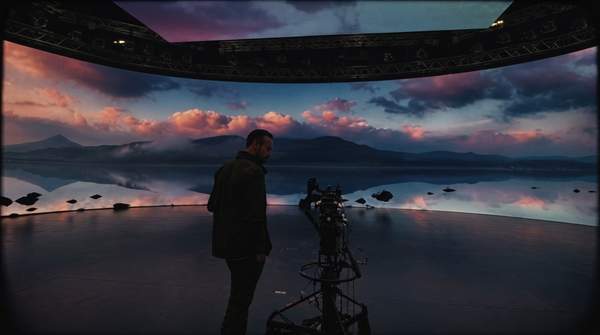
Modern virtual production, leveraging high-resolution LED screens and game engine technology, gives creatives direct control over an entire scene. This fundamentally changes how film art departments realize visual concepts, allowing for immediate adjustments and comprehensive environmental design, according to Magnopus. This technological shift impacts roles and responsibilities in film production art departments in 2026, particularly between the Production Designer and Art Director.
However, the Production Designer remains the undisputed head of the art department. Yet, the Art Director's extensive operational responsibilities are equally vital for realizing that overarching vision. This inherent tension between conceptual leadership and practical execution forms a critical dynamic within contemporary film production.
Therefore, the evolving landscape of film production increasingly demands a nuanced understanding of these distinct yet interdependent roles to achieve cinematic excellence efficiently.
Understanding the Film Art Department Structure
The film art department establishes and maintains a production's visual integrity, ensuring every element aligns with the director's vision. This complex structure encompasses roles from conceptualization to on-set execution. A key function involves creating a comprehensive production guide covering design continuity and clearances, as detailed by BlockReelDAO. This guide establishes the visual foundation.
Within this structure, the Production Designer leads, defining the overall aesthetic. However, the operational success of this vision relies on a team of specialists, including Art Directors, set designers, prop masters, and graphic artists. The integration of a Virtual Art Department (VAD) adds a layer of digital creation and management, working in tandem with physical production. A fundamental shift towards hybrid production models, where digital assets are as crucial as physical builds, is evident.
The Production Designer: Visionary, Logician, and Budget Master
The Production Designer, as the head of the art department, plays a significant role in calculating the cost of materials and resources, including CGI elements, according to NYFA. This financial oversight is crucial for maintaining a project within its budgetary constraints. Production designers also deal with comprehensive filmmaking logistics, encompassing schedules, budgets, and staffing for the entire art department, as reported by EN. This blend of creative and administrative duties reveals the position's inherent complexity.
Beyond conceptualizing a film's visual concept, the Production Designer ensures each shooting location is perfect, prepared, and aligned with the film's vision. This requires deep understanding of practical execution alongside artistic direction. The Production Designer's role thus extends beyond pure conceptualization into significant logistical and budgetary management, blurring traditional lines between high-level vision and practical execution within the art department.
The Art Director: Bringing Vision to Life On Set
Art directors realize the Production Designer's vision by translating conceptual designs into tangible sets and environments, according to ScreenSkills. This involves a direct, hands-on approach to the film's visual identity. Art directors are responsible for designing sets, overseeing construction workers and other artists, and playing a part in determining the overall aesthetic of a movie production, as explained by StudioBinder. Their involvement ensures the creative brief's practical manifestation.
Despite the Production Designer being the 'head,' Art Directors also manage the overall visual aspects of a production. This creates an inherent ambiguity in who holds ultimate creative authority over the final visual aesthetic. Art Directors, through set design and construction oversight, emerge as critical co-creators of the tangible visual aesthetic, not mere implementers. While the Production Designer sets the overarching vision, the Art Director's meticulous operational execution is paramount for the practical success of a film's visual identity.
Why Operational Mastery Is Paramount in 2026
The distinction between the Production Designer's conceptual leadership and the Art Director's operational mastery becomes particularly salient with the rise of virtual production technologies. Virtual production, by granting 'creatives control over an entire scene,' fundamentally shifts the power dynamic. It enables Art Directors to directly realize complex visions with unprecedented autonomy, allowing for immediate visual iteration and refinement on set, reducing reliance on post-production corrections.
Companies embracing virtual production are not just adopting new tools; they are empowering Art Directors with direct control over scene realization. This challenges the Production Designer's traditional conceptual dominance and demands a re-evaluation of art department leadership. The Art Director's ability to execute a vision with precision and adaptability is more critical than ever. The practical success of a film's visual identity hinges more on the AD's meticulous operational execution than the PD's initial concept, especially when real-time adjustments are possible.
FAQ
What are the key roles in a film art department?
Beyond the Production Designer and Art Director, a film art department includes several specialized roles. These often include Set Designers who draft and build sets, Prop Masters who source and manage props, and Graphic Artists who create visual elements like signs and logos. Model Makers and Scenic Artists also contribute to the physical construction and artistic finishes of sets.
How is the art department structured in film production?
The art department operates under the Production Designer, who is responsible for the overall visual concept and budget. Reporting to the Production Designer are one or more Art Directors, who manage specific sets or aspects of the design. Below the Art Directors are various supervisors for props, construction, and set decoration, each leading their own teams of artists and technicians to execute the detailed visual plan.
What skills are needed for film production art department jobs?
Film production art department jobs require a blend of artistic talent, technical proficiency, and organizational skills. For instance, Set Designers need strong drafting abilities and knowledge of construction, while Prop Masters require research and procurement skills. Strong communication, problem-solving, and the ability to work collaboratively under pressure are also essential across all roles in the department.
If virtual production continues its rapid integration, Art Directors, particularly those adept with real-time rendering and LED stage technology, will likely see their operational mastery become the primary driver of a film's visual success by late 2026, as companies like Magnopus push technological boundaries.