A script supervisor is the crew member who keeps a film coherent: they track every visual and auditory detail across takes and shooting days so the footage can be cut together into a continuous story. Their work spans all three phases of production—pre-production analysis, on-set monitoring, and post-production documentation—and the notes they produce are what the editor relies on to assemble scenes shot out of sequence into a film that makes sense. Understanding that chronological workflow, and the specific documents produced at each stage, is the key to understanding why the role exists at all.
By the end of this guide you should be able to name what the supervisor delivers in each phase, what they watch for on every take, and how their paperwork protects the production when filming order and story order diverge. The guide covers general film and television production; it is not a training manual for entering the role, and it does not address salary, career paths, or genre-specific variations such as animation or unscripted television.
Introduction: The Unsung Hero of Film Continuity
Films are rarely shot in story order. A conversation filmed today may be intercut with a reaction shot captured two weeks later, and a single scene can be assembled from takes recorded on entirely different days. The script supervisor, also called the continuity supervisor, is the person who makes those pieces match. As a member of the crew, they oversee the continuity of dialogue and action during a scene, and they may also be called upon to ensure wardrobe, props, set dressing, hair, and makeup stay consistent from scene to scene.
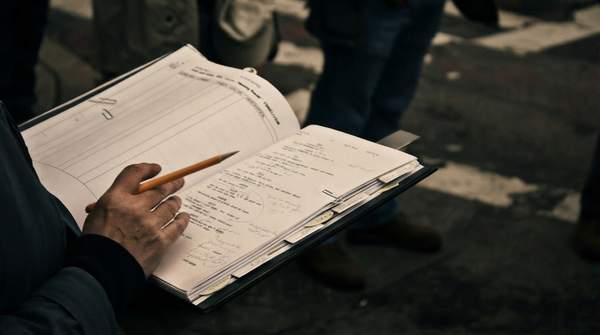
The role is often described as a security net for department heads, producers, and the director. Because a production can have dozens of takes of a single shot, someone must remember which hand the actor held the coffee cup in last week and at what angle the set dresser placed the paper on the desk the day before. The script supervisor keeps detailed notes on each take so those details survive across days, departments, and out-of-sequence shooting.
The position carries real weight in the crew hierarchy. The script supervisor is a department head, plays a crucial role in the shooting of a film, and typically receives credit in the closing credits of a motion picture. That billing reflects a simple reality: the supervisor's notes are the thread that connects hundreds of fragments of footage into a single, watchable story.