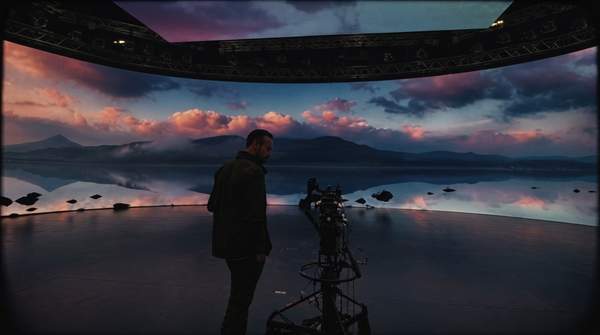
Building an 80 ft. diameter, 30 ft. height LED volume with rendering equipment could cost $8-16 million, excluding labor, according to Copilotco. Virtual production promises unprecedented creative freedom and efficiency. However, its implementation often comes with multi-million dollar price tags and specialized technical demands. While rapidly becoming a standard for high-end filmmaking, its widespread democratization requires significant advancements in cost reduction and accessibility. This economic hurdle limits the technology's full benefits to a privileged few.
OVERVIEW OF VIRTUAL PRODUCTION WORKFLOW
Virtual production integrates physical and digital elements in real-time during filming, allowing immediate visualization of final shots. This process promises significant efficiency gains and reduced reshoots, according to Deloitte. However, the multi-million dollar investment for an LED volume, or weekly rentals up to $400,000 as detailed by Copilotco, creates a cost-benefit paradox, making these benefits largely inaccessible. This financial scale currently bottlenecks the technology's revolutionary impact. Only blockbusters can fully integrate actors with virtual environments, enhancing performance and creative control, while smaller productions remain confined to pre- and post-production visualizations, according to CG Spectrum. This disparity prevents widespread adoption beyond top-tier filmmaking.
KEY STAGES OF VIRTUAL PRODUCTION WORKFLOWS
The virtual production workflow typically begins in pre-production, focusing on digital asset creation and virtual scouting. This initial phase involves designing and building 3D environments for projection onto LED volumes or for visualization. Integrating these virtual production workflow components early allows for meticulous planning and iteration before principal photography.
During production, camera tracking systems synchronize the physical camera's movement with the virtual environment, ensuring seamless integration between live-action and digital elements. Actors perform within the LED volume, interacting with the virtual world displayed around them. This real-time feedback loop allows directors to make immediate creative decisions on set, refining performances and visual compositions.
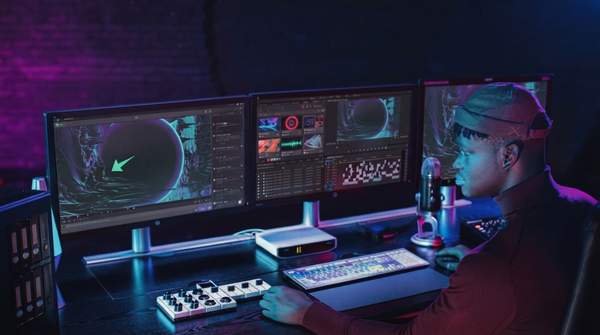
Post-production in virtual environments often involves refining digital assets, compositing, and color grading, though the aim is to minimize these traditional steps. The goal is to capture as much of the final image in-camera as possible. This streamlined approach contributes to efficiency gains. This integrated approach, while complex, fundamentally shifts traditional filmmaking paradigms, demanding a more front-loaded creative process.
THE FINANCIAL PITFALLS OF VIRTUAL PRODUCTION
Despite promises of enhanced efficiency, the financial demands of full-scale virtual production remain a significant hurdle. Beyond the $8-16 million cost for an 80 ft. LED volume, according to Copilotco, weekly rentals range from $100,000 to $400,000. While virtual production promises to reduce expensive reshoots and increase efficiency, according to Deloitte, these staggering weekly costs often mean the initial investment outweighs potential long-term savings. The benefits designed to save money become inaccessible due to prohibitive entry costs.
STRATEGIES FOR ACCESSIBLE VIRTUAL PRODUCTION
For productions with limited budgets, focusing on pre-production visualization can provide some benefits of virtual production without the high cost of an LED volume. Utilizing game engines for previs and techvis allows filmmakers to plan shots, block scenes, and iterate on virtual environments. This approach enhances production planning without requiring real-time on-set integration.
Exploring smaller, modular LED setups or specialized virtual production studios could also offer more accessible options. These smaller configurations might not provide the expansive immersive experience of a full volume but can still facilitate real-time compositing for specific shots. Companies that fail to invest in accessible, scalable virtual production solutions risk widening the gap between high-budget and independent filmmakers, potentially stifling innovation and creative diversity in the industry.
Collaborative models and shared studio spaces could also help distribute the financial burden. By pooling resources, multiple productions might gain intermittent access to virtual production facilities. This approach could foster greater experimentation and broader adoption of the technology across different budget levels.
FREQUENTLY ASKED QUESTIONS
What are the key stages of virtual production?
A typical virtual production workflow includes distinct stages such as Pre-production (Development), the Virtual Art Department (VAD), and Visualization. These stages involve creating digital assets, designing virtual environments, and planning camera movements, ensuring a cohesive vision before filming begins, according to CG Spectrum.
How does virtual production differ from traditional filmmaking?
Traditional filmmaking typically involves a linear process where visual effects are added during post-production, often after principal photography is complete. Virtual production, conversely, integrates digital environments and effects directly into the filming process in real time. This allows filmmakers and actors to interact with virtual sets and make immediate creative decisions on set, reducing the need for extensive reshoots, as noted by Deloitte.
What are the benefits of virtual production?
Virtual production offers several key benefits, including enhanced production planning and increased shooting efficiency. By visualizing complex scenes in real time, directors and cinematographers can make immediate creative adjustments. This process also significantly reduces the number of expensive reshoots, optimizing both time and budget during the production phase, according to Deloitte.
THE BOTTOMLINE ON VIRTUAL PRODUCTION COSTS
The current financial model, with multi-million dollar build costs and high weekly rentals, creates a significant barrier, confining virtual production's efficiencies and creative freedom to blockbuster budgets. Without advancements in accessibility and scalability, the two-tiered filmmaking industry will solidify, though by Q4 2026, demand for cost-effective virtual production solutions will likely intensify, pushing technology providers to innovate beyond high-end studio models.