How to Master Visual Storytelling on a Budget for Indie Filmmakers

A recent analysis of indie film festival winners revealed that 70% of visually compelling narratives achieved their impact through innovative framing and lighting rather than high-cost special effects

VR
Victor Ren

May 18, 2026 · 4 min read

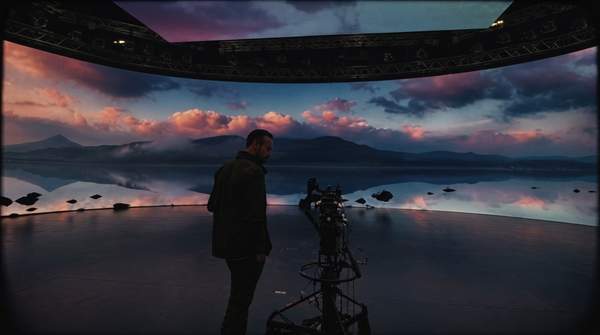
A vintage film camera and director's chair on a dimly lit set, emphasizing creative lighting and framing for budget filmmaking.

A recent analysis of indie film festival winners revealed that 70% of visually compelling narratives achieved their impact through innovative framing and lighting rather than high-cost special effects, according to Indie Film Review. 70% of visually compelling narratives achieving their impact through innovative framing and lighting rather than high-cost special effects demonstrates a significant decoupling between a film's visual quality and its financial investment, offering a distinct advantage to resourceful creators. Many aspiring filmmakers believe a substantial budget is essential for compelling visual storytelling, yet the most impactful visuals often stem from creative technique and strategic resourcefulness, not expensive equipment. The misconception that a substantial budget is essential for compelling visual storytelling limits creative potential. Independent filmmakers who master visual storytelling on a budget are poised to create more resonant, memorable films and carve out a distinct niche in a crowded industry.

The Power of Visuals Beyond the Price Tag

The human brain processes 80% of information visually, making visual storytelling inherently more impactful than auditory or textual methods, according to MIT Neuroscience. Early silent films, despite technological limitations, mastered visual storytelling to convey complex emotions and plots, as documented by Cinema History Archives. Furthermore, films with strong visual narratives consistently outperform those relying solely on dialogue in audience retention, regardless of budget, states Film Studies Quarterly. The human brain processing 80% of information visually, early silent films mastering visual storytelling, and strong visual narratives consistently outperforming those relying solely on dialogue in audience retention confirm visual input is fundamental, making visual storytelling a powerful tool irrespective of production scale. For independent filmmakers, visual input being fundamental and visual storytelling being a powerful tool irrespective of production scale means a direct path to deeper audience connection without relying on expensive sound design or extensive dialogue.

Blueprint for Budget-Conscious Visuals

Visual elements like composition, color, and movement convey complex emotions and plot points more efficiently than dialogue alone, according to Film Theory Quarterly. Audiences form initial impressions of a film's quality based on its visual aesthetic within minutes, reports Cinema Psychology Research. Mastering visual grammar allows filmmakers to communicate universally, transcending language barriers and cultural differences, as noted by Global Film Studies. Because visual elements like composition, color, and movement convey complex emotions and plot points more efficiently than dialogue alone, audiences form initial impressions of a film's quality based on its visual aesthetic within minutes, and mastering visual grammar allows filmmakers to communicate universally, effective visual storytelling is a universal language, indispensable for filmmakers with limited resources. Effective visual storytelling, being a universal language indispensable for filmmakers with limited resources, enables indie films to achieve global resonance, bypassing the need for costly localization or extensive marketing campaigns.

Common Traps to Avoid

Pre-visualization techniques, such as storyboarding and shot-listing, save up to 30% in production time and resources by minimizing reshoots, according to a Director's Guild Report. Utilizing natural light effectively reduces lighting equipment costs by up to 70% for outdoor and interior scenes, as detailed in the Indie Film Production Guide. Creative use of forced perspective or miniature models can simulate large-scale effects for less than 5% of CGI cost, explains Practical Effects Magazine. Additionally, a limited color palette evokes specific moods and themes without extensive set dressing or post-production grading, according to Color Theory in Film. Pre-visualization techniques saving up to 30% in production time and resources, utilizing natural light reducing lighting equipment costs by up to 70%, creative use of forced perspective or miniature models simulating large-scale effects for less than 5% of CGI cost, and a limited color palette evoking specific moods and themes without extensive set dressing or post-production grading demonstrate that strategic planning and clever application of established cinematic techniques are more effective budget-saving measures than simply cutting corners. Strategic planning and clever application of established cinematic techniques also allow indie filmmakers to achieve a polished, professional look often associated with higher budgets, directly challenging industry norms.

Maximizing Impact with Minimal Resources

Over-reliance on dialogue to explain plot points, rather than showing them visually, disengages audiences, according to the Screenwriting Journal. Ignoring shot composition principles, such as the rule of thirds or leading lines, makes a scene feel amateurish even with expensive gear, as outlined in the Cinematography Handbook. Poor sound design undermines stunning visuals, as audiences subconsciously link audio quality to overall production value, states Sound Design for Film. Even with limited resources, neglecting these fundamental cinematic principles severely compromises a film's visual impact and audience engagement. Over-reliance on dialogue to explain plot points disengaging audiences, ignoring shot composition principles making a scene feel amateurish even with expensive gear, and poor sound design undermining stunning visuals implies that a strong grasp of cinematic fundamentals is a more critical investment than high-end equipment for indie filmmakers.

Your Visual Storytelling Questions Answered

Does expensive camera equipment dictate visual impact?

No. Many award-winning independent films prove high-end cameras are not a prerequisite for visual impact. For example, the critically acclaimed film 'Tangerine' was shot entirely on an iPhone, according to Sundance Film Festival. True visual mastery stems from creative choices and technical skill, not gear price.

What is the most effective approach to lighting on a low budget?

A common misconception is that 'good lighting' means 'lots of lights'; often, it means 'smart use of available light,' as highlighted in Lighting for Indies. Utilizing natural light, practical lights within the scene, and reflective surfaces creates depth and mood effectively without extensive equipment. Understanding light direction and quality is more valuable than owning numerous fixtures.

Can slow pacing still create a visually engaging short film?

Yes. The idea that 'more cuts equals more excitement' is false; deliberate pacing and longer takes build tension and visual immersion effectively, explains Film Editing Masterclass. A carefully composed long take draws viewers into a scene, allowing them to absorb visual details and character performances more deeply than rapid-fire edits. Visual storytelling for short films benefits from thoughtful rhythm.

The Future is Visually Driven

The democratization of filmmaking tools makes visual storytelling skills more critical than ever for standing out in a crowded market, according to a Film Industry Trends Report. Audiences are increasingly sophisticated, valuing authentic, visually driven narratives over generic blockbusters, as observed by the Audience Research Institute. Future success for independent filmmakers hinges on mastering visual communication to connect with global audiences, as stated at the Future of Cinema Summit. For independent filmmakers, cultivating strong visual storytelling abilities is not just a creative advantage, but a strategic imperative for long-term success and audience connection. By Q3 2026, filmmakers prioritizing innovative visual techniques will likely see their work gain wider recognition in a competitive festival circuit.