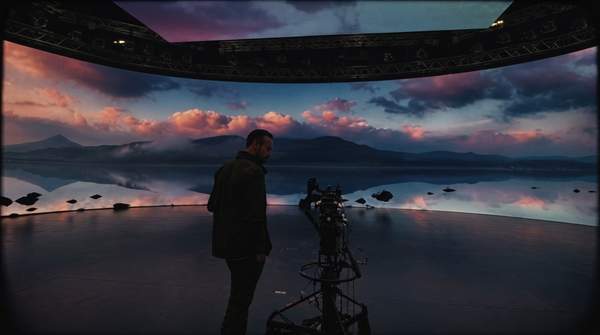
From the grimy streets of Gotham to the opulent ballrooms of Bridgerton, every visual detail transporting an audience into a film's world is meticulously crafted by a production designer. This intricate artistry shapes a story's setting and deeply influences audience perception, transporting viewers through time and enhancing narratives via style and character representation, according to Inquiries Journal. Production design is essential for a film's success and narrative depth, but its profound influence often remains invisible to the average viewer. While crucial for authentic and believable worlds, its impact is frequently subconscious, blending seamlessly into storytelling. As audiences increasingly demand immersive and authentic storytelling, the subtle yet critical artistry of production designers will become more explicitly valued, even if their work continues to operate beneath conscious recognition.
The Unseen Architect: Defining Production Design
Production designers join projects during early pre-production, conducting visual research and reading scripts, according to Saturation. They collaborate closely with directors and producers to design all visual aspects, including set designs, locations, graphics, props, lighting, camera angles, and costumes, as reported by Prospects Ac Uk. This early, comprehensive involvement ensures the aesthetic vision aligns with the narrative from the outset, establishing a cohesive visual blueprint for the entire production. The role demands artistic interpretation and practical execution, bridging abstract ideas with tangible on-screen realities. This foundational input means the production designer's vision dictates the visual language, profoundly impacting how audiences perceive the story and characters.
Crafting Narrative Through Visuals
Production designers are visual storytellers, translating abstract script concepts into tangible, narrative-driving environments. Their work provides layers of visual information, enriching the story beyond dialogue; a character's living space, for instance, can reveal personality or economic status without a single line of script. These environments are not mere backdrops but integral to the narrative, conveying mood, tone, and historical context. This deliberate construction ensures every on-screen element contributes to storytelling. A film’s immersive quality hinges on the production designer’s ability to create an authentic and narratively resonant world, making them primary architects of audience suspension of disbelief. The implication is that without this visual foundation, a film risks losing its emotional impact and narrative coherence, regardless of script quality.