Retail Media's CTV Pivot: Fox's $22B Roku Acquisition

Fox acquired Roku for $22 billion, a move that fundamentally reshapes how media companies and retailers battle for advertising control.

LH
Leo Hartmann

June 30, 2026 · 4 min read

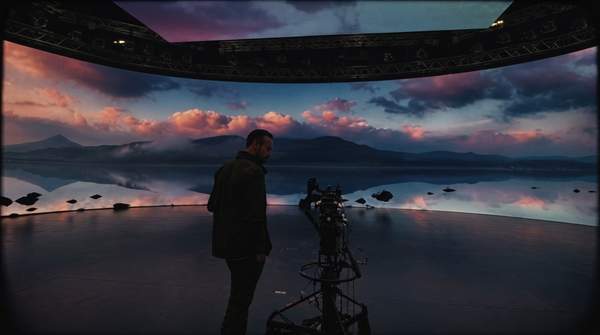
Media and retail leaders finalize a major deal, symbolizing the convergence of traditional media and digital advertising platforms in the CTV era.

Fox acquired Roku for $22 billion, a move that fundamentally reshapes how media companies and retailers battle for advertising control. This monumental acquisition, reported by Omdia and Deadline, ushers in an era where traditional media giants make aggressive plays to dominate the advertising ecosystem. It marks a significant consolidation in the digital media space, demanding a re-evaluation of brand budget allocation.

Major media and retail giants are spending billions to acquire connected TV (CTV) platforms and integrate them with first-party data. Yet, the broader retail media ecosystem will still largely depend on strategic partnerships rather than outright acquisitions for expansion, creating a bifurcated market for influence and control.

The advertising landscape will consolidate around a few data-rich, vertically integrated retail-media-CTV powerhouses. This forces others to adapt through strategic alliances or risk marginalization. This convergence of retail and media assets fundamentally reshapes the digital advertising supply chain.

Retail Media's Strategic Pivot to CTV

Walmart agreed to acquire Vibe.co, a self-service connected TV advertising platform, for over $1 billion, according to Digiday. This move follows Walmart's earlier purchase of VIZIO, which integrated VIZIO's operating system into its retail media strategy, rolling out VIZIO OS onto Onn TVs, as noted by Omdia. Walmart is now integrating Vibe's service with its vast shopper data, closed-loop measurement, and existing media ecosystem, including Vizio. This creates a comprehensive advertising solution that directly challenges traditional ad tech's measurement and targeting capabilities.

Companies like Walmart, by integrating Vibe.co's CTV capabilities with their extensive shopper data and Vizio's OS, are not merely selling ads. They are constructing a closed-loop advertising ecosystem. This approach offers advertisers unprecedented attribution directly within the retail ecosystem, potentially rendering traditional ad platforms less appealing for performance-driven campaigns.

The Expanding Reach of CTV Audiences

  • 100 million — Roku surpassed 100 million streaming households in April, according to Deadline.
  • 3% — The Roku Channel held a 3% share of streaming viewing in March, per Nielsen’s The Gauge, as reported by Deadline.
  • 2.2% — Tubi held a 2.2% share of streaming viewing in March, also reported by Deadline.

The substantial and growing audience of CTV platforms makes them indispensable for advertisers seeking broad reach. However, the relatively small viewing shares for individual platforms like The Roku Channel and Tubi, despite Roku's broad household penetration, reveal intense competition for viewer attention within the CTV space. This fragmentation means advertisers must diversify their CTV buys to achieve true market saturation.

Beyond Owned Properties: Retail Media's New Frontier

MetricTraditional Retail Media ScopeEvolving Retail Media Scope (2026)
Ad PlacementRetailer's website, appRetailer's website, app, streaming video, social video
Data IntegrationFirst-party shopper dataFirst-party shopper data, CTV viewing data
MeasurementSales on retailer platformClosed-loop attribution across digital touchpoints

This table illustrates the expansion of retail media beyond owned properties, according to Digiday.

This evolution signifies a fundamental shift: retailers are becoming comprehensive media entities, extending their reach far beyond their traditional digital storefronts. By integrating various media channels, retailers aim to offer advertisers a more unified and attributable view of consumer journeys. This expansion forces traditional media companies to re-evaluate their value proposition, as retailers now directly compete for media budgets previously allocated elsewhere.

Strategic Choices: Acquisitions vs. Partnerships

Most retailers will rely on partnerships that combine retailer data with established CTV platforms and media infrastructure, rather than major acquisitions, according to Digiday. This approach allows retailers to expand their media offerings without the significant capital outlay and integration challenges associated with outright purchases. This strategy democratizes access to advanced retail media capabilities, preventing a complete monopolization by the largest players.

While a few giants pursue vertical integration through multi-billion dollar acquisitions like Fox's deal for Roku and Walmart's purchase of Vibe.co, the majority of retailers will find strength in strategic partnerships. This creates a bifurcated market where both scale through ownership and agility through collaboration are critical for success in the evolving advertising landscape. The choice between acquisition and partnership will define a company's speed to market and long-term data control.

AI's Role in Optimizing the Converged Ad Landscape

AI will significantly enhance campaign planning and optimization in streaming TV advertising.

  • Nearly half (43%) of buyers identify campaign planning and optimization as the area where AI can make the most immediate impact in streaming TV advertising, according to AdExchanger.

AI is poised to become an indispensable tool for advertisers, enabling more efficient and effective campaign management within the increasingly complex and data-rich CTV and retail media ecosystem. Its application can streamline audience targeting, budget allocation, and real-time performance adjustments, offering a crucial competitive edge. This suggests that companies failing to integrate AI will quickly fall behind in campaign efficacy and ROI.

The Future: Data-Driven Convergence and Strategic Alliances

  • TCL and Hisense adopted Google TV as their operating system, creating distribution challenges for Roku, according to Omdia.

The advertising landscape will likely see further consolidation and new strategic partnerships forming by Q4 2026, as companies vie for dominance in this converged retail media and CTV space.