Copywriter Niki Tibble, once thriving on smaller writing jobs like blogs and social media posts, now finds herself offering a 'final check' for AI-generated copy. This shift illustrates the rapid redefinition of creative livelihoods, where human expertise increasingly functions as an editorial safeguard rather than the primary generative force. The immediate economic pressures on individual artists are undeniable, as AI tools offer faster, cheaper alternatives across various creative domains.
The European Union is implementing robust regulations to protect creative rights from AI exploitation, but these very protections are contributing to a widening investment gap in AI compared to global competitors. This tension between safeguarding existing artistic models and fostering technological advancement presents a critical dilemma for the continent's economic future.
Based on current trends, European creative industries risk becoming highly regulated but less innovative, potentially ceding global leadership in AI-driven creativity to regions with more permissive environments. This dynamic suggests a future where the EU's protective framework, while well-intentioned, could inadvertently undermine the long-term competitiveness of its creative sectors and artists.
The profound and rapid impact of AI on traditional creative roles is forcing professionals to adapt or risk obsolescence. The EU's aggressive stance on AI copyright protection, exemplified by its opt-out provisions for data mining, is directly sacrificing the future competitiveness of its creative industries by driving away crucial AI investment and innovation.
How AI Impacts Creative Livelihoods
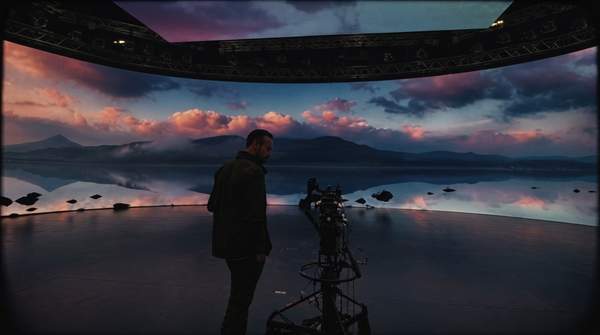
JP Allard's company, MirrorMe, demonstrates the immediate, cost-saving power of AI in creative fields by now using AI to create 'digital twins' and AI-generated advertisements, replacing traditional videography with a cheaper and faster process, according to BBC. MirrorMe's technological pivot eliminates roles that once required extensive human input and specialized equipment, streamlining content creation for businesses seeking efficiency.
Artist Aisha Belarbi is concerned about AI art becoming indistinguishable from human art and its impact on her livelihood, leading her to diversify into writing books, BBC reports. Similarly, musician Ross Stewart expresses concern that AI-generated music is being released rapidly, affecting songwriters, producers, and musicians by removing exposure and revenue opportunities. The concerns of artists like Aisha Belarbi and Ross Stewart illustrate a clear and present danger to the economic viability of traditional creative professions, necessitating a regulatory response to protect artists.
The combined effect of AI-driven efficiency and the proliferation of AI-generated content creates a challenging environment for individual creators. As MirrorMe scales its operations with AI, and as artists like Belarbi and Stewart face direct threats to their income streams, the urgency for frameworks that address these disruptions becomes increasingly apparent. This immediate shift highlights the profound and rapid impact of AI on traditional creative roles, forcing professionals to adapt or risk obsolescence.
Europe's Approach to AI Ethics and Artist Rights
Europe's Copyright Directive allows rightsholders to opt out of Text and Data Mining (TDM), a provision actively utilized by content creators and distributors. Over half of European news publishers already block AI web crawlers, according to the Center for European Policy Analysis (CEPA). The widespread adoption of opt-out mechanisms by over half of European news publishers creates a significant barrier for AI models seeking to train on vast datasets of European content.
The EU, through its Copyright Directive's opt-out provisions, is actively establishing barriers to AI data access, demonstrating a clear intent to protect existing creative content and rights holders from potential AI exploitation. The EU's active establishment of barriers to AI data access reflects its commitment to safeguarding creative rights and addressing ethical challenges. The ability for rightsholders to prevent automated systems from ingesting their content is a direct policy choice, designed to maintain control over intellectual property in the face of rapidly evolving AI capabilities.
The EU's regulatory environment, intended to shield artists and publishers from unauthorized use of their work, establishes a distinct data landscape within Europe. The directive's implementation means that a substantial portion of public-facing European digital content remains inaccessible for AI training, a direct consequence of the desire to protect existing creative models at the cost of fostering new, AI-driven creative industries that could generate future wealth and jobs.
How EU Regulations Stifle AI Innovation
The EU's restrictive data access policies are contributing to a widening investment gap in AI compared to global competitors, according to the Center for European Policy Analysis (CEPA). The widening investment gap in AI is directly linked to the limitations placed on Text and Data Mining, where over half of European news publishers block AI web crawlers, as noted earlier. The absence of readily available, high-quality data for training AI models hinders the development and scaling of European AI companies.
Based on CEPA's findings, the EU's protective copyright framework, particularly its TDM opt-out provisions, is actively creating a self-inflicted wound, trading short-term content protection for a long-term deficit in AI innovation and economic competitiveness. The EU's policy choice to prioritize short-term content protection means that while European content creators are theoretically protected from AI exploitation, European AI developers lack the foundational data necessary to build competitive models, effectively ceding this economic advantage to less regulated regions.
While protecting existing rights, these stringent policies inadvertently create a less fertile ground for AI development within the EU, potentially hindering its ability to lead in future creative technologies. The EU's current regulatory path risks leaving European creatives without the advanced AI tools and platforms that global competitors will leverage, further exacerbating the innovation gap. The EU's current regulatory path prioritizes the preservation of traditional creative models over the cultivation of a robust, AI-driven creative sector.
Future of Art and Europe's AI Competitiveness
The lack of robust AI development within Europe, a direct consequence of its restrictive data access policies, risks leaving European creatives without the advanced AI tools and platforms that could help them thrive in a globally competitive, AI-driven future. The lack of robust AI development within Europe suggests a future where Europe's creative output, while protected by regulation, may struggle to innovate and compete on a global scale against regions fostering more permissive AI development. The EU is choosing to protect existing creative models at the cost of fostering new, AI-driven creative industries that could generate future wealth and jobs.
The rapid adoption of AI by companies like MirrorMe, demonstrating significant efficiency gains in creative production, starkly contrasts with the EU's restrictive data environment, suggesting that European industries are poised to fall behind global competitors who are unburdened by similar data access limitations. While artists like Niki Tibble and Aisha Belarbi are struggling to adapt to AI's immediate disruption, the EU's current regulatory path, as highlighted by CEPA's report on data access policies, risks leaving European creatives without the advanced AI tools and platforms that could help them thrive in a globally competitive, AI-driven future.
The imbalance between stringent protection and limited innovation poses a significant long-term challenge to Europe's position in the global creative economy. By prioritizing data restrictions, the EU risks creating a scenario where its artists and creative industries are safeguarded from certain AI impacts but are simultaneously deprived of the tools and opportunities that could drive future growth and creative expression. The economic implications of this strategy could become more pronounced by Q4 2026, as the investment gap continues to widen and global AI capabilities advance rapidly outside the EU's borders.