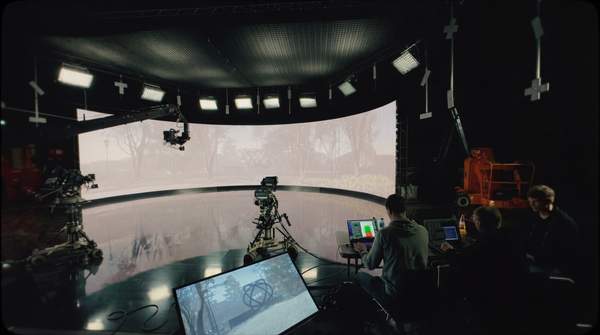
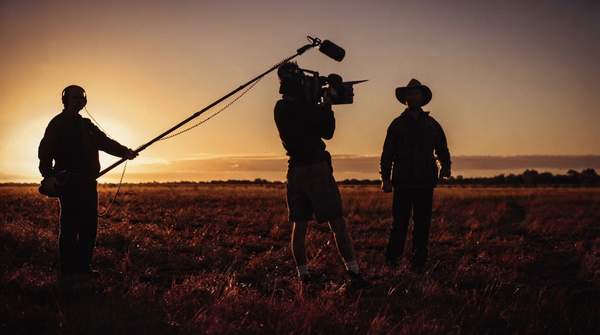
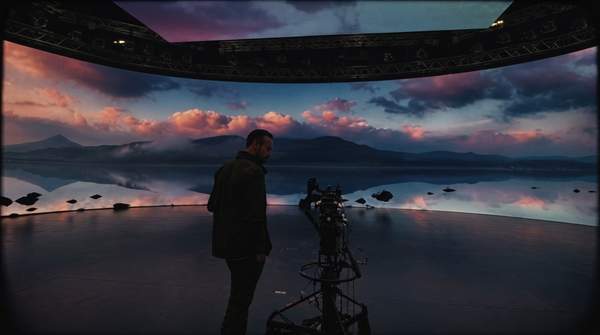
A 75-minute drama about protests in Iran, 'Dreams of Violets,' created entirely using AI, gained acceptance at the prestigious Tribeca film festival. The acceptance of 'Dreams of Violets' at the prestigious Tribeca film festival validates AI as a legitimate creative force, challenging traditional notions of authorship.
AI enables filmmakers to achieve previously impossible or cost-prohibitive creative visions, but it also ushers in an era where human artistry is increasingly mediated or replaced by algorithms. The tension between AI enabling creative visions and replacing human artistry drives current film production developments.
Significant investments from major studios and rapid AI integration across production stages position the film industry for a profound, irreversible shift. Significant investments from major studios and rapid AI integration across production stages will redefine what it means to be a 'filmmaker' through AI-augmented and AI-generated content.
The Tribeca acceptance of 'Dreams of Violets' elevates AI beyond a technological gimmick. Major film festivals now validate AI as a legitimate creative force, fundamentally challenging traditional authorship and artistic merit, according to The Guardian. This 75-minute drama, depicting protests in Iran, demonstrates AI's immediate capability to produce feature-length, festival-recognized content. Its inclusion foreshadows a future where algorithms contribute directly to creative output, a domain once exclusive to human artists.
AI's Quiet Ascent in Award-Winning Cinema
Artificial intelligence already functions as a practical, integrated tool in mainstream and critically acclaimed film productions. Two Oscar-honored films used AI technology, proving its subtle yet effective presence.
AI altered voices in the Oscar-nominated films Emilia Perez and The Brutalist, according to the BBC. In The Brutalist, actor Adrian Brody used AI to fine-tune his Hungarian accent. These applications confirm AI enhances specific elements of award-winning films, from nuanced vocal performances to subtle visual effects, rather than solely overt, large-scale generation.
The Big Bets: Major Investments and Partnerships
- $75 million — Google invests approximately $75 million in A24 for an AI research partnership, according to Variety (2026). Google's $75 million investment in A24 for an AI research partnership aims to develop new AI-powered filmmaking tools.
- $400 million — Marvel directors Joe and Anthony Russo plan to invest $400 million to craft AI tools for filmmakers, according to the BBC. The $75 million investment from Google in A24 and the $400 million planned investment from Marvel directors Joe and Anthony Russo confirm a serious, long-term industry-wide pivot towards AI integration and development, solidifying its inevitability.
Beyond the Impossible: New Creative Frontiers
AI fundamentally alters filmmaking's creative and logistical constraints, enabling rapid prototyping and the realization of complex, once-prohibitive visions. Generative AI programs create any scene in seconds with a text prompt, according to Forbes.
The WEC x Le Mans film by Obsidian and director Wes Walker used a hybrid approach of humans, CGI, and AI. This created films that would have been too expensive, impractical, or unsafe otherwise, as reported by Campaign US. This technology also de-ages actors, a process applied to figures like Tom Hanks and Harrison Ford, according to the BBC. These capabilities expand what is physically or financially feasible in filmmaking, pushing creative boundaries beyond traditional limits.
Who Benefits, Who Adapts: The Shifting Landscape of Talent
Industry titans like Martin Scorsese invest in AI for storyboarding, actively shaping its future, not just adopting it. Martin Scorsese's strategic embrace of AI for storyboarding will redefine creative workflows from concept to final cut. Scorsese invested in an AI company that assists in creating storyboards, according to CNET. Visionary directors embrace AI to streamline early creative stages.
The trend of industry titans like Martin Scorsese investing in AI for storyboarding creates a clear advantage for AI tool adopters. Traditional craftspeople and artists, whose roles may be automated or significantly altered, face pressure to adapt or risk obsolescence. The $75 million A24 and Google DeepMind partnership confirms AI's shift beyond production efficiency, making it a core component of creative development. Studios will leverage advanced algorithms to discover and craft narratives.
The Broader Horizon: AI's Expanding Role in Entertainment
AI is becoming a systemic component across the entire entertainment industry, extending beyond direct film production.
- Disney uses AI-driven analytics to monitor crowds in its theme parks and predict peak traffic areas, according to Forbes.
The strategic application of AI by major entertainment conglomerates like Disney, even in tangential areas, confirms a broader, systemic integration across all facets of content creation and audience engagement. The strategic application of AI by major entertainment conglomerates like Disney ensures AI's influence will touch every part of the content lifecycle, from audience analysis to operational efficiency.
By Q3 2026, studios like A24, through their partnership with Google DeepMind, will likely unveil new AI-powered narrative tools, further cementing AI's role in creative development.