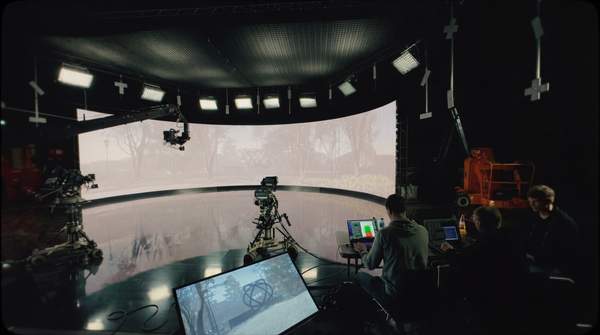
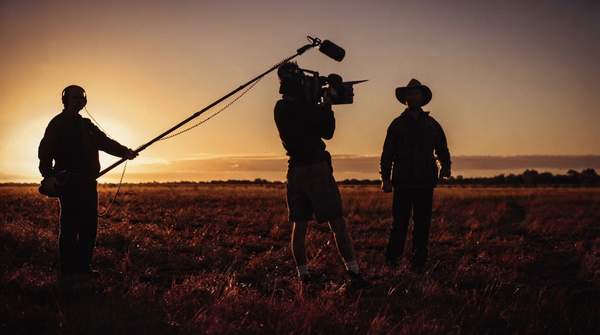
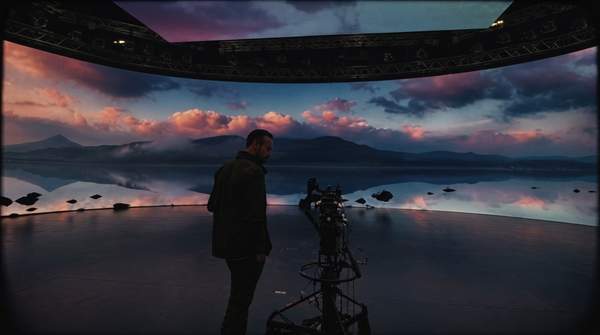
Recent Netflix AI investments and statements from industry directors indicate a significant shift in film production, a change poised to dramatically reduce costs and displace on-set personnel like background extras. This reshaping of film production's future, driven by major studios' push for tighter budget control and streamlined workflows, promises greater efficiency but also raises concerns about human artists' role in the creative process.
Who Is Affected
The immediate impact of this technological shift is being felt by on-set talent, particularly background actors, or extras. According to Chinese director Yi Xiaoxing, the use of artificial intelligence to generate crowd scenes is becoming a viable alternative to hiring large groups of people. This directly reduces the need for human extras, a foundational role in the film industry that provides employment for thousands. The ability to create realistic, populated environments digitally alters a long-standing production practice.
Performers in more prominent roles are also facing potential displacement. In a report from Yicai Global, Yi estimates that AI has already encroached upon "roughly half of actors’ territory." He suggests that actors who lack highly developed skills or a distinct personal style may be the first to be replaced by digital counterparts. This points to a future where only top-tier or uniquely stylized performers are deemed essential, while other roles could be filled by AI-generated characters.
Netflix AI Strategy in Film Production
Netflix recently acquired InterPositive, an AI company founded by actor and director Ben Affleck, marking a key strategic investment by the streaming giant. InterPositive's technology functions as a sophisticated quality control system for film production. It analyzes footage to identify and flag potential technical and logistical errors, such as missed shots, inconsistent lighting, or continuity mistakes, allowing production teams to address problems before they escalate into costly reshoots.
Netflix's acquisition of InterPositive aligns with its broader corporate strategy to exert greater control over its production pipeline. By integrating such AI tools, the company can standardize workflows across numerous global productions, which helps maintain tighter control over both timelines and budgets in the competitive streaming market. According to a report from lamag.com, AI-assisted tools could reduce production costs by an estimated 10 to 20 percent, with savings potentially more substantial in projects heavy on post-production and visual effects.
Despite the potential for job displacement, both Netflix and the creators of these tools have framed them as supportive instruments. Netflix executives have reportedly emphasized that their AI initiatives are meant to augment the capabilities of filmmakers, not replace them. Similarly, Ben Affleck has stated that the goal behind InterPositive was to use AI as a tool to enhance human creativity. The stated intention is to free up creative personnel from tedious technical oversight, allowing them to focus on storytelling.
The Immediate Fallout of AI Integration
Director Yi Xiaoxing has stated that AI has the potential to cut overall movie production costs by more than half, making its tangible consequences most visible in production budgets and workflows. This dramatic cost reduction stems from efficiencies across the entire filmmaking process, from pre-production planning to post-production effects and editing. The ability to generate assets, environments, and even characters digitally eliminates significant logistical and financial burdens associated with traditional methods.
However, the creative implications are also a subject of debate. While AI can execute tasks with precision, some creators worry it lacks the nuance of human artistry. "In film and television, the most touching moments often defy convention and common sense, and it's those imperfections that truly make humans and artistic creations fascinating," Yi said. He noted that because AI does not make mistakes, its output can sometimes appear "mediocre and boring." This highlights a central tension: the trade-off between technical perfection and the unpredictable, often flawed, nature of human creativity.
What Comes Next
The film industry is formally beginning to grapple with significant changes on a global scale. The Cannes’ Marché du Film, a major industry marketplace, is reinforcing its focus on innovation for its 2026 edition, scheduled to run from May 12-20. According to Variety, the event will feature its first-ever Creator Economy Summit and an enhanced AI for Talent Summit. These programs are designed to explore the real-world applications of AI in creative and business processes, with a focus on ethical use, workflow integration, and industry-wide education.
Zheng Lin, a prominent figure in China's tech and media landscape, predicts an even more rapid and comprehensive transformation, believing the cost of processing power for AI will plummet by 2028, becoming one-50th or even one-hundredth of its current cost. This significant reduction in cost would make advanced AI tools accessible to a much wider range of creators, from large studios to independent filmmakers. Such accessibility could democratize high-end production techniques previously reserved for blockbuster budgets.
This technological and economic trajectory leads to bold predictions about the future of content itself. Zheng predicts that by 2031, over half of the world's top fictional content could be generated using AI. He also forecasts that production cycles could be compressed to monthly intervals, a stark contrast to the year-long or multi-year timelines common today. If these forecasts prove accurate, the entire model of content creation, from conception to distribution, will be fundamentally reshaped within the next decade, challenging existing business models and the very definition of a film production.