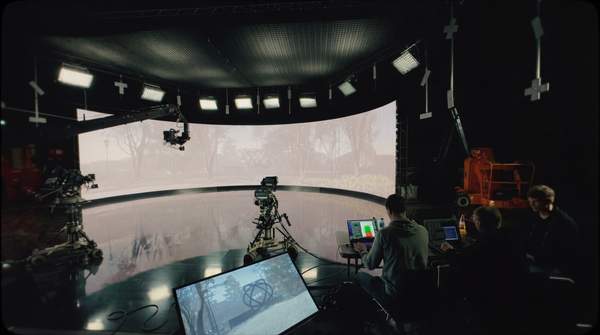
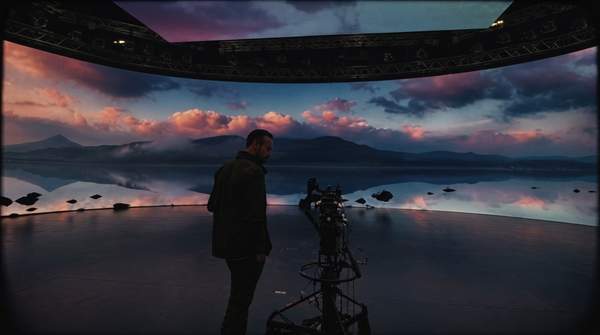
India's film industry is rapidly adopting artificial intelligence to reduce production costs and accelerate filmmaking, a strategic shift affecting studios, artists, and audiences as new technology reshapes creative and commercial workflows.
Who Is Affected
This technological integration directly impacts several key groups within the Indian film ecosystem. The consequences, both positive and negative, are already being felt across the production chain.
- Film Studios and Producers: Major production houses and independent studios are the primary beneficiaries of cost-saving measures. They can now explore ambitious, effects-heavy genres like mythology and fantasy with significantly lower financial risk. This allows for more experimental projects and quicker turnaround times from concept to release.
- Actors and Creative Artists: Performers and directors face new challenges to their creative authority. The AI-driven alteration of existing work, such as changing a film's ending without the original creators' consent, raises significant ethical and artistic questions. Actor Dhanush's public criticism of the 'Raanjhanaa' re-release highlights a growing concern among artists about the integrity of their performances and the "soul" of their work.
- Audiences: Viewers are at the receiving end of these AI-generated or altered productions, and their reactions have been decidedly mixed. While some projects, like the re-released 'Raanjhanaa', have reportedly seen commercial success, others have been met with severe criticism for lacking creative depth, demonstrating that audience acceptance is not guaranteed.
- VFX and Post-Production Professionals: The roles of visual effects artists, editors, and sound designers are evolving. While AI tools can automate repetitive tasks, they also demand new skills in managing and directing AI systems. This shift could displace workers in traditional roles while creating demand for new specializations like AI supervisors and machine learning engineers within film production.
How AI is Transforming Indian Film Production
The push toward artificial intelligence in Indian cinema is driven by a confluence of economic pressures and technological advancements. The industry is navigating a complex market where, despite record box-office earnings of $1.4 billion last year, overall cinema attendance has declined. According to data reported by enterpriseai.economictimes.indiatimes.com, the number of moviegoers fell from 1.03 billion in 2019 to 832 million in 2025. This dynamic has created an urgent need for greater production efficiency and cost control, a need that AI is uniquely positioned to address.
Studios are reportedly deploying AI at a scale unseen in many other global markets. The applications are diverse and integrated throughout the production pipeline. AI tools are being used for routine tasks like editing and color grading, but also for more complex processes such as generating entire special effects sequences. The technology is also enabling sophisticated dubbing techniques, where an actor's facial expressions and lip movements can be digitally altered to perfectly match dialogue in a different language, thereby improving the quality and appeal of regional-language versions of films.
Perhaps the most disruptive application is in the narrative itself. The ability to reimagine and recut the endings of previously released films, as seen with 'Raanjhanaa', represents a new frontier in content monetization and adaptation. This allows studios to test different story outcomes or cater to perceived audience preferences, turning a finished creative work into a more fluid asset. This strategic adoption aims to not only streamline current workflows but also to unlock new revenue streams and expand into new markets by overcoming linguistic and cultural barriers more effectively.
What are the Cost Benefits of AI in Indian Cinema?
The most immediate and quantifiable impact of AI adoption is financial. For genres that are traditionally expensive and time-consuming, such as mythology and fantasy, the savings are substantial. According to Rahul Regulapati, whose comments were reported by news.broadcastmediaafrica.com, AI can reduce production costs to as low as one-fifth of the expenses associated with traditional filmmaking. Furthermore, production timelines can be cut to a quarter of their original length. This dramatic reduction in overhead and time-to-market reshapes the entire financial model of filmmaking, making large-scale productions more accessible and less risky.
Several high-profile case studies illustrate this trend, though they also reveal a complex picture of success and failure. Eros Media World's decision to re-release its 2013 film 'Raanjhanaa' with an AI-altered, happier ending became a significant test case. Despite public backlash from lead actor Dhanush, who stated on X that the remake had "stripped the film of its very soul," the project reportedly achieved commercial success. One report noted that attendance in August 2025 rose 12% compared to other releases, and 35% of available tickets for its Tamil-language version were sold during its release month.
In stark contrast, JioStar's AI-generated adaptation of the epic 'Mahabharat' highlights the potential pitfalls. While the project garnered significant viewership, reportedly recording at least 26.5 million views, it was met with overwhelming audience disapproval. The series holds a 1.4 out of 10 rating on IMDb, indicating that technical execution without compelling creative direction can fail to connect with viewers. This suggests a critical distinction: audiences may be willing to accept AI-assisted modifications but are less receptive to content perceived as wholly machine-generated and lacking human artistry.
Other studios are exploring a more collaborative model. Civic Studios, for instance, produced the microdrama 'Scam City' using AI not to replace human creativity but to augment the production process. In an interview with Cinema Express, founder Anushka Shah explained the studio's philosophy: "The goal is to use it to amplify urgency, not replace the human truth at the heart of these stories." This approach focuses on using AI for efficiency in service of a creative vision, rather than as the vision itself. Meanwhile, major industry players like The Collective Artists Network are also reportedly focusing on creating digital content using AI, signaling a broad industry-wide movement.
| Metric | Traditional Production (Mythology/Fantasy) | AI-Assisted Production (Mythology/Fantasy) |
|---|---|---|
| Production Cost | Standard Budget | Reduced to one-fifth of standard budget |
| Production Timeline | Standard Timeline | Reduced to one-quarter of standard timeline |
What Comes Next
The rapid integration of AI into Indian cinema is sparking significant transformation and debate. The divergent outcomes of 'Raanjhanaa' and 'Mahabharat' provide an early, crucial lesson: technology is a tool, and its success depends entirely on how it is wielded. This central conflict revolves around balancing clear economic incentives with the less tangible, but equally important, values of artistic integrity and audience trust. As studios experiment, the industry will closely watch audience data and critical reception to determine commercially viable and culturally resonant AI applications.
The industry must develop ethical guidelines for AI use, especially regarding altering an artist's work and likeness, to prevent creative and legal disputes. New roles and skill sets will emerge, demanding a workforce trained in both creative arts and data science. Studios must invest in this training to fully leverage AI's potential without sacrificing quality.
AI could boost revenues for India’s media and entertainment sector by 10% and cut costs by 15% in the medium term, according to an EY report cited by multiple outlets. Realizing these profound financial gains requires a sustainable model that uses AI to enhance, not replace, human creativity. The future of Indian filmmaking depends on creators harnessing algorithms to tell more compelling stories more efficiently, without losing the human touch defining the world's busiest film industry, as described by Modern Diplomacy.