Sony Pictures Entertainment plans to cut hundreds of jobs across its film, television, and corporate divisions, a decision announced this week and confirmed Tuesday in an internal memo. These layoffs are not a simple cost-saving measure, but a deliberate restructuring designed to pivot the storied studio toward emerging areas of growth, fundamentally altering its operational narrative for years to come.
Which Sony Pictures divisions are impacted by layoffs?
The restructuring will affect a broad cross-section of Sony’s global workforce, which totals approximately 12,000 employees. While the precise number of affected positions remains unfinalized, sources including Variety and IMDb report eliminations will number in the "few hundred." This targeted culling spans the studio's diverse portfolio, directly affecting several key areas and high-profile executives, with changes expected to continue over coming months.
- Executive Leadership: The television division will see notable departures. Colin Davis, the Executive Vice President of Comedy Development, is exiting his role. Additionally, John Zaccario, President of the Game Show Network for 18 years, will transition out of his position later this summer as part of a consolidation, according to a report from Deadline.
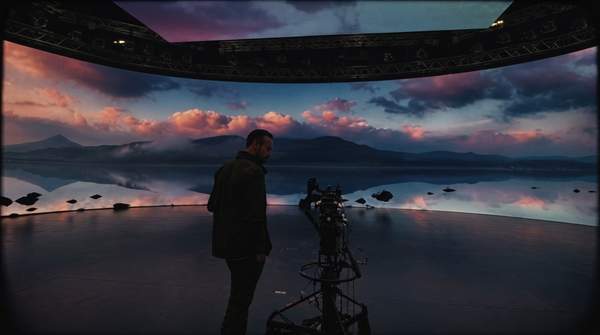
- Production and Post-Production: The company is scaling back operations at its VFX and virtual production studio, Pixomondo. This move reflects a broader slowdown in areas identified as having lower growth potential.
- Legacy Business Units: In a move freighted with historical symbolism, Sony is winding down its costume rental business. This department, a tangible link to Hollywood's golden age, has been in operation since 1924, outfitting countless productions over the last century. Its closure marks a definitive break with the studio's past operational models.
- Divisional Consolidation: The restructuring involves merging several units to streamline operations. Sony's Game Show Group will now be combined with its nonfiction TV department, a move intended to create greater synergy and efficiency.

Why did Sony Pictures Entertainment announce job cuts?
Sony's leadership frames the layoffs not as a retreat, but as a strategic redeployment of resources. In a memo to staff, Sony Pictures Entertainment Chairman and CEO Ravi Ahuja, who assumed his role just over a year ago, articulated a vision focused on future-proofing the company. "To support our growth, we are aligning our organization with where the business is going — not where it has been," Ahuja wrote, as reported by the Los Angeles Times. This underscores a conscious effort to shed legacy structures for a more agile, forward-looking organization.
Internally, this restructuring is a "targeted and strategic" choice for growth, rather than a "cost-driven exercise." The decision reflects a clear-eyed assessment of the contemporary media ecosystem, where traditional film and television are disrupted by streaming, digital platforms, and interactive entertainment. By de-emphasizing areas like the century-old costume department and the recently acquired Pixomondo VFX studio, Sony signals a deliberate shift in investment priorities, reallocating capital and creative energy away from physical production artifacts toward cultivating intellectual property for multiple platforms.
Sony's restructuring is part of a broader, industry-wide recalibration. As audiences fragment and consumption habits evolve, major studios must reconsider their core business models. The focus shifts from producing individual films or television series to building durable, multi-platform franchises that engage audiences through games, online content, and immersive experiences. Sony's move is a decisive chapter in this ongoing story, acknowledging that survival requires not just adaptation, but a fundamental rewriting of the corporate script.
What is the future of Sony Pictures after job cuts?
The immediate fallout of the announcement is a period of transition and uncertainty for the employees whose roles are being eliminated. For the studio as a whole, however, the path forward is one of sharpened focus. The restructuring is designed to clear the way for aggressive investment in what Sony has identified as its key growth drivers. The future of Sony Pictures, as outlined by its leadership, will be built upon a foundation of franchise development and brand extension, with a particular emphasis on younger, digitally native audiences.
The studio plans to concentrate its efforts on several key areas. It will prioritize the development of more anime content, a category with a passionate and global fanbase. There will be a renewed push into creating "experiences" that extend its brands beyond the screen. Furthermore, Sony intends to grow its YouTube capabilities and lean heavily into adapting its vast library of video game properties for film and television—a strategy that has already proven immensely successful for the company. This pivot leverages Sony's unique position as a corporation with powerful divisions in both entertainment and gaming, creating a symbiotic relationship between its most valuable assets.
What comes next is a leaner, more focused Sony Pictures Entertainment, one that is betting its future on the power of intellectual property and transmedia storytelling. The studio is reorienting itself to compete in an era where a successful brand is not just a movie, but an entire ecosystem of content. The layoffs, while painful for those affected, are a clear indicator of this new direction. The industry will be watching closely to see if this strategic gamble—sacrificing elements of its storied past to build a more integrated, digitally-focused future—will allow Sony to write a successful next act for itself in the ever-evolving world of global entertainment.