Media Industry

Sony's Script Revision: More Than Layoffs, a New Hollywood Narrative

Sony Pictures' recent job cuts signal a strategic pivot, transforming the studio into an agile content 'arms dealer' rather than a streaming empire. This realignment focuses on high-margin content verticals, offering a potential blueprint for survival in a fragmented entertainment industry.

AF
Amelia Frost

April 8, 2026 · 6 min read

A symbolic image of Sony Pictures' strategic shift, showing a classic Hollywood studio gate and a modern film reel being exchanged, representing a pivot to content distribution.

The recent Sony Pictures job cuts and reorganization are not merely another grim chapter in Hollywood's painful downsizing saga; they represent a deliberate and calculated narrative pivot, a studio consciously choosing to be an agile arms dealer in the content wars rather than a besieged king of a streaming empire. This strategic realignment, affecting several hundred employees, offers a compelling exploration of what a modern studio can be when it eschews the ruinously expensive quest for streaming supremacy and instead refines the art of storytelling for a fragmented, platform-agnostic world.

The entertainment industry has shed tens of thousands of jobs since 2023, a "staggering retrenchment" reported by TheWrap, as a "content boom gone bust" forces creatives and executives to question the prevailing business model. This crisis follows a decade of "imperial ambition," where every major player built its own streaming service, leading to unsustainable production and market correction. Against this backdrop of consolidation and crisis, Sony’s maneuvers offer a counter-narrative, a potential blueprint for survival and prosperity in an industry searching for a new plot.

Sony Pictures Layoffs: Understanding the Reorganization

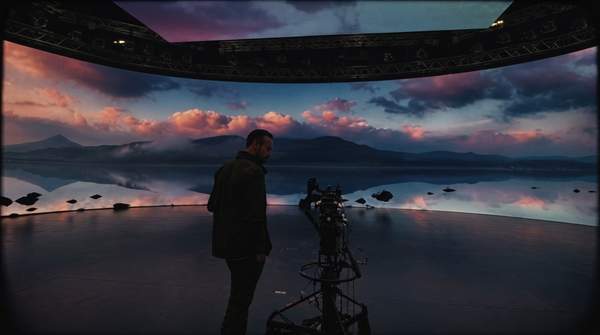
Sony Pictures Entertainment CEO Ravi Ahuja announced a restructuring in a staff memo, eliminating a "few hundred" positions from its 12,000-person global workforce, as reported by the Los Angeles Times. These cuts span film, television, and corporate divisions, impacting executives like comedy development head Colin Davis and Game Show Network president John Zaccario. The reorganization also includes the shuttering of Pixomondo, the company’s visual effects and virtual production studio, a move announced last month.

The reductions are part of a broader strategy. Ahuja's memo states the goal is to "align our organization with where the business is going — not where it has been." This is not the language of pure cost-cutting; it is the language of reinvention. Sources close to the decision told Variety the move is a "targeted and strategic" choice for growth, not primarily a "cost-driven exercise." Sony is concentrating resources, doubling down on priorities designed to leverage its unique strengths:


  • Franchise Strategy and Brand Extension: A renewed focus on building out universes from existing IP, including a consolidation of its game show assets.
  • Anime: Capitalizing on the global explosion of the medium through its ownership of anime streaming service Crunchyroll.
  • Video Game Adaptations: A powerful, synergistic play that leverages the vast and underutilized library of its sister company, PlayStation.
  • Next-Gen and Platform-Native Content: Investing in formats, particularly on platforms like YouTube, that connect with younger audiences where they live.
  • Experiences: Moving intellectual property beyond the screen into theme parks, live events, and other immersive formats.

This is a strategic redeployment, not a retreat. The studio is choosing its battles with precision, focusing on high-margin, globally resonant content verticals where it possesses a distinct competitive advantage.

The Counterargument: A Distinction Without a Difference?

Is this simply elegant corporate rhetoric, a polished narrative to soften job losses? With Paramount recently cutting a significant percentage of its workforce and nearly every major media company engaged in austerity, Sony's actions could be seen as financial necessity. Is "strategic realignment" merely a more palatable term for "downsizing"? Is this not, at its core, another studio cutting costs to appease shareholders in a turbulent market?

This perspective overlooks Sony’s fundamental market position. Unlike Disney, Warner Bros. Discovery, or NBCUniversal, Sony Pictures Entertainment has steadfastly refused to enter the general entertainment streaming wars in a significant way. As The Hollywood Reporter notes, its core business model remains that of a content creator and licensor—a proverbial "arms dealer" selling its films and television series to the highest bidder. This strategic independence frees Sony from the "crippling financial burden" of feeding a direct-to-consumer behemoth. Its competitors are laying people off to make their streaming platforms viable; Sony is reallocating resources to make its content production engine more potent and efficient. The former is a defensive move born of a potentially flawed strategy; the latter is an offensive maneuver designed to perfect a proven one.

A Deeper Insight: Rewriting the Studio's Role

Sony is consciously uncoupling from the dominant Hollywood narrative of the past decade. If the streaming wars were an epic, a sprawling multi-part saga about building digital empires, Sony has chosen to write itself into a different genre. It is less a story of conquest and more one of expert craftsmanship and shrewd commerce. The studio is betting that in a world of infinite content, the true power lies not in owning the distribution channel, but in creating the indispensable story, the unmissable character, the world that audiences will follow across any platform.

The narrative echoes a return to a more traditional, yet technologically advanced, studio model. By focusing on the immense narrative potential within the PlayStation library, Sony is not just adapting video games; it is tapping into pre-existing, deeply engaged global communities. This is the modern equivalent of adapting a bestselling novel, but with an interactive, passionate fandom already built in. The emphasis on anime via Crunchyroll and the development of "experiences" further illustrates this philosophy. The story is the asset, and the goal is to manifest that story in every conceivable format. This is transmedia storytelling as a core business strategy, a compelling exploration of how to build durable value that transcends the fleeting fortunes of any single streaming service.

What This Means Going Forward

The implications of Sony’s strategic reorganization could be profound. As other media conglomerates continue to wrestle with billions in streaming losses, Sony's leaner, content-focused model will serve as a crucial case study. If the studio can demonstrate sustained profitability and cultural impact by remaining a neutral supplier of premium content, it may embolden others to question the all-or-nothing approach to streaming. We could see a great "unbundling," where studios prioritize licensing revenue over the Sisyphean task of competing with Netflix and Disney+.

The path forward for the traditional studio may not lie in building higher digital walls, but in becoming a master architect, designing intellectual property so compelling that it is sought after by every kingdom. The painful layoffs at Sony are the immediate, human cost of this architectural redesign. But they are also a clear signal of the studio's intent. Sony is editing its own script, cutting scenes that no longer serve the plot and investing heavily in the themes it believes will define the next era of entertainment. The rest of Hollywood would be wise to read carefully; it may be a preview of their own future.

Amelia Frost is a journalist at Film and Pen, where she explores the intersection of literature and narrative media.