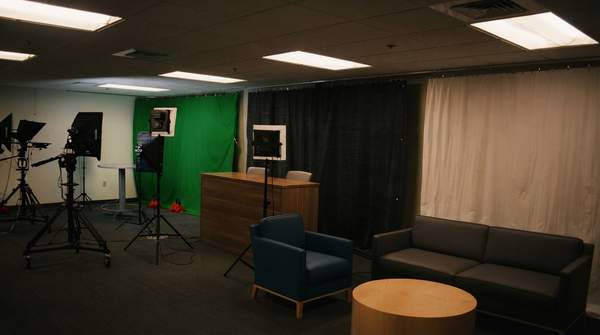
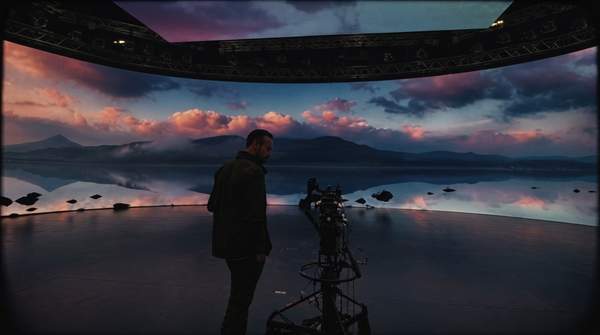
Not so long ago, the narrative of media was written in ink and broadcast on celluloid. Its protagonists were institutions—venerable mastheads and legacy studios that served as the arbiters of culture and information. Today, that story is being radically revised. The global creator economy, valued at hundreds of billions of dollars, has introduced a new protagonist: the individual creator, broadcasting from a spare room, commanding an audience of millions, and rewriting the rules of engagement. This shift from institutional monologue to a decentralized dialogue is no longer a fringe phenomenon; it is the central plot. The clearest signal of this new chapter comes from the industry’s own heartland. The 2026 NAB Show, long the sanctum for traditional broadcasting, is now actively courting creators with free access, an overture that acknowledges a fundamental transfer of power and a new narrative taking hold.
What Changed: The Audience as Author
The inflection point was not a single event but a slow, inexorable turning of the page, driven by technological velocity and a profound change in audience behavior. For over two decades, as noted in a recent Deloitte industry outlook, tech companies have been redefining media consumption, pioneering user-generated content and algorithmic discovery. This cultivated an audience that was no longer a passive recipient but an active participant, a co-author of the cultural conversation. The platform, not the publisher, became the primary stage. This dynamic reached its apotheosis with the dominance of platforms like YouTube, which now ranks as the world’s most valuable media company, surpassing legacy titans like Netflix and Disney, according to an analysis by MoffettNathanson.
The narrative echoes a classic trope: the overlooked force that quietly grows to challenge an empire. The creator, once dismissed as an amateur, has become a formidable economic and cultural power. This is a story of scale. According to a report from Vocal.media, more than 200 million people worldwide now identify as content creators, with an estimated 50 million earning a meaningful income from their work. The aggregate of their efforts constitutes an economic force that Goldman Sachs estimates pulls in around $250 billion annually. This is not merely a collection of hobbyists; it is a distributed, global production studio operating on its own terms, compelling the old guard to either adapt or risk becoming a relic.

The Rise of Creator-Led Video: A Tale of Two Models
The collision of these two worlds—the structured, high-gloss production of traditional media and the agile, authentic voice of the creator—has created a stark contrast in both process and product. The legacy model, with its long development cycles, union-scale crews, and layered executive approvals, was built for a world of scarcity and controlled distribution. Its financial structure relied on high-cost advertising inventory bundled within rigidly scheduled programming. In contrast, the creator-led model thrives on immediacy, direct audience connection, and a radically different economic equation. This new format, sometimes dubbed "creator TV," is rapidly claiming a significant share of audience attention and advertising dollars.
A recent report highlighted by insideradio.com illuminates the sheer scale of this new media form. It finds that approximately 6,600 U.S.-based creator-led channels now produce structured, episodic content of 22 minutes or longer. The data paints a compelling picture of a market in transformation.
| Metric | Traditional Television (Linear & Streaming) | Creator-Led Video ("Creator TV") |
|---|---|---|
| U.S. Annual Viewing Hours (2025 est.) | N/A (Fragmented) | 26 Billion Hours |
| Advertising Load (per 30 min) | Significantly Higher | ~2.4 Minutes |
| Advertising Rate (CPM) | $15+ | $7 - $10 |
| Platform Ad Revenue (YouTube, 2025 est.) | N/A | $40.4 Billion |
The figures in this comparison tell a story of profound disruption. In 2025, creator TV programming reportedly generated an astonishing 26 billion hours of viewing in the United States alone, with more than half of that consumption happening on connected televisions—the traditional domain of legacy media. This content carries a much lighter advertising load, which, while seemingly less profitable per hour, is offset by a lower cost-per-thousand (CPM) for advertisers and a massive volume of engaged viewers. The economic consequence is stark: YouTube's reported advertising revenue of $40.4 billion in 2025 exceeded the combined totals of its four largest traditional media competitors. This is not just a shift in viewership; it is a fundamental realignment of the economic foundations upon which media is built.
Winners and Losers: A New Cast of Characters
Every great narrative shift produces its victors and its displaced. In this evolving media landscape, the lines are drawn between those who embrace the new grammar of storytelling and those who cling to an increasingly obsolete syntax. The most obvious winners are the creators themselves, who have leveraged technology to build personal empires, bypassing traditional gatekeepers to cultivate direct, loyal, and monetizable relationships with their audiences.
Alongside them, the tech platforms that host and distribute this content have become the new super-studios. Their algorithmic power and global reach provide a distribution network that legacy media struggles to replicate. The advertisers who adapt also stand to gain, trading the broad, expensive reach of linear television for the targeted, data-rich environment of creator-led video, where engagement can be measured with granular precision. A new ecosystem of adjacent companies is also flourishing. Production houses like Second Rodeo Productions, for instance, are being built specifically at the intersection of legacy and digital media, focusing on new formats. Similarly, media brands like Uproxx are now actively involved in efforts to package and pitch "creator TV" to advertisers, as reported by Axios, lending institutional legitimacy to this burgeoning market.
Traditional media companies confront audience erosion, declining advertising revenue, and a competitive landscape redrawn by tech giants. Their long-held assumptions about quality, value, and audience loyalty are being tested, placing newsroom and studio structures under pressure. New required skills—speed, digital fluency, community management—often differ from established roles. This necessitates a fundamental rethinking of content strategy, talent acquisition, and monetization, moving beyond mere social media presence in a world where audiences have countless other options.
Future Outlook: A Metamorphosis of Media
The future of media is a metamorphosis, not a death, as described by Scott Brown, CEO of Second Rodeo Productions. Hollywood and traditional media are being reborn through convergence and synthesis, integrating new talent and methods. Successful players will blend legacy media's production quality and storytelling craft with the creator economy's agility, authenticity, and audience insight.
Convergence is evident as creators adopt sophisticated technology and production techniques, like those showcased at the NAB Show. Simultaneously, broadcasters and studios reach younger audiences on digital and social platforms, fostering partnerships where traditional companies provide resources and expertise, and creators offer authentic access to engaged communities. Narratives evolve into digitally native formats; the "micro-drama"—a 90-minute story in one-minute mobile app chapters, as described by Sports Video Group—exemplifies this new storytelling grammar built for modern attention spans, often missed by legacy media.
The global creator economy, currently valued over $500 billion, is projected to surpass one trillion dollars by decade's end. This growth will pull talent, capital, and attention from traditional models, forcing a continued evolution and a complex, often fraught, but necessary integration of two powerful narrative traditions.
Key Takeaways
- An Unignorable Economic Force: The creator economy is no longer a niche market but a central pillar of the global media industry, valued in the hundreds of billions and projected to exceed a trillion dollars. Its economic gravity is reshaping advertising models, revenue streams, and investment priorities.
- The Strategic Imperative for Legacy Media: Traditional media companies face a critical choice: attempt to compete with a dominant, tech-driven model or strategically collaborate. Successful adaptation will require integrating creator-led video strategies, rethinking talent acquisition, and embracing new partnership models to maintain relevance.
- The Evolution of Narrative Form: Storytelling itself is being remade. Digitally native formats like "creator TV" and "micro-dramas" prioritize speed, authenticity, and direct audience feedback, challenging the primacy of high-gloss production values and established narrative structures.
- Convergence Is the Future: The most resilient media ecosystem will emerge from the convergence of the two worlds. The future belongs to hybrid models where the production expertise of traditional media meets the agility and audience connection of the creator, blurring the lines between the studio and the streamer.