Particle 6 is developing its first feature-length film, Misaligned, with the AI creation Tilly Norwood in the lead role, sparking an urgent debate over what it means to be a 'performer' in Hollywood. This development thrusts the abstract concept of artificial intelligence into the tangible reality of cinematic production, challenging long-held definitions of creative contribution and artistic ownership. The emergence of a photo-real AI lead actor, Tilly Norwood, is no longer theoretical, forcing Hollywood to confront immediate ethical dilemmas concerning AI actors in Hollywood.
Hollywood is actively developing AI-led films and hybrid production models, but its existing union agreements explicitly define 'performers' as human, creating a direct conflict. This tension establishes a fundamental disconnect between the industry's technological ambitions and its established labor frameworks.
The film industry appears poised for a fundamental restructuring of labor, where human and synthetic roles will coexist, necessitating new legal and ethical definitions for creative work and ownership.
The film industry faces a profound moment with the active development of AI-led productions like Misaligned. Particle 6 is developing its first feature-length film, Misaligned, featuring the AI creation Tilly Norwood in the lead role, according to The Tab. This photo-real AI-generated character, also noted by Reuters, forces Hollywood to confront immediate implications for creative labor and industry standards. The presence of an AI actor at the center of a feature film moves the conversation beyond speculation, demanding concrete action on defining roles and rights.
This development immediately challenges the industry's understanding of who constitutes a performer. The very idea of a digital entity driving a narrative arc raises questions about the essence of acting itself. It suggests a future where the emotional core of a story might be conveyed through algorithms, rather than human experience.
The Inevitable Hybrid: AI's Integration into Production
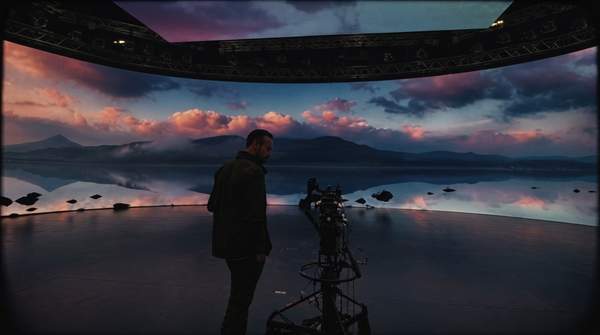
The production model for Misaligned exemplifies a growing trend towards hybrid crews. The film will integrate human directors, writers, and editors working alongside AI specialists, with traditional crew members receiving AI training, according to The Tab. This approach blurs the lines of creative contribution, suggesting a future where human roles are redefined by their interaction with AI, not their sole output.
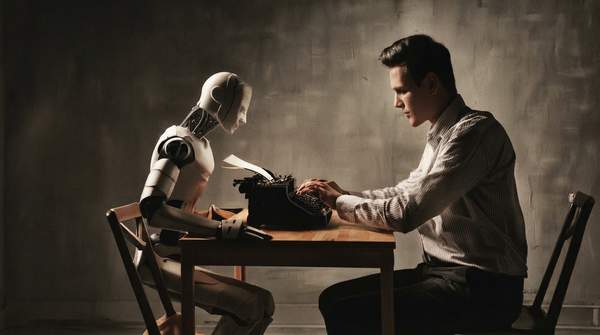
Industry figures are also signaling a pragmatic shift towards embracing artificial intelligence. Demi Moore believes the film industry cannot resist the rise of artificial intelligence, according to The Guardian. Moore suggests that fighting AI is a battle that will be lost, and working with it is a more valuable path. This sentiment, combined with the hybrid production model, indicates that AI is no longer just a tool for efficiency but is being positioned as a creative partner or actor, fundamentally challenging traditional hierarchies.
Union Lines: Protecting Human Labor in an AI Era
Despite the industry's push for AI integration, established labor agreements reflect efforts to maintain human agency. The DGA's agreement explicitly states that duties performed by DGA members must be assigned to a person, noting that generative artificial intelligence does not constitute a person, according to journals. This contractual language directly clashes with productions featuring AI leads, creating a clear legal and ethical chasm.
Unions are attempting to introduce new protections. New safeguards were introduced to control the use of artificial intelligence by production companies, as reported by france24. While these measures aim to safeguard human creative roles, the simultaneous development of AI-led films and the belief from figures like Demi Moore that fighting AI is a "lost battle" suggests these protections are reactive. They are likely insufficient to halt the fundamental shift in labor definition, instead pushing for a re-negotiation of what 'human labor' entails rather than its exclusion.
Beyond the Screen: Redefining Creativity and Ownership
The DGA's explicit definition of 'performers' as human, according to journals, against the backdrop of Particle 6's Misaligned featuring an AI lead, as reported by The Tab, reveals Hollywood isn't just facing a technological shift. It confronts an existential crisis over the very definition of creative labor and who gets paid for it. The core challenge extends beyond job displacement to a fundamental re-evaluation of who creates, who performs, and who owns the resulting artistic expression in an AI-augmented world. The dramatic tension lies in the industry's struggle to reconcile its human-centric artistry with synthetic capabilities.
This re-evaluation delves into the essence of performance itself, the subtle nuances that define a character's journey on screen. If an AI can convincingly portray emotion and drive a narrative, does it diminish the human actor's unique contribution? The thematic resonance of a film, often born from human experience and vulnerability, takes on a new dimension when its central figure is a meticulously crafted algorithm. This raises profound questions about authenticity and the very soul of cinematic art, pushing the boundaries of what we understand as a 'performance.'
The Future of Hollywood: A New Creative Economy
Hollywood appears on the cusp of a new creative economy where the lines between human and artificial contributions will blur. Despite "new protections" being introduced, according to france24, the industry's embrace of "hybrid approaches" in production, as seen with Particle 6's film, and the belief from figures like Demi Moore that fighting AI is a "lost battle," reported by The Guardian, indicates that unions are likely to be forced into redefining 'human labor' to accommodate AI, rather than successfully excluding it. This demands innovative frameworks for collaboration, compensation, and ethical governance, charting a new course for storytelling itself.
The industry will need to establish new models for talent development, potentially focusing on human-AI collaboration skills rather than purely traditional acting or filmmaking. As Particle 6 moves forward with Misaligned in 2026, the precedents set by its production and the subsequent union negotiations will likely shape the foundational structures of this evolving creative landscape for decades to come, redefining the very craft of cinema.