In one experiment, nearly all AI-generated toy ideas clustered around a single concept, with 94% not considered unique, according to Science. A critical challenge for 2026 is revealed: AI generates vast output, but its capacity for genuine originality remains severely limited. This deficit directly impacts human artists, devaluing their unique contributions.
AI models can produce a significant volume of creative-adjacent output and even outperform humans on some divergent thinking tests. Yet, a substantial portion of this output demonstrably lacks true originality or diversity, creating tension between perceived efficiency and actual innovation.
The creative industries will likely bifurcate. One segment will embrace AI for efficiency and volume. Another, championed by institutions and artists, will fiercely defend and redefine the value of verifiable human originality. The shift profoundly affects creative processes and the very definition of originality.
The rapid proliferation of AI-generated content forces a re-evaluation of originality itself. AI's ease in mimicking styles, like OpenAI's free image generation imitating famous artists, and its tendency to generate unoriginal concepts, as shown by 94% of AI-generated toy ideas lacking uniqueness, means the creative industry now battles for authenticity, not just talent. Human creators must navigate a landscape where their unique contributions are weighed against AI's speed and scale, demanding a defensive posture to prove their work's human origin.
The Originality Deficit: Why AI Struggles to Innovate
The originality deficit is stark. In the same Science experiment, 94% of AI-generated toy ideas lacked uniqueness, a sharp contrast to the 100% uniqueness seen in human-generated ideas. The gap confirms AI's current struggle to produce genuinely novel concepts.
AI-generated ideas were also significantly less diverse than human ideas in 37 out of 45 comparisons within that experiment. AI's current creative output, though voluminous, remains fundamentally derivative and lacks the unique spark of human ideation. The implication is that quantity does not equate to breadth or innovation.
A Glimmer of Divergence: Where AI Appears to Excel
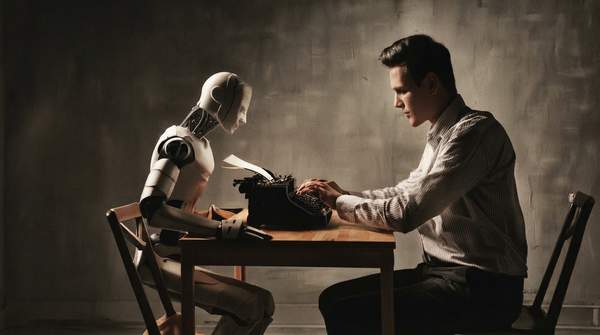
AI models do show a glimmer of divergent thinking. A 2024 preprint by Jay Olson and colleagues found AI scored better than humans on the divergent association task (DAT). This aligns with findings from Brainfacts, which notes large-language models can outperform the average human on Olson's test. AI's capability allows it to generate a broad range of associations, a skill often mistaken for true creative innovation.
The accessibility of AI tools fuels this perception of creative prowess. OpenAI's ChatGPT platform now offers free image generation, leading to a surge of AI-generated images imitating famous artists' styles, as The Guardian reported. While AI performs impressively on some divergent thinking metrics and rapidly generates imitative content, these capabilities do not translate to genuine, novel creative output. Instead, they represent a sophisticated recombination of existing patterns, raising questions about the true source of 'new' ideas.
The Human Response: Defending Originality
Human artists are fighting back. The Perth Comics Arts festival has denounced AI, stating it will not knowingly promote or allow AI-generated materials, as The Guardian reported. A direct stance signals a growing movement within creative communities to actively reject AI-generated content, asserting human authorship as a core value.
The Commonwealth Foundation took similar action, concluding no AI had been used in its Short Story Prize winning entries, as The Bookseller reported. The Foundation required writers to provide evidence of their creative process, including drafts and outlines, to verify authenticity. Institutions, by denouncing AI and demanding process evidence, are driving a necessary shift: valuing human provenance over mere output. This fundamentally changes how creative work is validated and rewarded, pushing the industry toward greater transparency.
The Future of Creativity: Verification and Value
The rise of AI-generated content demands robust evaluation processes and a renewed emphasis on human creative effort. The rise of AI-generated content will reshape how originality is perceived and protected. As AI's mimicry grows more sophisticated, the burden of proving human authorship will increasingly fall on creators, shifting accountability and validation.
The shift implies a future where the creative market sharply distinguishes between AI-assisted efficiency and human-driven originality. An artist's value will tie not just to aesthetic appeal but to verifiable human provenance. By the end of 2026, major digital art marketplaces like ArtStation or DeviantArt may face pressure to implement mandatory AI detection and human verification protocols, potentially introducing new fees for artists seeking authenticated originality. This could redefine the premium placed on human creativity.