Content Creation

The AI Production Shift: How Video Generation Tools Are Becoming Full Platforms

AI video generation tools are rapidly evolving into comprehensive production and distribution platforms, consolidating complex workflows into a single interface. This fundamental restructuring is redefining the digital content pipeline.

TC
Tara Collins

April 1, 2026 · 7 min read

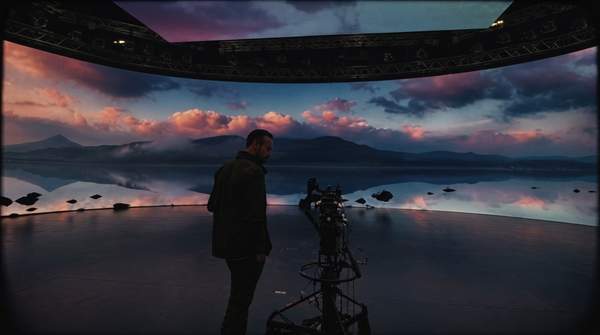
A futuristic control room with a creative director overseeing holographic displays of AI-generated video content, symbolizing the evolution of AI video tools into comprehensive production platforms.

Just a few years ago, creating a short video involved a dozen browser tabs and a suite of separate, specialized applications. Today, AI video generation tools have rapidly evolved into comprehensive production and distribution platforms, consolidating that complex workflow into a single interface. Industry reports now analyze a dedicated AI Video Market, signaling a shift from a collection of novel tools to a mature, high-growth economic sector.

What Changed: The Industry Acknowledges a Tectonic Shift

The NAB Show's 2026 event will feature a second AI Pavilion, a move reflecting AI’s rapid transition 'from experimentation to widespread practical use across the entire media workflow.' This signals the industry's collective acknowledgment that AI in media production has moved beyond the experimental phase, marking a significant tipping point.

Current registration for the NAB Show reveals a 200 percent increase over 2025 in attendees who identify as content creators, influencers, or podcasters. This data suggests a massive influx of independent and small-scale producers actively seeking solutions to streamline their work. The show’s Creator Lab, presented in partnership with major tech players like Adobe and Blackmagic Design, will focus specifically on the business and impact of this creator economy. Sessions with titles like 'Are We Nervous Yet: A Creator’s Guide to AI' directly address how these emerging platforms are reshaping content creation and the long-term viability of a creative career.

From Fragmented Tools to Integrated Ecosystems: The New Creator Workflow

A typical creator's workflow previously involved a patchwork of disconnected services, each requiring separate subscriptions, logins, and a significant amount of manual effort to stitch the pieces together. The new model, driven by the rise of comprehensive AI video production and distribution platforms, promises a seamless, end-to-end experience.

Previously, your process for creating a simple informational video might have looked like this: You'd start by brainstorming topics in a document, then move to an AI writer like Jasper to flesh out a script. Next, you would use a text-to-speech tool such as ElevenLabs to generate a voiceover. For visuals, you might generate still images in Midjourney, then try to animate them with another tool, all while searching for b-roll on a stock footage site. Finally, you would import all these disparate assets into a traditional video editor like Adobe Premiere Pro, where you would spend hours cutting, timing, and mixing everything together before manually uploading the final product to various social platforms.

Emerging platforms consolidate the entire lifecycle of a video within one environment. Users can input a simple prompt, and AI can generate multiple script options, create a synthetic voiceover in a chosen style, and produce all necessary visual assets—from animated characters to dynamic b-roll—based on the script's content. The editing process is also transformed, with AI-powered timelines automatically assembling a rough cut, suggesting pacing adjustments, and even generating background music that fits the mood. This integration is the core feature of the new AI video production tools.

The table below illustrates workflow consolidation, highlighting how distinct, manual tasks are being absorbed into a single, AI-driven process.

Workflow StageTraditional Creator Stack (Before)Integrated AI Platform (Now)
Ideation & ScriptingManual research, Google Docs, separate AI writersAI-driven topic generation, automated scriptwriting, and versioning
Asset CreationStock footage subscriptions, manual filming, separate image generatorsIntegrated text-to-video, image-to-video, and AI avatar generation
Voice & SoundSeparate text-to-speech tools, stock music libraries, manual mixingBuilt-in voice cloning, text-to-speech, and AI-generated music scores
Editing & AssemblyManual timeline editing in Adobe Premiere Pro or Final Cut ProAI-assisted timeline assembly, automated cuts, and smart scene transitions
Distribution & AnalyticsManual uploads to each platform, separate social media management toolsAutomated scheduling, AI-generated titles/tags, and cross-platform analytics

Market Impact: The Winners and Challengers in the AI Platform Era

The primary beneficiaries of this technological shift are solo creators and small media businesses. This means access to production capabilities once the exclusive domain of large studios with significant budgets. The ability to generate high-quality video content at scale without a large team or expensive equipment lowers the barrier to entry and allows competition on creativity and strategy rather than just production resources. This democratization of video production is a central theme of the evolving creator economy.

Developers of these integrated platforms are positioned for significant success. The existence of a defined AI Video Market, analyzed in reports from firms like Grand View Research, confirms this is a serious business sector. One report from market.us projects the market is growing at a compound annual growth rate (CAGR) of 36.20%, an explosive figure that underscores immense commercial interest and investment. Brands and marketing agencies also stand to gain, producing personalized video ads and content marketing materials at a speed and volume previously unimaginable.

However, this consolidation presents a challenge to other parts of the industry. Companies that offer specialized, single-function tools—for instance, a service that only provides AI voiceovers—may find themselves struggling to compete with platforms that offer that same capability as part of a larger, integrated suite. The pressure will be on them to either be acquired or find a niche, best-in-class value proposition. Similarly, the traditional stock media industry faces a direct threat from platforms that can generate custom b-roll on demand, potentially reducing reliance on generic library footage. For professionals, certain entry-level roles in video editing or motion graphics may evolve, demanding new skills in AI prompting, system management, and creative direction over purely technical execution.

Expert Outlook: The Future of AI-Powered Video Content Creation

Industry analyses that offer market size projections up to 2033, such as one from Allied Market Research, indicate a long-term trajectory of growth and innovation for this trend. The data suggests we are only in the early stages of this transformation. As these platforms mature, we can expect to see several key developments that will further reshape the media landscape.

First, expect the rise of hyper-personalization at an unprecedented scale. As production and distribution become more tightly integrated, platforms will be able to use audience data to automatically generate variations of a video tailored to specific demographics, interests, or even individual viewing habits. Imagine a product tutorial that shows different features depending on the viewer's known skill level, or a marketing video that changes its call-to-action based on location. This moves beyond simple A/B testing into a new realm of dynamically generated, one-to-one communication.

Second, the concept of a fully autonomous content channel is becoming increasingly plausible. An AI-powered system could soon manage an entire YouTube or TikTok channel, from analyzing trends to generate ideas, to producing and scripting the videos, to publishing them at optimal times and responding to comments. While human oversight and creative direction will remain crucial for quality and brand identity, the operational heavy lifting could become almost entirely automated, allowing a single creator to manage a portfolio of content channels simultaneously.

Finally, the next frontier may be interactive AI-driven narratives. Instead of passive consumption, viewers could engage with video content, asking questions of AI-generated characters, making choices that alter the storyline, or requesting different camera angles in real-time. This would blur the lines between video content, gaming, and personalized education, opening up entirely new formats for storytelling and information delivery.

Key Takeaways

As you navigate this evolving landscape, it's crucial to focus on the strategic implications. The technology will continue to change, but the underlying shifts in workflow and business models are here to stay. Here's what you need to watch.

  • The Shift is from Tools to Platforms: The most significant change is the consolidation of fragmented AI services into single, end-to-end production and distribution ecosystems. Your focus should be on mastering these new integrated workflows, not just individual tools.
  • The Market is Validated and Growing Rapidly: Industry reports confirm a significant and expanding AI Video Market, with a reported CAGR of over 36%. This is a major economic and technological wave, not a passing trend.
  • Efficiency and Scale are the Core Benefits: For creators, this evolution means a radical reduction in the time, cost, and technical barriers to producing high-quality video, enabling new levels of experimentation and output.
  • Adaptation of Skills is Non-Negotiable: The value of purely technical skills like manual editing may decline, while the importance of strategic skills—creative direction, prompt engineering, and audience strategy—will grow. Your long-term viability depends on adapting to this new creative paradigm.