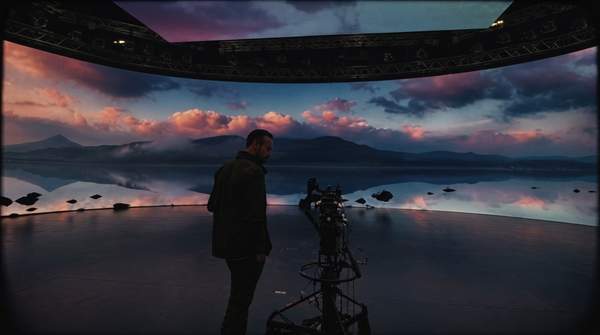
The production designer builds the visual world of a film, translating the script's setting into tangible environments like a dystopian future, a lavish 18th-century ballroom, or a cramped suburban home. This role is central to cinematic magic, creating the overall visual look and design concept that complements the director's story and the actors' performances.
Operating at the intersection of art and logistics, the production designer translates a script's abstract ideas into tangible environments. This role underpins every frame of a movie, from the color of a wall to the style of a chair, demonstrating the meticulous detail and creative vision required for a cohesive final product.
What Is a Production Designer?
A production designer is the head of the Art Department and is responsible for developing and executing the overall visual concept of a film in collaboration with the director. Think of them as the chief architect of a movie's world. If the script is the blueprint, the production designer is the one who designs the structure, chooses the materials, and defines the aesthetic, ensuring every visual element serves the story. Their work is a blend of creative vision and practical management, turning narrative needs into physical sets and locations.
The American Film Institute defines production design as the meeting point of art, architecture, and narrative, using visual tools to form a distinct language for the film. A production designer's visual toolkit includes:
- Space: The layout and scale of a room or location, which can make characters feel powerful, trapped, or free.
- Lines and Shapes: The use of sharp, angular lines for a futuristic, sterile environment versus soft, curved shapes for a warm, organic one.
- Color: Creating a specific color palette to evoke mood, signal character traits, or guide the audience's emotional response.
- Patterns and Textures: The details that add depth and realism to a set, from the grain of wood on a table to the pattern of wallpaper in a bedroom.
What are the Core Responsibilities of a Production Designer?
Overseeing the entire Art Department, the production designer ensures the director's vision is realized on time and within budget. This multifaceted role, demanding artistic talent and strong organizational skills, begins in the earliest stages of pre-production and continues through the end of the shoot.
- Conceptualization and Research: The process begins with a deep analysis of the script. The production designer formulates ideas and plans for the film's visual context, deciding on themes, compositions, and color palettes that will evoke the intended emotions and actions, as noted by the New York Film Academy. This phase involves extensive research into historical periods, architectural styles, and cultural details to ensure authenticity and create a believable atmosphere for each scene.
- Art Department Management: As the head of the Art Department, the production designer is responsible for hiring and managing a large team of creatives. This includes key roles like the art director (who oversees set construction), the set decorator (who furnishes the set), the prop master, and concept artists. They must lead this team effectively to execute a singular, cohesive vision.
- Budgeting and Scheduling: A crucial and often challenging part of the job is managing the art department's budget. The production designer must calculate the costs of materials, labor, set construction, and even digital elements to prevent misallocation of resources. They are also responsible for creating a schedule and ensuring the department meets its deadlines, a task that requires constant oversight and problem-solving.
- Location Scouting and Set Design: Production designers are instrumental in finding and selecting shooting locations. They work to ensure that each location aligns with the film's established visual language. For scenes requiring constructed environments, they oversee the design of sets from initial sketches and digital models to the final build on a soundstage.
- Collaboration: The role is inherently collaborative. Production designers work in close partnership with the director and producer from the very beginning. They also interface constantly with other department heads, particularly the cinematographer, to discuss how sets will be lit and shot, and the costume designer, to ensure a unified visual style across all elements on screen.
The Production Designer's Role in Pre-Production and Production
The production designer's workflow is heavily concentrated in pre-production, where the visual foundation of the entire film is laid. During production, their role shifts to supervision and adaptation, ensuring the established vision is maintained as filming progresses.
During pre-production, the designer synthesizes the script into a compelling visual story. This involves creating concept art, sketches, 3D models, and mood boards to present their design concepts to the director. They generate detailed breakdowns of all sets, locations, and props required, which informs the budget and schedule. This meticulous planning is essential for a smooth production. As Emmy-winning production designer Bill Groom told the Los Angeles Times about his experience on Boardwalk Empire, "I looked up and there were just about 100 people walking towards stage to go in and start working, and it had never occurred to me just how much trust was given to me to have something ready for 100 people to show up."
Once production starts, the production designer oversees the execution of their designs on set, ensuring every detail is correct, from prop placement to wall aging. They must be adaptable problem-solvers, ready to make last-minute changes if a location falls through or a scene's blocking requires a set modification. This presence ensures the visual integrity of the film remains consistent from the first day of shooting to the last.
Production Designer Skills and Qualifications
Most production designers share common skills and experiences, often coming from related creative disciplines like architecture, theater design, fine arts, or industrial arts. While no specific degree is formally required, a background combining artistic sensibility with technical knowledge is highly beneficial. Many successful designers began their careers in entry-level art department positions, such as production assistant or intern, gaining practical experience by designing environments for low-budget or student films.
Beyond technical skills like drawing and model-making, soft skills are critical for success. Production designer Toni Barton emphasizes, "You have to be a listener, taking in the notes and comments of the director, showrunner or producer." This requires being an excellent communicator, highly organized, patient, and a creative problem-solver. The role relies heavily on the assembled team, making the ability to lead and inspire them as important as artistic vision, thus balancing management and collaboration with design.
Frequently Asked Questions
What is the difference between a production designer and an art director?
The production designer is responsible for the overall visual concept, or the "what and why" of the film's look. The art director works under the production designer and is responsible for the "how," managing the art department crew (like carpenters, painters, and set dressers) to bring the designer's vision to life. In the architect analogy, the production designer is the lead architect, and the art director is the project manager or construction foreman.
How do you become a production designer?
Most production designers start in entry-level positions within a film's art department, such as a production assistant or art department coordinator. From there, they often progress to roles like prop master, set decorator, or art director, building their skills and portfolio along the way. Gaining experience on smaller independent films, student projects, or commercials is a common way to build a body of work that can lead to a production designer role on larger projects.
Does a production designer work on animated films?
Yes, the role of a production designer is crucial in animation, though the execution differs. Instead of overseeing the construction of physical sets, they work with a team of digital artists, modelers, and animators. They are still responsible for establishing the overall visual style, color palette, and design of the environments and characters to create a cohesive and immersive animated world.
The Bottom Line
As the primary architect of a film's visual identity, the production designer translates the script's words into a tangible, immersive world. This work is a foundational element of cinematic storytelling, influencing the mood, tone, and narrative of a film.
The production designer manages the art department's budget and collaborates with the director on the creative vision. This role ensures every color, object, and space visible on screen is a deliberate choice, meticulously planned and executed to serve the story.