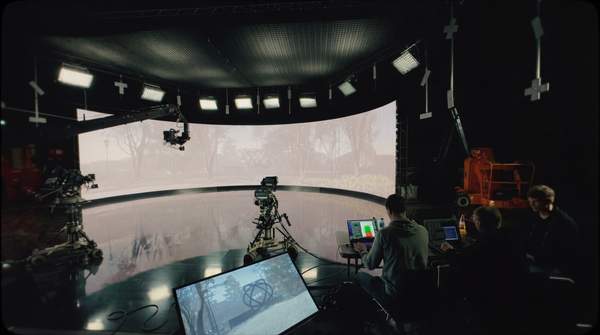
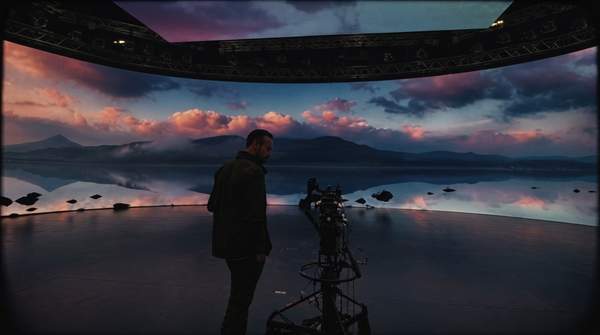
Filmmaker Griff Furst, known for traditional productions, is building a studio in Calabasas. This facility will release serialized content on YouTube, entirely bypassing traditional distribution. His new company, New Power Studios (NPS), founded in 2025, prioritizes YouTube-first content, later exploring secondary channels, according to Programming Insider. This staged model tests content directly with audiences, fostering immediate engagement and driving a fundamental decentralization in film and TV production.
Furst's strategy moves towards audience-driven storytelling. It reduces reliance on traditional studio systems and their gatekeepers for financing, marketing, and release. This direct-to-audience approach redefines the production pipeline, empowering creators by removing historical access barriers.
Major studios, conversely, decentralize production for tax incentives, a distinct industry shift. The film and TV landscape now bifurcates: a geographically dispersed, traditional studio system, and a rapidly growing, direct-to-audience creator economy. This challenges established power structures.
The Great Relocation: How Tax Breaks Lure Blockbusters Away
California allocated $193 million in tax incentives across 38 film and TV projects, according to Deadline. This financial inducement aims to retain and attract major studio productions. For instance, an Untitled Paramount Crime Thriller received $25.8 million in tax credits, leading the allocations. Such significant credits underscore the state's investment in maintaining its production footprint amidst broader industry shifts.
The California Film Commission also allocated $21.86 million to The Simpsons Movie 2. These substantial tax credits intensify competition among states to attract major studio productions. This leads to a geographical dispersion of traditional film and TV work. Studios prioritize financial optimization through strategic relocation, not fundamental shifts in content distribution.
L.A.'s Shifting Sands: A Bellwether for Industry Change
- 5,121 — L.A. on-location production totaled 5,121 shoot days in Q1 2026. This marked a 10.7% increase from the prior quarter, but a 3.3% decrease year-over-year, according to LAmag.
- 40% — Relocating TV series qualify for a 40% tax credit under California's program. Independent films, feature films, and new TV series qualify for 35%, per LAmag.
- 20% — Oklahoma provides a 20% base incentive for projects filming principal photography in the state, according to Oklahoma Film + Music Office.

L.A.'s mixed production data, coupled with aggressive out-of-state incentives, confirms a sustained trend: traditional production is moving away from Hollywood. This impacts its historical dominance. Short-term gains may occur, but decentralization's underlying forces outweigh quarterly fluctuations.
Beyond Location: The Rise of Agile, Creator-Driven Production
| Metric | Traditional Studio Model | New Power Studios (NPS) Model |
|---|---|---|
| Primary Focus | Physical production location, tax incentives | Direct-to-audience distribution, content agility |
| Distribution Strategy | Gatekeeper-dependent (theatrical, network, streaming deals) | YouTube-first, direct audience engagement |
| Operational Pace | Slower, hierarchical, multi-stage approval processes | Rapid content development and release |
| Decision-Making | Centralized, risk-averse | Decentralized, creator-driven, audience-responsive |
Source: Programming Insider (2026)
New Power Studios (NPS) operates from a creator campus in Calabasas, California. It develops, produces, and distributes serialized content at a pace traditional studios cannot match, according to Programming Insider. This operational model prioritizes speed and agility, a direct contrast to the slower, hierarchical structures of established studios. NPS leverages direct audience ownership, fundamentally reshaping the content pipeline beyond mere geographical considerations.
Who Benefits Most: The New Power Dynamics
States offering generous tax incentives clearly benefit from the traditional decentralization model. These incentives attract major studio productions, like an Untitled DreamWorks Animation Feature Film which received $24.7 million in tax credits, according to Deadline. This influx of large-scale projects brings economic activity and jobs to new regions, shifting traditional production hubs and solidifying regional economies.
Agile new production companies, such as New Power Studios, also gain market share. They circumvent traditional distribution bottlenecks. Their direct-to-audience approach enables rapid content testing and dedicated viewership growth, directly challenging slower, centralized studio bureaucracies. The core competition is not physical location, but direct audience ownership, as evidenced by Programming Insider's reporting on Griff Furst's New Power Studios.
The Future of Storytelling: Adapt or Be Left Behind
The industry's future favors adaptability, where financial optimization and direct audience engagement are paramount.
- The Phineas and Ferb film received $3.45 million in tax credits, according to Deadline.
Even smaller, established franchises leverage incentives. Even smaller, established franchises leveraging incentives indicates all players, regardless of size, must adapt to a landscape prioritizing financial optimization and direct audience engagement for survival. Traditional studios investing heavily in tax-credit-fueled productions appear to misinterpret the evolving competitive landscape. The new model prioritizes direct connection over location-based incentives, shifting the strategic imperative.
By late 2026, the continued growth of creator-driven platforms and strategic tax incentive pursuits will likely force traditional studios to fundamentally re-evaluate their engagement with audiences and production models, if they are to remain competitive.