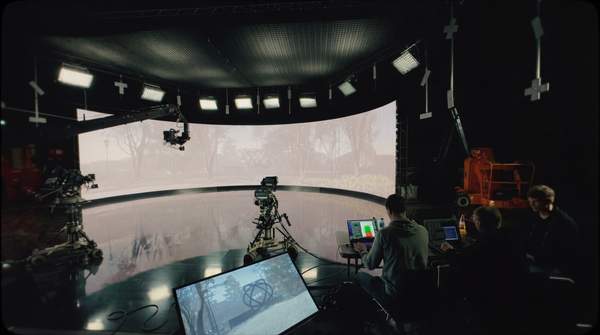
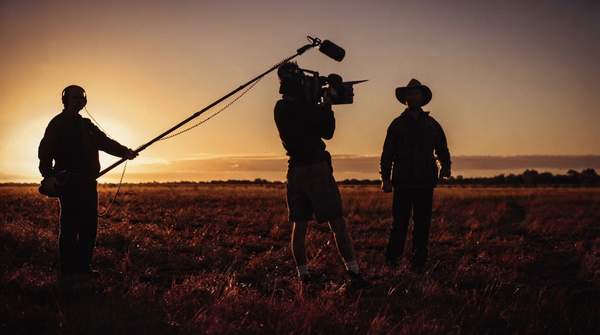
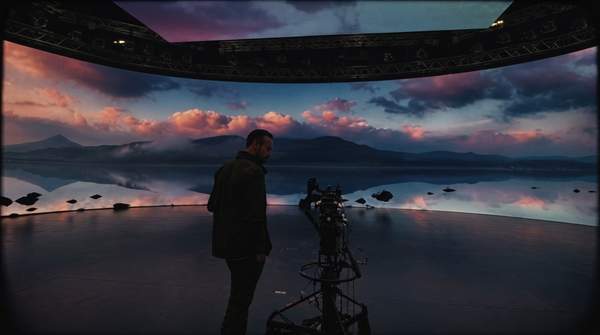
Morocco has just broken ground on a new International Cinema City in Ouarzazate, an investment exceeding $25 million (240 million Moroccan Dirhams), according to Variety. An investment exceeding $25 million (240 million Moroccan Dirhams) elevates Morocco's standing as a global film production powerhouse. This development follows a year where foreign film shoots generated up to $150 million annually, as reported by Northafricapost.
Morocco is making massive investments in film infrastructure and incentives. However, ensuring sustainable growth that benefits both international blockbusters and its burgeoning domestic industry requires a careful balancing act.
Morocco is poised to become an even more formidable player in the global film industry, attracting major international productions and solidifying its "Hollywood of Africa" reputation. Strategic capital deployment aims to enhance its appeal to filmmakers worldwide.
A Decade of Growing Foreign Investment
- Foreign film shoots generated around 1.5 billion dirhams ($140–150 million) annually in 2025, according to Northafricapost.
- In 2025, foreign investment in productions shot in Morocco reached roughly $130 million, according to Variety.
- Total investments by foreign producers in Morocco stood at 320 million dirhams in 2016, according to Northafricapost.
Foreign film investment figures for 2025 show a slight discrepancy: Variety reports $130 million, while Northafricapost states $140–150 million. The slight discrepancy in foreign film investment figures for 2025 suggests differing calculation methods. Despite the slight discrepancy, Morocco consistently attracts substantial international film investment, indicating a mature and appealing production environment.
Strategic Incentives Fueling Growth
In 2025, the Moroccan Cinematographic Center (CCM) backed 23 foreign features through an incentive scheme. The incentive scheme generated over $165 million in local investment, as Variety reports. The scheme ensures substantial local economic impact, extending direct financial benefits throughout the Moroccan service sector and local workforce.

Morocco's strategy combines new infrastructure, like the $25 million Ouarzazate cinema city, with robust incentive programs. Morocco's strategy, generating over $165 million in local investment from foreign features in 2025, provides a blueprint for global production hubs. It demonstrates how strategic capital deployment leverages existing foreign production revenues for high returns, moving beyond reliance on natural landscapes or brute force spending.
The Rise of Domestic Cinema
Morocco's domestic film industry produced 54 films last year, a thirteen-fold increase from just four features at the millennium's turn, Variety reports. The rapid, organic growth of Morocco's domestic film industry indicates a self-sustaining creative ecosystem. Despite the focus on foreign blockbusters and their $150 million annual revenue, the local expansion of Morocco's domestic film industry proves global appeal need not compromise domestic creative development.
This dual-track industry benefits Morocco, securing both large-scale international projects and its unique cinematic voice. This balanced approach is crucial for long-term industry health and cultural preservation.
Expanding Global Reach and Future Prospects
The Moroccan Cinematographic Center (CCM) actively promotes the country's film industry internationally. In 2026, the CCM will bring 10 producers to the Berlin market, selected from over 75 applicants, Variety reports. Bringing 10 producers to the Berlin market expands Morocco's global footprint and attracts new collaborations.
Morocco's commitment to infrastructure and international outreach positions it for continued growth. Morocco's commitment to infrastructure and international outreach solidifies its role as a key destination for diverse film projects, from independent features to major studio productions, showcasing its capabilities and talent globally.
Strategic initiatives foster long-term partnerships and integrate Morocco into the global film market. This approach keeps Morocco competitive and appealing to filmmakers seeking high-quality production environments.
What Does This Mean for the Global Film Industry?
What recent high-profile international productions have chosen Morocco as a filming location?
Ridley Scott's Gladiator 2 filmed in Ouarzazate, demonstrating the region's capacity for large-scale historical epics. Ridley Scott's Gladiator 2 utilized Morocco's diverse landscapes and studio infrastructure, drawing significant international attention.
How does the Moroccan Cinematographic Center (CCM) support the film industry?
The CCM backs foreign features via incentive schemes, generating substantial local investment. It also promotes Moroccan talent and projects internationally, exemplified by bringing 10 producers to the Berlin market from over 75 applicants, fostering global partnerships.
What are the benefits of Morocco's dual-track film industry approach?
This strategy attracts foreign investment while fostering a robust domestic creative sector. It ensures economic stability from international blockbusters and cultural enrichment through local storytelling, evidenced by a thirteen-fold increase in domestic film production to 54 films annually. This balanced model creates a resilient industry.
By 2026, the International Cinema City in Ouarzazate is expected to fully operationalize, likely solidifying Morocco's position as a premier global production hub for major studios and enhancing its capacity for large-scale projects.