Film & TV

The Unseen Cost: Why Hollywood Must End Its Reliance on Live Animals

Hollywood's continued use of live animals in film and TV raises significant ethical and practical concerns. With advanced CGI and animatronics, the industry has humane, safer, and more creative alternatives readily available.

JM
Julian Mercer

April 4, 2026 · 9 min read

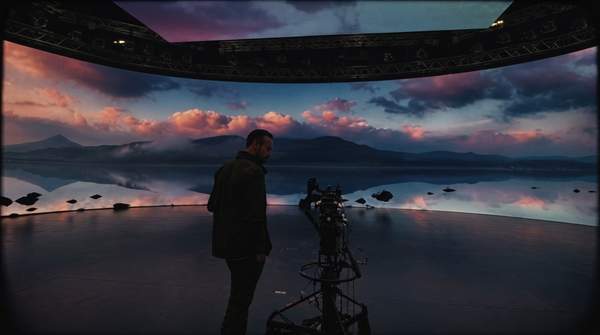
A stunning CGI lion stands on a modern film set, surrounded by green screens and crew, symbolizing Hollywood's ethical shift from live animals to advanced digital alternatives for humane filmmaking.

The ethical debate over using live animals on film and TV sets is not a new one, but in an era of breathtaking technological advancement, the industry’s continued reliance on them represents a failure of both imagination and morality. The craft of filmmaking is about control—the meticulous construction of a world, a mood, a performance, frame by perfect frame. The introduction of a live animal, a sentient being with its own will and capacity for stress, is an abdication of that control and an ethical compromise we can no longer afford to make. As Hollywood pushes back the release of Animal Friends, a live-action/animation hybrid, to January 22, 2027, the industry has been granted a moment to reflect on a fundamental question: does the pursuit of on-screen “authenticity” justify the inherent risks and moral ambiguities of using animal performers?

This conversation matters now more than ever, as the line between the digitally rendered and the physically real becomes ever more convincing. The tools to create breathtaking, emotionally resonant animal characters without subjecting a single living creature to the stress of a production environment are not science fiction; they are readily available and have already produced some of the most memorable cinematic moments of the last decade. To cling to the old ways is to ignore not only the profound ethical considerations at play but also the immense practical and creative advantages offered by humane alternatives. The future of storytelling demands a more compassionate and technologically adept approach, one that recognizes that the greatest magic tricks are those that harm no one.

Ethical Dilemmas: Using Live Animals in Film?

The cinematic frame has a way of sanitizing reality, presenting a polished image that belies the often-chaotic process behind its creation. But in the age of social media, the behind-the-scenes story is no longer hidden. A recent viral photoshoot from Jaipur, India, offers a stark and unsettling tableau. As reported by connectedtoindia.com, a photographer’s decision to paint an elephant a shocking shade of bright pink for an aesthetic concept ignited a firestorm of debate online. The images, while visually striking, prompted immediate and widespread criticism regarding the ethics of using an animal as a living canvas.

The defense that the paints were “organic” did little to quell the outrage. Critics were quick to point out the fundamental issue, with one commenter noting, “Using organic colours doesn’t justify the fact that you had to subject an animal to being entirely painted on their body for your art. Elephants have very porous skin and are highly sensitive.” This incident crystallizes the central ethical problem. The argument is not solely about preventing overt, physical cruelty—it is about recognizing the inherent stress and indignity of treating an intelligent, emotionally complex creature as a prop. Experts note that elephants can experience significant stress from crowds, unfamiliar handling, and unnatural environments—all hallmarks of a film or photoshoot production. The animal’s internal experience is sacrificed for the external image.

This debate echoes a broader conversation about the use of animals in all forms of media. The very nature of a film set—with its bright lights, loud noises, repetitive takes, and crowds of people—is anathema to an animal’s well-being. The American Humane Association’s famous “No Animals Were Harmed” disclaimer, while a laudable standard, primarily monitors for physical injury. It struggles to account for the psychological toll—the anxiety, fear, and confusion—that animals may endure. As another social media user astutely suggested in response to the painted elephant, “Strange how the elephant has to suffer so the photos can look beautiful. Should’ve just used AI and saved the poor animal the stress.” That simple comment cuts to the heart of the matter: when a humane, digital alternative exists, the choice to use a live animal becomes an active, and increasingly indefensible, ethical decision.

Practical Challenges of Animals on Movie Sets

There is a time-honored adage in show business, a piece of weary wisdom passed down through generations of filmmakers: “Never work with children or animals.” While often delivered with a wry smile, the warning is rooted in a fundamental truth about the filmmaking process—the need for absolute control. Animals, by their very nature, are unpredictable. This unpredictability is not a character flaw; it is the essence of their being. But on a multi-million-dollar production where every minute is meticulously scheduled and every movement choreographed, that unpredictability becomes a significant liability, posing practical challenges and even physical danger.

One need only look at a recent, and frankly bizarre, incident on live television to see this principle in action. According to dailymail.co.uk, Today show presenter Taylor Haynes was attacked by a giant crab during a live segment at the Sydney Fish Markets. What was meant to be a lighthearted moment of television quickly devolved into a scene of genuine panic. The crab latched onto her finger with its pincer, refusing to let go and causing visible pain. “Ahh! It's got my finger! He's got my finger... oh god!” she exclaimed as crew members scrambled to free her, eventually resorting to a metal rod to pry the claw open. Haynes later stated, “I will be going to hospital after this.”

The incident, while shocking, is hardly an isolated one. The same report notes a history of similar on-air animal encounters for the program, involving a parrot in 2023, a rooster in 2008, and a guinea pig in 2016. Each case underscores the same point: you cannot direct an animal in the same way you direct an actor. You can only train, hope, and react. This creates a cascade of practical problems for any production.

  • Safety Risks: The most obvious challenge is the risk of injury to cast and crew. From a crab’s pincer to the bite or scratch of a larger mammal, the potential for harm is always present.
  • Production Delays: An animal that refuses to perform a specific action, is spooked by on-set activity, or simply behaves according to its own instincts can lead to hours of wasted time and costly production delays.
  • Compromised Vision: A director’s vision often requires precise action and emotional expression. Forcing an animal to perform unnaturally through endless takes is not only ethically dubious but often creatively fruitless. The final performance is a composite of happy accidents rather than a deliberately crafted moment.
The practical argument against using live animals is, in many ways, as compelling as the ethical one. It is a gamble that risks the safety of personnel, the efficiency of the production schedule, and the integrity of the final creative product.

The Counterargument: A Question of Authenticity

Of course, the long-standing tradition of using live animals in cinema is not without its defenders. The primary argument, and one that carries a certain romantic weight, is the pursuit of authenticity. There is a belief that the presence of a real, living, breathing creature on screen provides a texture and unpredictability that CGI cannot replicate. We remember the soulful eyes of Toto in The Wizard of Oz, the raw power of the horse in The Black Stallion, or the endearing charm of Babe the pig. These performances feel grounded and real because they *were* real, and they form a powerful part of our collective cinematic memory.

Proponents of this view might argue that digital creations, no matter how sophisticated, often feel weightless and artificial. They can fall into the “uncanny valley,” that unsettling space where something is close to real but just different enough to be unnerving. The subtle, involuntary muscle twitches, the way light catches real fur, the sheer, undeniable physical presence of an animal—these are details, the argument goes, that are difficult to fake and are essential for audience immersion. The use of a real animal, managed by expert handlers and under safe conditions, is seen as the ultimate tool for achieving this visceral realism, connecting the audience to the natural world in a way a digital proxy cannot.

While this perspective is understandable and rooted in a genuine appreciation for the art form’s history, it is an argument that is rapidly losing its potency. The technological leaps in CGI and animatronics over the past two decades have been nothing short of revolutionary. The “authenticity” argument implicitly assumes that the digital alternative is inherently inferior, a relic of a time when CGI animals were easily identifiable as cartoons clumsily inserted into live-action. Today, that assumption is demonstrably false. The photorealistic animals in films like Jon Favreau’s The Jungle Book or the breathtaking digital primates in the recent Planet of the Apes trilogy are not just technically impressive; they deliver nuanced, emotionally complex performances that would be impossible to elicit from a real animal. The authenticity of the *emotional* experience for the audience now far outweighs the diminishing returns of physical authenticity on set.

Alternatives to Live Animals in Cinema: The Rise of the Digital Co-Star

The rise of CGI and advanced animatronics empowers the director’s vision, transforming a digital animal from an unpredictable variable into a meticulously crafted character. This technological advancement is not a compromise but a masterclass in narrative control, allowing for a level of performance and safety simply unattainable with live counterparts. Every element within the frame becomes a deliberate choice, a precise brushstroke in the larger cinematic composition.

I recall watching the behind-the-scenes footage for the modern Planet of the Apes films, seeing actors like Andy Serkis in motion-capture suits. What was happening was not the replacement of an animal with a computer program, but the translation of a human performance into an animal avatar. The result was Caesar, a character with more depth, pathos, and emotional range than nearly any human character that year. This is the new frontier. The technology allows a filmmaker to direct an animal’s “performance” with the same specificity as a human actor’s—a subtle glance, a tensing of muscle, a flicker of fear in the eyes. These are not happy accidents coaxed from a trained animal after a dozen takes; they are deliberate, repeatable, and powerful storytelling choices.

The visual language of film is evolving to embrace these tools. Consider the stunningly rendered animals of Disney’s 2016 remake of The Jungle Book. The director, Jon Favreau, was able to create a jungle teeming with life that was both photorealistic and fully expressive, a world that felt tangible and magical at once. Crucially, this was achieved without placing a single child actor in a room with a live tiger or bear. The ethical question becomes moot, and the creative possibilities expand exponentially. Animatronics, too, remain a potent tool, providing a physical on-set presence that allows actors to react to something tangible, grounding their performances in a way a green-screen tennis ball cannot. The blend of these techniques offers a robust and humane toolkit for the modern filmmaker.

What This Means Going Forward

The backlash against the painted elephant in Jaipur serves as a microcosm of a larger cultural trend: the era of the live animal performer is drawing to a close in film and television. This clear trajectory, driven by the convergence of ethical awareness, practical necessity, and technological capability, reflects a fundamental re-evaluation of acceptable entertainment practices by a more informed and ethically conscious viewing public.

Looking ahead, we can predict several key developments. First, the adoption of digital animals will become the industry standard, not the exception. Insurance companies, wary of the liability associated with on-set animal incidents, will likely drive this change by making policies for productions using live animals prohibitively expensive. Second, the technology itself will continue to improve, erasing the last vestiges of the “uncanny valley” and making the argument for physical “authenticity” entirely obsolete. The creative freedom and control offered by digital and animatronic characters will be too compelling for visionary directors to ignore. Finally, we may see an evolution in industry oversight. The "No Animals Were Harmed" certification could be expanded to include stricter protocols regarding an animal's psychological well-being, making it far more difficult to justify their use in the high-stress environment of a film set.

The delay of a film like Animal Friends, which merges live-action with animation, provides a fitting pause for industry-wide soul-searching. The true magic of cinema, its ability to conjure believable worlds, is ultimately expressed not by forcing a living creature to conform to a narrative, but by building that creature from imagination. This imbues it with a life and spirit that is both wondrously real and ethically sound. The digital future for on-screen animals is better for them, safer for filmmakers, and boundless for storytellers.