Hollywood debates AI script eligibility for Oscars

Steven Soderbergh's documentary 'John Lennon: The Last Interview' featured AI-generated video of both John Lennon and Yoko Ono, a collaboration with Meta, to recreate a conversation that never physica

JM
Julian Mercer

May 14, 2026 · 6 min read

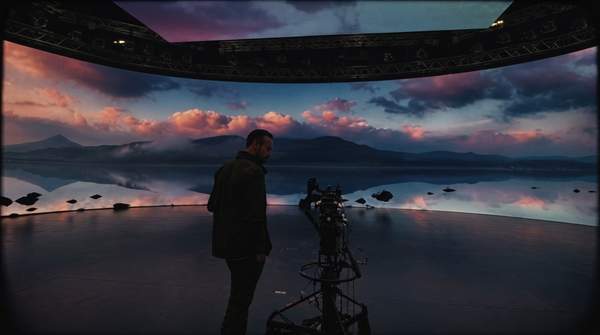
A cinematic depiction of artificial intelligence influencing Hollywood scriptwriting, with holographic scripts and a shadowy AI figure observing.

Steven Soderbergh's documentary 'John Lennon: The Last Interview' featured AI-generated video of both John Lennon and Yoko Ono, a collaboration with Meta, to recreate a conversation that never physically occurred in the same space. This innovative use of technology allowed for a cinematic resurrection, bringing an imagined encounter to life for audiences. The project offered a glimpse into a future where the lines between archive and creation blur, presenting profound ethical dilemmas for AI-generated scripts and creative works in Hollywood by 2026.

Hollywood is drawing clear lines against fully AI-generated content for awards, yet AI is already deeply embedded in subtle, supporting roles throughout film production. This tension creates a facade, where the industry publicly rejects what it privately embraces, celebrating technological advancements while simultaneously attempting to regulate their most overt manifestations.

The industry's current regulatory efforts are likely to be a temporary measure, as AI's pervasive influence will continue to redefine creative roles and challenge traditional notions of artistic credit. This stance creates a false sense of ethical boundaries, overlooking the irreversible integration of AI into the core of human creative authorship. The film world finds itself navigating a complex terrain where artistic originality and intellectual property face constant re-evaluation, pushing against the traditional value of artistic originality.

The very definition of a "human" creative contribution is becoming increasingly ambiguous, a subtle erosion accelerated by tools designed for efficiency and novel effects. This dynamic suggests that while the industry debates the eligibility of fully AI-generated content for accolades, the more profound impact of AI lies in its unacknowledged, pervasive presence, quietly reshaping the creative process from within.

How is AI covertly shaping film production?

Two films honored at the Oscars used AI technology to alter voices, demonstrating AI's deep, yet often unacknowledged, integration into celebrated works. Adrian Brody's accent in 'The Brutalist,' for instance, was fine-tuned with AI, an enhancement that directly impacts a performance's core. This digital refinement, while seemingly minor, subtly reshapes the actor's vocal delivery and character portrayal. AI has also been used to de-age actors like Tom Hanks and Harrison Ford, distinctly altering their on-screen presence, according to BBC News. These visual transformations allow actors to transcend time, blurring the distinction between their natural appearance and a digitally enhanced facade.
AI's widespread, often uncredited, use in various creative and technical capacities shows that it is not a future threat but a present reality, already shaping the final product. It operates as an invisible hand, refining performances and visual effects in ways that are often imperceptible to the average viewer but profoundly affect the cinematic experience. The subtle integration means that what audiences perceive as purely human artistry often carries a digital signature.

Hollywood's regulatory bodies, exemplified by the Academy's new rules banning fully AI-generated content, are creating an illusion of control. This effectively ignores the pervasive and subtle integration of AI in critical creative processes like voice alteration and de-aging that have already been celebrated in Oscar-honored films. The industry's public stance clashes with its celebrated achievements, revealing a disconnect between policy and practice.

What are Hollywood's rules for AI-generated content?

The Academy Awards have introduced new rules banning AI-generated actors and fully AI-written scripts from consideration for awards, according to Variety. These regulations aim to draw a clear distinction, asserting that digital performances created entirely by AI will not qualify for an Oscar. Such policies attempt to safeguard the traditional value of human authorship in creative endeavors, particularly when it comes to the highest accolades in filmmaking. However, a significant loophole exists: AI is still permitted for supporting roles in post-production, such as visual effects (VFX), editing, and technical polishing.

Regulatory attempts, while well-intentioned, highlight the industry's struggle to define and control AI's role, often drawing arbitrary lines that fail to address its more subtle and pervasive integration. The distinction between 'technical polishing' and 'creative origination' becomes functionally meaningless when AI-driven enhancements distinctly reshape and reinterpret human performances. For instance, the de-aging of an actor goes beyond mere technical correction; it redefines their presence in a narrative, a creative choice empowered by AI.

By permitting AI for 'supporting roles' in post-production while simultaneously using it to de-age actors like Tom Hanks and Harrison Ford or fine-tune accents, Hollywood is inadvertently eroding the very definition of a 'human' performance. This creates a moving target for what constitutes 'AI-generated' content, making future attempts to draw clear lines against it functionally impossible. The industry's reactive approach to technological change struggles to keep pace with AI's evolving capabilities and applications, leaving a significant gap between policy and the practical realities of film production.

What are the legal implications of AI-written scripts?

OpenAI, Google, and other tech companies are facing lawsuits for allegedly using copyrighted material to train AI without consent, according to BBC News. This legal challenge directly confronts the foundational principles of intellectual property in the age of generative AI, questioning who owns the creative output when its genesis involves vast amounts of existing human-made content. Simultaneously, Steven Soderbergh's documentary 'John Lennon: The Last Interview' used AI-generated video of John Lennon and Yoko Ono, in partnership with Meta, raising complex questions about posthumous consent and the ethical boundaries of artistic legacy.

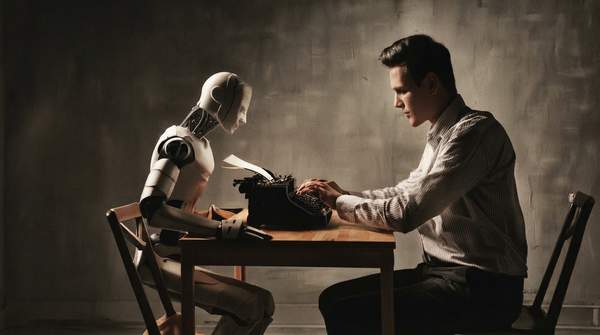
The anxieties about AI's impact on creative authorship are not confined to legal briefs; they are also explored in fictional narratives, reflecting a collective unease within the creative community. In 'The Comeback,' for example, Valerie Cherish is offered a comedy show secretly written by an AI named 'Al' that can generate jokes rapidly, as detailed by The Atlantic. This fictional scenario highlights the struggle to define intellectual property in an era where machines can mimic and even originate creative content.

Legal battles over training data and the use of AI to simulate or generate creative works directly challenge established notions of authorship, intellectual property, and artistic legacy. The industry is not merely debating award eligibility; it faces a core, unresolved crisis of authorship and intellectual property in the age of generative AI. This crisis extends beyond the practicalities of production, touching upon the very philosophical underpinnings of artistic creation and credit.

How does AI impact creative industries?

The Cannes Film Festival opened with a substantial debate surrounding artificial intelligence's impact on the film industry, highlighting the global concern over this evolving technology, according to Daily Sabah. Public discourse reflects a broader industry grappling with the future of creative work, where the boundaries of human invention are constantly being pushed and tested. In a fictional parallel, 'Hacks' depicts Deborah Vance being offered a deal to use her work for an app, QuikScribbl, that embellishes speeches with her comedic sensibility, a scenario that mirrors real-world anxieties about AI replicating and extending human artistic styles, as explored by The Atlantic.

As AI continues to mimic and extend human creative styles, the industry faces an inevitable re-evaluation of what constitutes original artistry and how credit is assigned in a collaborative human-AI landscape. The blend of human and machine contributions challenges traditional notions of authorship, requiring new frameworks for understanding creative value and the very essence of originality. The shift suggests a future where the creative process is increasingly a dialogue between human ingenuity and algorithmic capability, making the allocation of credit a complex endeavor.

Human creatives, whose authorship is diluted by these subtle integrations, stand as the potential losers in this evolving landscape. Studios and tech companies, prioritizing efficiency and novel effects, emerge as the beneficiaries. The traditional value of artistic originality, once sacrosanct, finds itself redefined by the capabilities of generative AI, forcing a re-examination of what truly constitutes artistic innovation in the 21st century.

By 2026, major studios will continue to navigate these blurred lines, with companies like Meta already demonstrating advanced AI integration in projects like the Lennon documentary. The film industry, therefore, must confront the reality that AI's role is not merely supportive but transformative, necessitating a re-evaluation of creative compensation and artistic credit.artistic recognition by the end of the year.