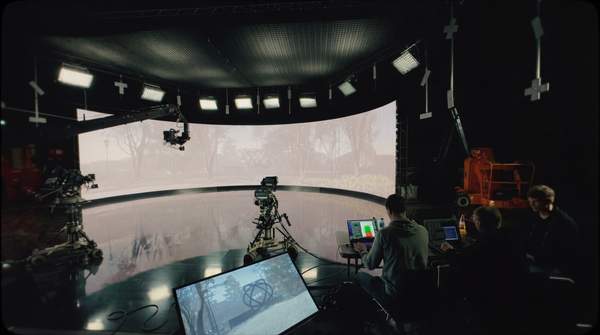
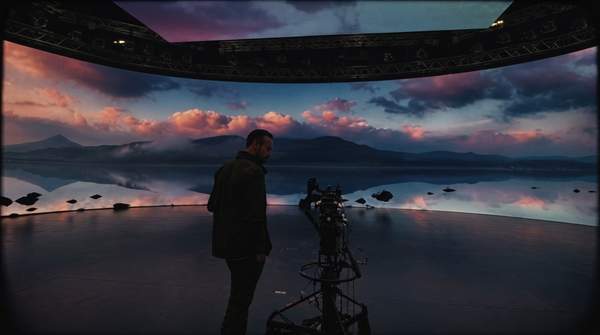
Renting an LED volume for real-time visual effects typically costs a production between $50,000 and $75,000 per week, a price tag that is both substantial and rapidly falling, according to Copilotco. The investment allows filmmakers to integrate digital environments directly into live-action shoots, blurring the lines between traditional and virtual production stages. Such technology offers immersive on-set experiences, previously reserved for blockbuster budgets, but its accessibility is expanding.
The barrier to entry for virtual production remains high for many filmmakers, but the industry is actively driving down costs and expanding access. The shift challenges established production models and redefines what is visually achievable across various budget tiers.
Virtual production will likely become the standard for high-end cinematic content, while smaller projects increasingly integrate its pre- and post-production benefits, creating a tiered adoption model across the industry. The evolution promises to democratize cutting-edge visuals for a broader range of productions.
Beyond Green Screens: What is Virtual Production?
Virtual production integrates physical and digital elements in real-time during filming, moving beyond traditional green screen techniques. This method allows actors and crew to interact with computer-generated environments visible on large LED screens. The process demands seamless collaboration between various departments, including art, visual effects, and camera teams, to achieve immediate feedback on set. The real-time integration significantly streamlines workflows and enhances creative control, allowing directors to make immediate adjustments.
The Price Tag of Innovation: Building a Virtual Stage
Establishing a large-scale virtual production facility requires a substantial capital investment. Building an 80-foot diameter, 30-foot height LED volume with rendering equipment could cost between $8 million and $16 million, excluding labor, as reported by Copilotco. The multi-million dollar commitment positions dedicated virtual stages primarily as viable options for major studios or long-term infrastructure investments. The high upfront cost contrasts sharply with the weekly rental rates, highlighting different access models for the technology.

Who Can Afford the Future of Filmmaking?
Currently, only bigger-budget films can typically afford to use full virtual production workflows during the filming stage, while smaller-budget films and TV series often utilize pre- and post-production virtual workflows, according to CGSpectrum. However, this definition of "bigger-budget" is rapidly changing. The declining rental costs for LED volumes imply that what was once exclusive is quickly becoming attainable for a wider range of productions. The shift challenges the perception of accessibility, enabling mid-tier projects to leverage real-time visual effects during principal photography.
Rental vs. Ownership: Understanding Stage Options
What are the benefits of virtual production stages?
Virtual production stages offer significant advantages, including immediate on-set visual feedback, enhanced creative control, and fewer reshoots due to real-time adjustments. They also provide realistic interactive lighting on actors and sets, which reduces complex post-production work like rotoscoping and keying. The integrated approach often leads to greater efficiency and a more immersive experience for performers.
How does virtual production differ from traditional filmmaking?
Traditional filmmaking often separates principal photography from visual effects, with many digital elements added in post-production. Virtual production, conversely, integrates these elements during the shoot, displaying digital backdrops on LED walls in real-time. This allows directors, cinematographers, and actors to see and react to the final environment on set, fostering a more collaborative and iterative creative process.
What technology is used in virtual production stages?
Virtual production stages rely on several advanced technologies working in concert. These include large LED video walls for displaying digital environments, real-time game engines like Unreal Engine for rendering those environments, and camera tracking systems that synchronize the virtual world with the physical camera movements. Specialized media servers and powerful graphics workstations also manage and process the complex visual data. The technological convergence enables a level of on-set creative control and fidelity previously unattainable, pushing the boundaries of what is possible in live-action production.
The Evolving Economics of Virtual Production
The cost of LED volumes has decreased from $75,000-$100,000 per week a few years ago to $50,000-$75,000 per week due to industry growth, Copilotco reports. The significant reduction signals a maturing market, making advanced visual effects more accessible. Studios slow to integrate virtual production are missing a critical window to gain a creative and financial edge, risking obsolescence as competitors achieve high-end visuals at mid-tier prices.
The stark contrast between the $8-16 million cost to build a large LED volume and the $50,000-$75,000 weekly rental rate reveals that agility and strategic rental are now more critical than outright ownership for most productions, democratizing access to cutting-edge visual effects. By 2027, smaller production houses like A24 will likely leverage strategic rental models to compete with larger studios on visual ambition, altering the competitive landscape for cinematic content.