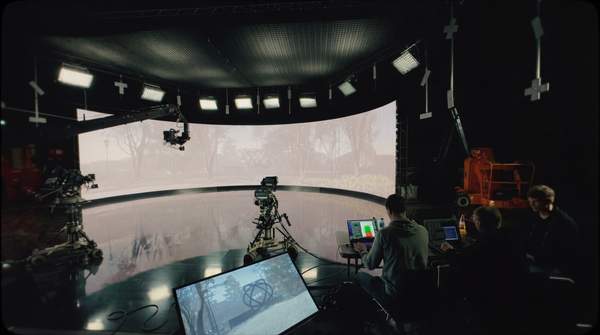
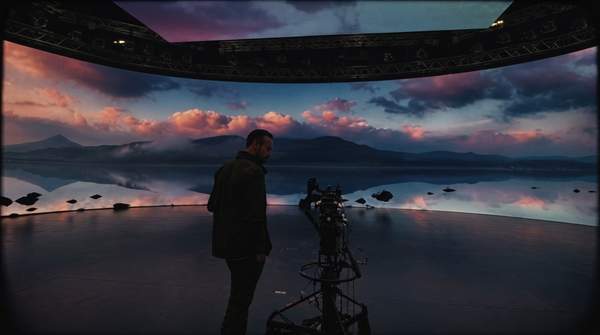
Building an 80 ft. diameter, 30 ft. height LED volume with rendering equipment could cost $8-16 million, excluding labor, according to Copilotco. This significant investment constructs large-scale virtual production stages that enable real-time visual effects. Such facilities integrate advanced display technology and powerful processing to create immersive on-set environments.
Despite these substantial upfront costs, the global virtual production market is projected to nearly quadruple in the next five years. This growth creates a tension between the high capital expenditure required for such infrastructure and the increasing demand for its capabilities in filmmaking. Studios must decide their long-term visual effects strategies.
Companies rapidly invest in virtual production infrastructure. This move fundamentally shifts how high-budget visual effects are created and managed on set. In-camera effects using virtual production stages and LED volumes now reshape filmmaking workflows in 2026.
Beyond Green Screens: What is an LED Volume?
An LED volume projects real-time backgrounds that respond to camera movement, a key distinction from traditional green screens, according to avixa. This technology creates an immersive environment directly on set. Actors and crew interact with virtual surroundings during filming, providing immediate visual feedback and enhancing creative control for directors.
For instance, The Mandalorian's standard StageCraft setup, as reported by avixa in 2020, was 20 feet tall, 75 feet across, and offered a 270-degree arc of coverage. Such expansive configurations enable wide shots and dynamic camera movements within a virtual setting. Virtual production aligns with the evolution of compositing technologies, suggests Researchgate. These systems deliver an immersive, real-time environment, fundamentally changing how filmmakers interact with on-set visual effects.
The Mechanics of a Virtual Production Stage
Hardware, including advanced cameras, LED walls, and real-time graphics processing systems, accounted for the largest market share in 2024, according to MarketsandMarkets. These components form the foundation of a virtual production stage, enabling complex digital environments. The expanding use of large-scale LED volumes for in-camera visual effects (VFX) and the rising adoption of AI-driven real-time rendering drive market growth, MarketsandMarkets also reported. These technological advancements enhance the realism and efficiency of virtual sets.

A large virtual production team typically consists of around 14 people on a major project, according to Copilotco. This lean staffing reflects a highly specialized and efficient workflow, integrating technical expertise with creative direction. The sophisticated integration of specialized hardware, software, and dedicated personnel, driven by advancements like AI-driven rendering, is critical for executing complex virtual productions.
The Economic Imperative: Why Studios Are Investing Billions
The global virtual production market was valued at USD 2.10 billion in 2025 and is projected to reach USD 8.76 billion by 2030, according to MarketsandMarkets. This growth signifies a fundamental shift in industry investment priorities. The market is expected to grow at a Compound Annual Growth Rate (CAGR) of 33.1% from 2025 to 2030, MarketsandMarkets also states. Such projections confirm virtual production's rapid ascent as a critical investment area and a dominant force in entertainment economics.
This nearly quadrupling of the market in five years means studios are not merely adopting this technology for specific projects. They are restructuring production pipelines to integrate real-time visualization and in-camera VFX as a standard approach. This makes virtual production an indispensable investment for future-proofing visual effects capabilities.
Cost vs. Creative Control: The Investment Equation
Building an 80 ft. diameter, 30 ft. height LED volume with rendering equipment could cost $8-16 million, excluding labor, Copilotco states. This figure represents the capital expenditure for a major, custom-built virtual production facility. However, productions can also rent an LED volume for 2D plate playback, such as 'people in cars, driving in cars,' for between $50,000 - $75,000 per week, Copilotco reports. This rental model offers flexibility for projects without the upfront investment.
The production segment holds the largest share within virtual production types, driven by increasing reliance on real-time visualization and on-set virtual environments, according to MarketsandMarkets. This confirms that virtual production's creative and efficiency benefits outweigh its significant costs for major projects. Real-time visualization, creative flexibility, and potential post-production savings increasingly justify the investment for major productions.
Your Questions Answered: Virtual Production Explained
What are the key components of an LED volume?
Beyond the display panels, an LED volume relies on precise camera tracking systems to synchronize the virtual environment with camera movement. Powerful real-time rendering engines, such as Unreal Engine, generate the virtual backgrounds, while a robust control system manages the entire setup to ensure seamless integration and dynamic adjustments.
What is the difference between building and renting an LED virtual production stage?
Building a large, full-scale LED volume can cost $8-16 million for an 80 ft. diameter setup, representing a significant capital investment for high-end productions. In contrast, a smaller, permanent LED virtual production stage might cost between $35,000 - $50,000, according to Copilotco, offering a more accessible entry point for productions with more modest needs. Renting a volume typically costs $50,000-$75,000 per week, providing flexibility without ownership.
Does virtual production reduce post-production work?
Virtual production aims to shift visual effects work from post-production to pre-production and on-set, often reducing the need for extensive compositing. By capturing final pixel images in-camera, productions can achieve higher realism and interactive lighting earlier in the workflow, potentially streamlining later stages of the filmmaking process.
By 2030, if current investment trends persist, virtual production appears poised to become the default methodology for high-budget visual effects, fundamentally redefining filmmaking workflows and on-set roles.