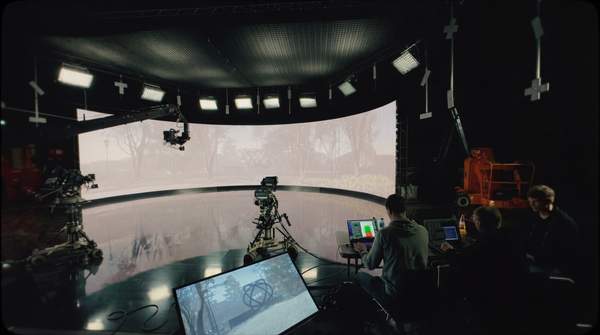
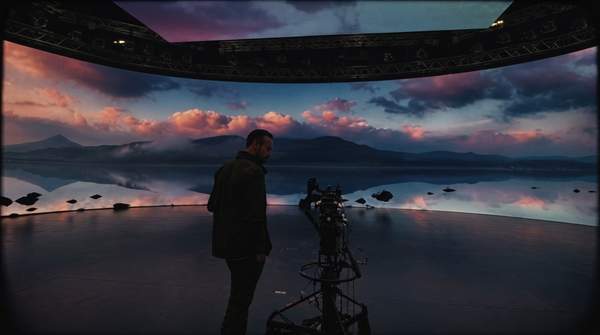
Renting a 2D playback LED volume for scenes like 'people in cars' now costs productions approximately $50,000 - $75,000 per week, according to Copilotco. This price point marks a significant decrease from prior years, democratizing access to high-end visual effects for independent filmmakers.
Despite this trend, virtual production requires substantial initial investment and specialized teams for full-scale ownership. However, it simultaneously lowers barriers to entry for high-quality visual effects and fosters greater creative collaboration.
As technology matures and costs continue to decrease, virtual production will likely become a standard rather than a niche approach for a wider range of film and television projects by 2026.
What is Virtual Production and Why Does it Matter?
Virtual production integrates digital assets into live-action shoots, enabling more creative and collaborative filmmaking. This method allows directors and cinematographers to visualize complex scenes in real-time, facilitating immediate on-set adjustments rather than post-production revisions, according to Unreal Engine. Key technologies include large LED volumes as dynamic backdrops for real-time rendered environments, motion capture systems for tracking camera and actor movements, and powerful game engines like Unreal Engine to process and display virtual worlds. These components integrate seamlessly, creating immersive on-set experiences.
This technique significantly enhances a project's visual quality. Filmmakers achieve unprecedented control and flexibility, embedding intricate visuals directly into the production process. This integration streamlines workflows and elevates the final on-screen product. The shift fosters a more unified creative vision from pre-production through principal photography.
Building the Virtual World: The Components and the Team
Building an 80 ft. diameter, 30 ft. height LED volume for virtual production could cost $8-16 million, excluding labor, according to Copilotco. Such a significant capital expenditure positions major studios with an inherent infrastructure advantage, centralizing advanced production capabilities.

However, despite the technological complexity and high hardware cost, a large virtual production team typically consists of around 14 skilled workers, as also reported by Copilotco. Lean staffing indicates a highly efficient and specialized workflow, capable of delivering high visual quality without the massive crews traditionally associated with complex visual effects. The competitive edge will increasingly shift from technology ownership to mastering the specialized skills required for efficient operation.
Navigating the Challenges of Virtual Production
Implementing virtual production involves inherent complexities. Diagnosing related issues is critical for maintaining production schedules, according to Netflix Studios Partner Help. Challenges range from technical glitches with LED panels to software integration problems, each capable of causing significant delays.
Understanding these potential roadblocks is crucial for successful implementation. Proactive identification and resolution of technical and workflow integration issues mitigate costly delays and ensure a smoother production process. This necessitates a deep understanding of both hardware and software components. The ability to troubleshoot rapidly on set directly impacts project timelines and budget adherence.
Best Practices for a Seamless Virtual Production
To overcome common virtual production challenges, mapping out potential solutions is essential, according to Netflix Studios Partner Help. This involves establishing clear communication protocols between departments and extensively pre-visualizing scenes before principal photography commences.
Proactive planning, leveraging established solutions, and continuous learning mitigate risks. Optimizing workflows requires thorough testing of virtual environments and ensuring all team members are proficient with the technology. This approach maximizes the creative and efficiency benefits of virtual production, fostering a more predictable process.
Given the continued decline in rental costs and ongoing technological advancements, virtual production appears poised to become a standard, two-tiered approach for achieving cinematic quality across diverse budgets by 2026.