Hachette's Orbit imprint abruptly halted the US publication of Mia Ballard's novel 'Shy Girl' and pulled it from all retailers. Strong suspicions of AI generation drove the decision, leading to the book's discontinuation in the UK and removal from online platforms, according to The Guardian. This severe reaction reveals the publishing industry's growing anxiety over content authenticity, leaving creators vulnerable to career-damaging accusations.
AI tools are rapidly integrating into creative workflows across various sectors, but a widespread, consistent, and enforced standard for disclosing their use is conspicuously absent. This vacuum forces individual platforms and publishers to become ad-hoc regulators, inadvertently creating a fragmented and reactive system.
Without a unified industry standard, platforms will increasingly implement their own disclosure mandates, leading to a fragmented and potentially confusing landscape for both creators and consumers. This piecemeal approach risks punishing creators who are hesitant to disclose AI content creation tool use in 2026, while eroding public trust in content authenticity.
YouTube is introducing a new Creator Studio tool. It requires creators to disclose when realistic content uses altered or synthetic media, including generative AI, according to the YouTube Help Center. Specifically, creators must flag content meaningfully altered or synthetically generated if it appears realistic. YouTube's action confirms major platforms recognize unchecked AI content as a significant threat to user trust and content authenticity, demanding proactive measures.
The Silent Spread of Synthetic Content
The abrupt halt of Mia Ballard's novel 'Shy Girl' by Hachette's Orbit imprint, due to suspected AI generation, sent shockwaves through publishing, as detailed by The Guardian. Simultaneously, a Northeastern University student demanded a tuition refund after a professor allegedly used an AI platform for lecture notes, reports Inside Higher Ed. These incidents reveal a burgeoning crisis of authenticity and academic integrity. Content origin is increasingly obscured, leading to tangible consequences for creators, institutions, and consumers.
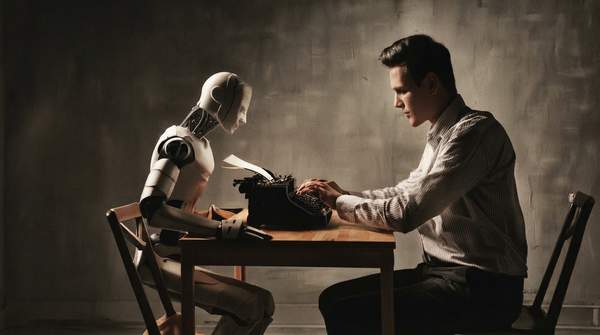
Publishers like Hachette now act as de facto AI content police. They set a precedent for severe, reactive consequences, disproportionately impacting creators caught in undefined AI ethics, as seen with Ballard's novel. This policing demands clearer, industry-wide standards to prevent disruptive actions and protect creators and consumers alike.
The Gray Areas and Creator Incentives
YouTube's official blog specifies no disclosure for content that is clearly unrealistic, animated, uses special effects, or employs generative AI for production assistance. This exception creates a significant gray area. Creators can leverage AI for efficiency without disclosure, especially when guidelines remain vague. The Northeastern University student, for instance, learned to use MagicSchool, an AI platform, to streamline teaching tasks, including prose generation, from her education department, Inside Higher Ed reports. This reveals a profound disconnect: educational institutions normalize AI for content generation, while the publishing industry reacts with severe penalties.
The current piecemeal AI disclosure approach, with YouTube's 'realistic' content rules and 'production assistance' exceptions, fosters a false sense of security. It allows vast amounts of AI-assisted content to proliferate without transparency, undermining public trust in human authorship. Researchers increasingly adopt AI for manuscript preparation, yet disclosure rates remain low, according to PMC. This illustrates the challenge. Conflicting signals from educators, who teach AI for prose, and creative industries, which penalize undisclosed use, are setting up a generation of creators for ethical dilemmas and career-damaging accusations.
YouTube's Mandate: A Precedent for Transparency
Creators who use YouTube's generative AI tools for posts or YouTube Shorts will have the use of AI automatically disclosed, as detailed in the YouTube Help Center. For AI tools other than YouTube's own, creators need to disclose their use during the upload flow. This 'altered content' disclosure setting is available in YouTube Studio on a computer or mobile device. YouTube's tiered disclosure system, distinguishing between its own tools and external ones, attempts to standardize transparency but also underscores the complexity of enforcing disclosure across a vast and varied content ecosystem.
YouTube's platform-specific mandate sets a precedent for how major content distributors may tackle AI. It places the onus on creators for transparency, especially for realistic content. This move, while clarifying, reveals the ongoing challenge of creating a unified standard for all AI assistance and generation across diverse platforms.
By Q4 2026, if industry leaders fail to establish unified AI disclosure standards, the creative landscape will likely remain fragmented, with platforms like YouTube and publishers like Hachette continuing to navigate content authenticity on their own terms.