A completed film soundtrack can expand from an initial 60 audio tracks to 600-900 tracks after adding artists add their invisible layers of sound. The tenfold expansion of audio tracks underscores the profound impact of meticulously crafted audio. Foley artists generate the seemingly mundane sounds of everyday life—footsteps, rustling clothes, object interactions—which are often lost or insufficient in raw production recordings.
Foley work is designed to be invisible, yet it is one of the most labor-intensive and impactful aspects of post-production, expanding a soundtrack tenfold. The deliberate invisibility of Foley work creates tension between immense effort and the audience's subconscious reception of vital sonic elements.
Understanding the meticulous craft of Foley reveals how deeply sound shapes our cinematic experience, often without conscious awareness, making it an unsung hero of storytelling.
The Profound Impact of Invisible Sound
Film watching is an embodied experience, generating significant physiological responses, according to Alphaville Journal. Sound affects body temperature, blood circulation, pulse rate, breathing, and even sweating. The profound physiological impact stems from sounds meticulously crafted to remain invisible.
Foley artists' subtle nuances enhance this embodied experience, making audiences feel deeply connected to the narrative. These carefully placed sounds are not mere background; they are fundamental drivers of physiological and emotional responses, crucial for true immersion.
Despite its deliberate invisibility, Foley artistry, evidenced by the tenfold expansion of audio tracks from 60 to 600-900, is a fundamental, often subconscious, driver of a film's emotional resonance and physiological impact, according to Shure and Alphaville Journal. The most powerful cinematic experiences are often built on unseen sonic foundations.
The Invisible Art: What Foley Artists Do
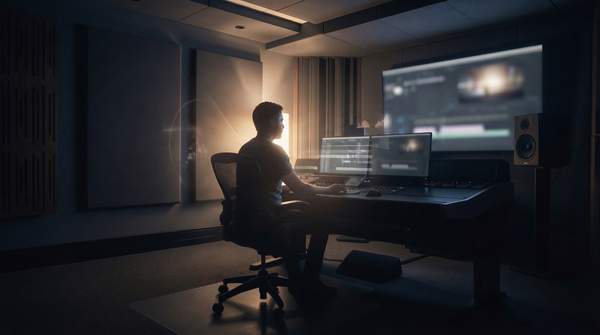
Foley artists devise, practice, and record sound effects on a dedicated studio stage, watching film sequences in real time to precisely match sound and video, according to Berklee Online. The live performance distinguishes Foley from pre-recorded libraries, ensuring organic synchronization.
Their primary goal is to recreate and enhance everyday sounds missing or inadequately captured during principal photography. These include rustling clothes, clinking dishes, or distinct footsteps on various surfaces. Meticulous detail ensures these sounds blend seamlessly, becoming imperceptible to the average viewer.
Foley artists are masters of sonic illusion, crafting everyday sounds that ground a film in reality and enhance believability. The hyper-realism, though artificial, is essential for suspending disbelief and drawing the audience deeper into the narrative, transforming a visual scene into a fully sensory experience.
From Spotting to Final Mix: The Meticulous Foley Process
The Foley process begins with a spotting session. Here, the director, supervising sound editor, music editor, and Foley editor catalog needed effects, as detailed by Berklee Online. The meeting identifies every sound required for the film's sonic environment.
Foley artists then prepare extensively, studying the film for 12-24 hours for surfaces, shoes, and characters, according to FoleyFirst. The intensive pre-production ensures artists understand precise sound cue requirements, from footwear type to ground texture.
The overall workflow involves reviewing locked picture, cleaning production audio, identifying ADR and SFX needs, assigning tasks, recording Foley, coding files, adding music, and securing final approval, according to Shure. The multi-stage process highlights the collaborative and technical demands.
The meticulous 12-24 hours of pre-recording study for sounds like footsteps and body movements reveals a paradox: the most 'natural' and impactful cinematic experiences are products of intense, unseen artificiality, designed to manipulate our deepest physiological responses, as noted by FoleyFirst and Alphaville Journal.
The Challenges of Crafting Sonic Reality
A completed film soundtrack can expand from an initial 60 audio tracks to 600-900 tracks after adding Foley and sound design, according to Shure. The exponential increase in audio complexity presents significant logistical and creative challenges for sound teams.
Managing hundreds of individual sound elements, each perfectly synchronized and harmoniously blended, demands sophisticated technical expertise and meticulous organization. Foley artists must ensure their contributions enhance, not detract from, the overall sonic landscape, often within tight post-production schedules.
Achieving seamless, realistic sound requires overcoming immense logistical challenges. The sheer volume of audio tracks managed by Foley artists to build a complete sonic world highlights the hidden complexity behind seemingly simple sounds.
Mastering the Craft: Essential Foley Techniques
Foley artists often use microphones with narrow polar patterns, such as cardioid or hypercardioid, and shotgun microphones to avoid picking up room noise, according to Shure. Specialized microphones isolate desired sound effects from ambient studio acoustics, ensuring clean recordings.
Microphone choice and placement are critical for capturing nuanced textures and characteristics. Artists experiment with distances and angles to achieve the desired sonic perspective, matching visual framing and emotional context.
Achieving a natural, 'invisible' sound requires a highly controlled, artificial environment and a blend of technical mastery and improvisational artistry, as explained by Shure and Berklee Online. The perceived organic quality of Foley is a direct result of rigorous technical control.
Common Questions About Foley Artistry
What are the most common foley sound effects?
The top three sounds Foley artists capture are footsteps, body movements, and prop handling, meticulously matched to images on screen, according to Shure. These fundamental sounds provide crucial auditory cues, grounding characters and actions in a believable physical space.
How do foley artists make footsteps sound realistic?
Foley artists create realistic footsteps by performing on various surfaces—gravel, concrete, wood, dirt pits—using different shoes, and adjusting their gait to match the character's movement and emotional state and the on-screen environment.
What is the difference between foley and sound design?
Foley primarily recreates everyday, diegetic sounds performed live to picture, like footsteps or clothing rustles, to enhance realism. Sound design has a broader scope, creating non-diegetic sounds such as explosions, atmospheric textures, or fantastical creature vocalizations, often using digital tools and libraries.
The Unsung Heroes of Cinematic Immersion
Given the increasing prioritization of immersive audio experiences, the demand for highly skilled Foley artists, capable of navigating complex soundscapes and employing advanced recording techniques, will likely continue to grow by 2026.