Digital Audio Tools & Immersive Sound for Modern Creators

Digital amp modelers now outsell tube amps, signaling a shift to versatile digital tools for professional sound and immersive storytelling.

VR
Victor Ren

April 20, 2026 · 8 min read

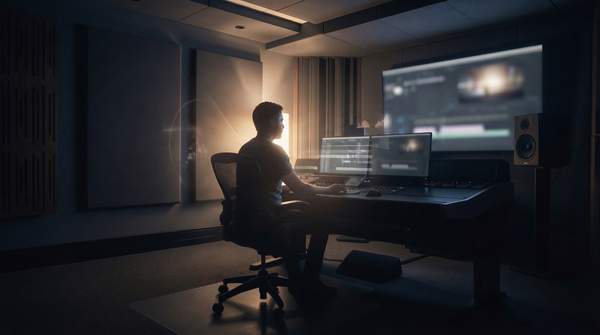
A modern creator in a high-tech studio, surrounded by advanced digital audio equipment and glowing sound wave visualizations, symbolizing immersive sound.

In 2025, digital amp modelers, once deemed inferior, outsold traditional tube amps on Reverb for the first time. This marks a seismic shift in how musicians achieve professional sound. Developdevice.com details this market preference, showing a growing reliance on versatile digital tools for immersive storytelling by 2026. Creators now prioritize accessible, high-fidelity digital solutions over legacy analog prestige.

High-quality, immersive audio was historically a luxury requiring significant investment and expertise. However, advanced digital solutions are now making it widely accessible and affordable. This tension challenges long-held assumptions about what constitutes premium sound.

The audio landscape will continue to evolve rapidly. Innovation will focus on user experience, integration, and further cost reduction. This progression could lead to a new golden age of sound for the masses.

The New Soundscape: Pro Tools and Immersive Home Audio

The ability of a $1,500 Fractal FM3 to replicate $50,000+ amps, alongside Blackstar's sub-$200 professional-grade options, means the perceived value of 'premium' audio gear is collapsing. Manufacturers are forced to innovate on features and convenience rather than relying on historical brand equity, according to Developdevice.

1. Dolby Atmos

Dolby Atmos, a primary spatial audio format, creates a three-dimensional soundstage, spreading audio in every direction, including overhead. LG integrates it into its 2026 premium TVs and select 2025 models, according to LG. Streaming platforms like Apple Music, Tidal, and Netflix also support it, as reported by NYT R&D. This widespread adoption, exemplified by systems like the Samsung HW-Q990F 11.1.4-channel system, makes immersive audio increasingly common, as detailed by Business Insider.

Strengths: Widely adopted across content and hardware; creates immersive 3D soundscapes; integrated into modern consumer electronics. | Limitations: Requires compatible hardware and content; full effect often needs dedicated speaker setups. | Price: Feature/System dependent

2. AI-driven Generative Soundscapes

AI tools now generate rich textures and matching ambient layers from descriptive phrases. For example, a designer can input 'ethereal underwater scene' or 'futuristic digital skyline' to create instant soundscapes, according to Soundverse Ai. This significantly accelerates the creative process.

Strengths: Speeds up soundscape creation; offers unique and complex ambient layers; reduces manual effort. | Limitations: Requires careful curation and refinement; may lack specific artistic intent without human oversight. | Price: Software subscription

3. AI Models for Dynamic Reverb Simulation

AI models simulate how sound behaves in realistic acoustic spaces, such as arenas, chambers, or natural landscapes. This enables dynamic reverb simulation that adapts to the virtual environment, enhancing immersion. These models provide nuanced and accurate spatial reflections.

Strengths: Creates highly realistic and dynamic acoustic spaces; enhances immersion through accurate sound behavior. | Limitations: Computationally intensive; requires high-quality input data for accurate simulations. | Price: Software plug-in/subscription

4. AI Tools for Optimal Spatial Positioning

AI tools analyze frequency, tone, and rhythmic patterns to suggest optimal spatial positions for different instruments or sound effects. This assists producers in crafting balanced and immersive mixes. Up to 60% of producers now use AI as an ideation tool, according to Developdevice.

Strengths: Optimizes sound placement for clarity and immersion; offers creative suggestions for complex mixes. | Limitations: May require user override for artistic intent; relies on algorithm understanding of 'optimal'. | Price: Software plug-in/subscription

5. Dynamic Sound Position Visualization (in DAWs)

Modern Digital Audio Workstations (DAWs) integrate plug-ins that visualize sound positions dynamically inside spheres or domes. This allows sound designers to manually fine-tune the placement of each audio source within a 3D space, as described by Soundverse Ai. Precise visual feedback aids complex spatial arrangements.

Strengths: Provides clear visual representation of sound placement; enables precise manual adjustment; improves mixing workflow. | Limitations: Requires compatible DAW and plug-ins; can be complex for beginners. | Price: Software plug-in

6. Headphone-supported Spatial Audio with Head Tracking

Headphone-supported spatial audio with head tracking enhances realism for personal listening. Apple's AirPods, for instance, use head tracking to create a fixed soundstage relative to the device. Mainstream streaming platforms like Apple Music, Tidal, Netflix, and Wondery are integrating spatial audio, according to NYT R&D, showing a clear convergence of personal devices and content delivery for immersive experiences.

Strengths: Highly accessible for personal use; enhances sense of presence and movement; works with common devices. | Limitations: Effectiveness varies by headphone quality; head tracking can be disorienting for some users. | Price: Device feature

7. Binaural Recording/Mixing

Binaural recording uses microphones placed in a dummy head or on a human to capture sound as it would be perceived by ears, creating a highly convincing 3D audio experience when played back through headphones. Artists like Janet Cardiff and George Bures Miller have used binaural recordings for over 30 years to create immersive audio walks, as noted by NYT R&D. It is a recognized immersive spatial audio mixing technique, according to Indiefy.

Strengths: Creates incredibly realistic 3D soundscapes for headphones; highly effective for conveying spatial information. | Limitations: Primarily for headphone listening; less effective on loudspeakers; recording setup can be specialized. | Price: Specialized microphones/Software

8. Mach1

Mach1, a primary spatial audio format, is utilized by the NYT R&D team. It offers a comprehensive approach to encoding and rendering spatial audio, providing flexibility for various playback environments from headphones to multi-speaker arrays. Its adoption by research and development groups confirms its technical capabilities.

Strengths: Flexible and robust spatial audio encoding; suitable for diverse playback systems; strong technical backing. | Limitations: Less widespread consumer adoption compared to Dolby Atmos; requires specific tools for production. | Price: Software/Tool dependent

9. Ambisonics

Ambisonics is a comprehensive spatial audio format that captures and reproduces a full 3D soundfield, allowing for flexible decoding to various speaker setups or binaural playback. It is covered as an immersive spatial audio mixing technique by Indiefy. This makes it particularly versatile for virtual reality and interactive audio applications where the listening perspective can change.

Strengths: Captures full 3D soundfield; highly versatile for various playback configurations; ideal for interactive content. | Limitations: Can be complex to work with; requires specialized software and understanding. | Price: Software/Tool dependent

10. Dolby Atmos FlexConnect

Dolby Atmos FlexConnect seamlessly integrates audio systems into everyday life, allowing speakers to be placed where chosen while the system automatically unlocks the best audio performance. This technology works with any television set if the soundbar is the primary device. It is expanding to LG’s 2026 premium TV lineup and select 2025 models, according to Stuff Tv and LG. This innovation simplifies the setup of immersive home audio.

Strengths: Offers flexible speaker placement; automatically optimizes audio performance; simplifies home theater integration. | Limitations: Requires compatible soundbar and TV; may not achieve the precise imaging of meticulously placed speakers. | Price: Feature/System dependent

This trend shows sophisticated audio capabilities, once exclusive to studios or high-end setups, are now within reach for a broad audience. This fosters creativity and enhances home entertainment.

Flagship Immersive Systems: A Deep Dive

With systems like the Samsung HW-Q990F offering 11.1.4-channel Dolby Atmos and advanced connectivitynectivity for a consumer price, companies still marketing multi-component, complex home audio setups are failing to recognize that true immersive experiences are now expected to be plug-and-play and affordable. The Samsung HW-Q990F is an 11.1.4-channel Dolby Atmos system that includes a wireless subwoofer and two wireless surround speakers, as reported by Business Insider. This integrated approach challenges traditional, fragmented home audio.

FeatureSamsung HW-Q990F (2026)Traditional Multi-Component System
System TypeIntegrated Soundbar SystemSeparate Receiver, Speakers, Subwoofer
Channels11.1.4 (11 main, 1 subwoofer, 4 height)Configurable (e.g. 7.1, 9.2)
Spatial Audio SupportDolby Atmos, DTS:XDependent on Receiver (often Dolby Atmos, DTS:X)
ConnectivityHDMI 2.1 (4K HDR, 120Hz, VRR), WirelessMultiple HDMI inputs, Analog, Wired Speaker Connections
ComponentsSoundbar, Wireless Subwoofer, 2 Wireless SurroundsAV Receiver, 7+ Wired Speakers, 1-2 Wired Subwoofers
Price RangeConsumer-level (e.g. ~$1,500-$2,000)Mid-to-High End (e.g. $3,000-$10,000+)
Key AdvantageSimplified setup, integrated immersive experienceCustomizability, upgrade path for individual components

The Samsung HW-Q990F exemplifies integrated home theater. It delivers a comprehensive, high-channel immersive experience with advanced connectivity. Its four up-firing and four side-firing drivers create surround and height effects. The system supports DTS:X and includes two HDMI 2.1 inputs with 4K HDR pass-through, supporting 120Hz and VRR for consoles like the PS5, according to Business Insider. This package offers premium features at a consumer price point.

Modular Approaches to Immersive Sound

LG's individual component pricing strategy allows consumers to build or upgrade immersive sound systems incrementally, offering flexibility and catering to different budget levels. For instance, the M5 surround speakers retail for $249.99, and the W7 wireless subwoofer for $599.99, according to LG. This modularity enables users to enter the immersive audio market with a foundational soundbar and add components as needed, democratizing access to advanced audio experiences by moving away from high upfront costs. This contrasts with all-in-one systems, empowering consumers to tailor their setups over time.

The Future is Immersive and Accessible

Digital modeling has lowered the barrier to professional music production. Immersive home audio systems are now standard, offering cinematic experiences at various price points. This convergence of advanced digital technology and consumer accessibility ensures high-quality sound will become a ubiquitous element of daily life, challenging established norms and forcing manufacturers to innovate on convenience and features over brand prestige.

By Q3 2026, the audio industry will see a greater emphasis on software-defined audio solutions. Companies like LG and Samsung will likely expand their modular and integrated offerings, pushing the boundaries of accessible, high-fidelity immersive sound for a broader consumer base.

Your Questions Answered

How do modern digital audio tools compare in fidelity to traditional analog equipment?

While traditional analog gear is prized for its unique sonic characteristics, modern digital tools like the $1,500 Fractal FM3 can replicate the sound of $50,000+ amplifiers with convincing accuracy, according to Developdevice. This suggests that for many applications, the perceived value and actual sonic performance are decoupled, making high-end analog gear more about brand prestige and specific tactile experience than inherent quality.

What is the role of remote collaboration in contemporary music production?

Remote collaboration has become a standard practice, with 70% of music collaborations involving remote elements in 2026, according to Developdevice. Affordable digital audio tools, such as Blackstar's sub-$200 professional-grade pedals, enable musicians worldwide to contribute high-quality tracks from any location. This shift prioritizes technological accessibility and flexible workflows over traditional studio setups.

How do immersive audio systems enhance storytelling beyond basic surround sound?

Immersive audio systems, like those supporting Dolby Atmos, move beyond simple channel-based surround sound by treating individual sounds as "objects" that can be precisely placed and moved in a 3D space. This allows creators to guide audience attention, evoke specific emotions, and build more believable virtual environments. The ability to place a sound overhead or behind a listener deepens the narrative by drawing them into the story's world.