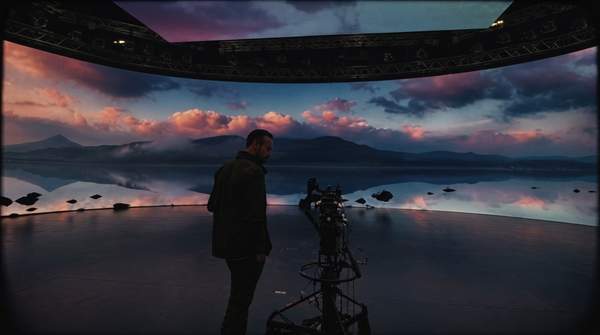
A single number on a spreadsheet directly determines production design decisions, such as whether a film’s hero lives in a sprawling, custom-built mansion or a cleverly repurposed suburban home. This financial framework constantly balances creative ambition with financial reality, dictating the very texture and scale of the world an audience experiences on screen.
Production design conceives and creates a film's visual world, encompassing every physical element viewers see, including sets, locations, props, and costumes. The budget allocated to this department directly shapes the scope and detail of this world, establishing parameters within which creativity must flourish. Managing this budget is a crucial component of the entire filmmaking process.
What Are the Key Components of a Production Design Budget?
A film’s overall financial plan, which Shamel Studio defines as a detailed estimate of all production costs, includes a specific allocation for production design. This comprehensive budget is often split into "Above the Line" and "Below the Line" categories, a distinction that clarifies where production design fits into the financial structure and ensures every dollar is tracked.
Above the Line (ATL) costs typically refer to the salaries of the primary creative and financial stakeholders who begin work during the development phase. Shamel Studio identifies these as the writer, producer, director, and principal cast. These costs are often fixed before principal photography begins. In contrast, Below the Line (BTL) costs encompass all the physical and logistical expenses of making the film. This is where the art department, and thus production design, resides.
According to Shamel Studio, Below the Line costs include crew wages, equipment rentals, sets, costumes, transportation, and catering. The online resource Rentman further details that these production costs cover the day-to-day expenses during shooting, specifically listing set construction and design, wardrobe, and makeup. These BTL costs are variable and depend heavily on the length and scale of the shoot, as noted by Shamel Studio. A longer shoot with more complex scenes will naturally require a larger BTL budget.
- Art Department Crew: This includes salaries for the production designer, art director, set decorators, prop masters, and construction crew.
- Set Construction & Dressing: This line item covers the raw materials (lumber, paint, fabric) and labor required to build sets. It also includes the budget for dressing existing locations to fit the film's aesthetic, which Rentman notes is a key part of the process.
- Props: This covers everything an actor touches, from a teacup to a custom-built weapon. The budget dictates whether these items are rented, purchased, or manufactured.
- Wardrobe & Costumes: The budget for the costume department covers purchasing fabric, hiring tailors for custom builds, renting period-specific clothing, or buying modern attire.
- Location Fees & Permits: While not always exclusively under the art department, the cost of securing and using real-world locations is a major factor in the production's visual plan.
- Contingency: A crucial component of any well-managed budget is a contingency fund. Shamel Studio advises that a contingency line, typically 5–10 percent of the total budget, should always be included to cover unexpected costs, which are an inevitable part of any film production.
How Does Budget Influence Set Design and Construction?
The budget's financial resources fundamentally determine the approach to creating a film's sets and locations, shaping the story's environment. Rentman states that production and set designers collaborate closely with the director to bring the script's vision to life, creating atmospheric and believable worlds. This collaboration begins with the script breakdown, which Shamel Studio identifies as the foundation of any film budget, as every location, prop, and visual effect mentioned in the script translates directly into a line item that must be accounted for.
In a high-budget production, the art department has the freedom to build elaborate sets from the ground up. Rentman describes this as creating the physical environments for filming, which can range up to highly detailed interior sets. This approach offers maximum creative control. If a script calls for a villain's lair inside a volcano or a starship bridge, a large budget allows the construction team to design and build that environment precisely as envisioned. This eliminates the need to compromise based on the limitations of an existing location. The funds cover not only high-quality materials and a large construction crew but also the time needed for intricate detailing, aging, and finishing.
Conversely, a limited budget demands a different, more resourceful strategy. Instead of building from scratch, the focus shifts to finding and modifying existing locations. This practice, often referred to as set dressing, involves taking a real-world space—an office, a house, a factory—and altering it to fit the narrative. The budget dictates the extent of these alterations. A modest budget might only allow for bringing in new furniture and props, while a slightly larger one could cover repainting walls, changing light fixtures, and adding or removing non-structural elements. This approach requires a keen eye from the production designer and location scout to find spaces that have the right "bones" for the story.
- Script Analysis: The production designer first breaks down the script to identify every required setting. According to Shamel Studio, this initial breakdown forms the basis of the art department's financial needs.
- Conceptualization: Working with the director, the designer develops a visual concept for the film. This includes the color palette, architectural style, and overall mood of the environments.
- Budgetary Review: The designer receives their allocated budget from the producers. This number dictates the feasibility of the initial concepts and forces a prioritization of visual elements.
- Build vs. Buy Decision: For each setting, a critical decision is made: Is it more cost-effective to build this set on a soundstage or to find and adapt a real location? This calculation involves construction costs versus location fees, transportation logistics, and potential weather disruptions.
- Resourceful Execution: Once the plan is set, the art department uses its allocated funds to execute the vision. On a low-budget film, this often involves creative problem-solving, like using forced perspective to make a set look larger or sourcing materials from salvage yards.
Impact of Budget on Costume and Prop Selection
The budget dictates what characters wear and interact with, just as it shapes the physical world of a film. Wardrobe and props are essential storytelling tools, conveying information about personality, social status, and the time period. According to Rentman, wardrobe designers create outfits reflecting these crucial character details, with the budget determining whether those outfits are sourced from a thrift store or custom-tailored from rare fabrics.
On a large-scale production, particularly a period drama or a science-fiction epic, the costume budget can be substantial. This allows the costume designer to conduct extensive historical or conceptual research and then design and manufacture original garments. This is essential when off-the-rack clothing is not an option. A generous budget covers the cost of skilled artisans, high-quality materials, and the labor-intensive process of creating multiple identical costumes for the lead actors and their stunt doubles. This level of investment ensures complete visual consistency and durability for the demanding environment of a film set.
For independent films or productions with tighter financial constraints, the costume department must rely on renting and sourcing. Designers become expert shoppers, scouring vintage stores, rental houses, and online marketplaces to find pieces that fit the characters and the film’s established color palette. The challenge is to assemble a cohesive wardrobe that looks intentional and serves the story without the luxury of custom creation; alterations are common, but the core garments are pre-existing. This approach requires immense creativity and a deep knowledge of fashion history and contemporary brands to pull off successfully.
The same budgetary logic applies to the selection and creation of props. A "hero prop"—a significant object that is featured prominently on screen, like a character's signature weapon or a key plot device—may receive a significant portion of the prop budget on a major film. This allows for custom fabrication using high-quality materials. On a lower-budget film, the prop master must be more resourceful. This may involve modifying existing objects, sourcing items from prop rental facilities, or building props from inexpensive, cleverly disguised materials. As Shamel Studio’s principle of the script breakdown suggests, every single item a character holds or uses must be budgeted for, making prop management a detailed and crucial task.
Why This Financial Planning Matters for Filmmaking
A film production budget is a foundational document that guides the entire project, described by Rentman as a "financial roadmap." Without this guide, a production risks veering into chaos and financial ruin. The budget forces the creative team to make deliberate, strategic decisions about resource allocation to serve the story, transforming abstract creative ideas into a concrete plan of action and ensuring the most important visual elements receive necessary funding.
Effective budget management in production design prevents costly delays that can jeopardize the entire film. If the art department exhausts its funds halfway through the shoot, construction on a critical set may halt, bringing filming to a standstill. Every day of delay incurs massive costs in crew salaries and equipment rentals. The variable nature of Below the Line costs, which Shamel Studio notes are dependent on the shoot's length and scale, makes this meticulous financial tracking absolutely essential for keeping a production on schedule and on budget.
A contingency fund is a necessity, not a luxury. The 5–10 percent contingency recommended by Shamel Studio acts as a financial safety net for filmmaking's inherent unpredictability. For instance, a custom prop might break during a take, a key location might become unavailable at the last minute, or unexpected weather could damage an exterior set. This fund allows the production to absorb such shocks without compromising other departments or derailing the project. The budget, as a framework, ultimately enables creative problem-solving, ensuring the final film delivered to the audience is a complete and compelling visual experience.
Frequently Asked Questions
What is the difference between "Above the Line" and "Below the Line" costs?
Film budgeting guides from Shamel Studio define "Above the Line" costs as salaries for main creative and financial talent—director, screenwriter, producers, and principal actors—secured during development. "Below the Line" costs cover all other physical production expenses, including technical crew wages, equipment rentals, location fees, and production design elements like set construction and costumes.
How does a production designer decide where to spend their budget?
A production designer's spending, guided by the script and director's vision, begins with a script breakdown. This process, noted by Shamel Studio, identifies every required visual element. The designer then collaborates with the director, a process highlighted by Rentman, to prioritize elements most critical to the story's atmosphere and themes. The budget is subsequently allocated to these key sets, props, and costumes to maximize narrative impact.
Can a low budget lead to more creative production design?
A limited budget necessitates creative problem-solving and innovation, often leading to unique and memorable visual styles. Designers must find resourceful solutions to stay within financial constraints, such as cleverly dressing an existing location to look entirely different, a technique mentioned by Rentman. This ingenuity, rather than immense financial resources, drives distinctive visual outcomes.
What happens if the production design department goes over budget?
Should the production design department exceed its budget, the film's overall contingency fund serves as the first defense. Shamel Studio indicates this fund typically comprises 5–10 percent of the total budget, designed for unforeseen expenses. If the overage surpasses the contingency, producers face difficult decisions, including simplifying later sets, cutting scenes, or seeking additional financing to complete the film as envisioned.
The Bottom Line
A film's budget is not a creative constraint but rather the essential framework that guides every visual choice, from the grand scale of a set to the subtle texture of a costume. It forces a disciplined approach to filmmaking, ensuring that financial resources are strategically applied to best serve the narrative. The key takeaway here is that exceptional production design, regardless of cost, is a masterful synthesis of artistic vision and meticulous financial planning, proving that the most compelling worlds are built not just with money, but with creativity and foresight.