More than 80 film and TV production service companies in Los Angeles have shuttered since 2022, marking a seismic shift in Hollywood's foundational infrastructure. This erosion impacts local businesses and thousands of workers, exemplified by the 2026 closure of Shadowcast Pictures, a long-standing production equipment rental company. While the industry faces a severe production drought and widespread closures, major studios simultaneously pursue mergers and AI integration, promising further disruption. This dual pressure renders Hollywood's traditional production model unsustainable for many small businesses, suggesting a future dominated by fewer, larger entities and a significantly altered workforce.
The Ripple Effect: Who Feels the Squeeze?
Over 80 film and TV production service companies in Los Angeles have closed since 2022, with some reports extending this timeline to four or five years (New York Post, CBS News, headliner). This consistent data points to a deep, persistent problem for local businesses. The widespread closure of service providers like Shadowcast Pictures exposes systemic vulnerability across Hollywood's support system. It leaves countless workers and businesses in precarious positions, from equipment renters to freelance crews, as traditional roles diminish rapidly.
A Perfect Storm: The Forces Dismantling Production
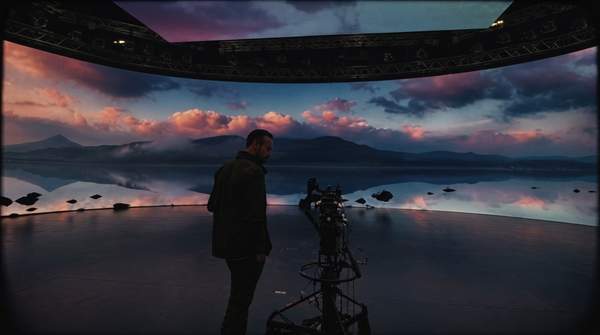
Jay Ellison, owner of Shadowcast Pictures, attributed his company's closure to a confluence of factors: the COVID-19 pandemic, recent labor strikes, and a persistent production drought (CBS News). Crucially, Ellison also cited the growing use of artificial intelligence, noting AI's capacity to replace needs for background, lighting, and wardrobe (New York Post). Ellison's observation that AI can replace needs for background, lighting, and wardrobe demonstrates AI's impact extends beyond complex visual effects, directly affecting fundamental, hands-on production roles that once formed the backbone of local industry support.
Despite a modest 10.7 percent increase in Los Angeles film and television activity in Q1 2026 compared to Q4 2025 (headliner), this uptick proved insufficient for traditional service infrastructure. The combination of pandemic halts, labor disputes, and accelerating AI integration creates an economic squeeze. Hollywood's technological shift, driven by AI, actively dismantles demand for traditional, hands-on production services, rendering entire industry segments obsolete rather than merely experiencing a downturn.