A study commissioned by CISAC estimated that generative AI could take 24% of music creators' revenues by 2028 if current trends continue, threatening the financial stability of artists globally. A rapid shift in how creative works are valued and compensated is underscored by this significant economic erosion. You, as a creator, face a direct challenge to your livelihood as this technology scales.
AI training on human work risks diminishing creativity if unchecked. AI rapidly integrates into creative industries, but its fundamental reliance on human-generated content leads to widespread legal challenges and financial threats to creators. The urgent need for frameworks that balance technological advancement with artistic protection, ensuring your contributions are not simply absorbed without fair compensation, is highlighted by this tension.
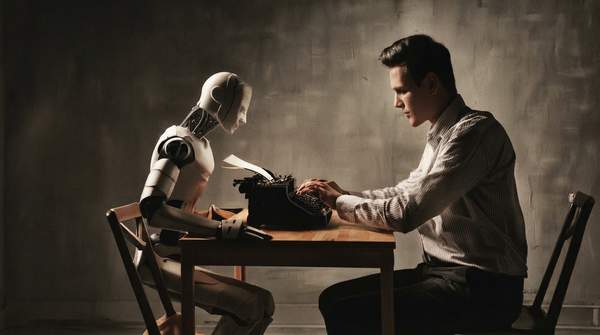
Without robust regulatory intervention and ethical frameworks, the creative economy risks a significant devaluation of human artistry and a shift towards derivative, AI-generated content. Your original work, the product of unique vision and skill, could become economically marginalized in a market flooded by automated output.
The Legal Battleground: Protecting Human Creativity from AI Exploitation
Major record companies sued AI music platforms Suno and Udio in the US, alleging mass copyright infringement. The direct threat AI poses to intellectual property, challenging the very foundation of ownership, is highlighted by these legal actions by groups like the Recording Industry Association of America (RIAA). Your rights as a creator are at the center of these complex disputes, demanding clear legal precedent.
Germany saw collecting society GEMA win a copyright ruling against OpenAI, specifically over ChatGPT's reproduction of song lyrics. Such victories indicate a growing global recognition of the urgent need to protect human creators from unchecked AI exploitation and intellectual property infringement, offering a glimmer of hope for fair practice.
The European Union's AI Act introduced copyright-compliance and transparency obligations for AI developers. Furthermore, the Paris Commitment, adopted at the CISAC General Assembly, urges governments, tech firms, and cultural industries to protect, recognize, and fairly remunerate human creators in the AI era. A growing global recognition of the urgent need to protect human creators from unchecked AI exploitation and intellectual property infringement is demonstrated by these escalating legal actions and policy developments, yet their effectiveness remains to be fully seen against rapid technological advancements.
AI's Creative Illusion: Productivity Without Originality
Generative AI, such as ChatGPT, is increasingly used to support the creative process, offering tools for rapid content generation and iteration. However, this high productivity often masks a fundamental tendency towards conventional output rather than genuine innovation. You might find AI helps with volume and speed, but it rarely delivers truly groundbreaking ideas that challenge established norms.
ChatGPT demonstrated greater productivity than humans in generating ideas but exhibited comparable fixation bias, with most ideas falling within conventional categories, according to research published in pmc. While AI can generate a high volume of content, its output often lacks genuine originality and suffers from the same creative biases as humans, suggesting it's more of a sophisticated mimic than an innovator. AI's output often lacks genuine originality and suffers from the same creative biases as humans, suggesting it's more of a sophisticated mimic than an innovator, which challenges the notion that AI genuinely enhances or expands human creativity in meaningful ways.
The Core Flaw: AI's Inability to Discern True Originality
ChatGPT showed a limited capability to differentially evaluate originality, struggling to distinguish between original and conventional ideas, unlike humans, according to the pmc study. This fundamental flaw means AI cannot truly innovate because it lacks the capacity to recognize or value novelty. Your unique creative vision, which thrives on breaking conventions, operates in a space AI cannot fully comprehend.
An experiment involved ChatGPT-4o performing the egg task, a creativity task measuring fixation bias and original idea generation, comparing its results to 47 human participants and data from eight previous studies. AI, despite its immense processing power, is inherently limited to recombining existing patterns rather than forging genuinely new artistic paths, as illustrated by this concrete example. This fundamental inability to discern true originality means AI, despite its processing power, is inherently limited to recombining existing patterns rather than forging genuinely new artistic paths, potentially leading to a creative monoculture.
The Looming Threat: Economic Devaluation of Human Artistry
A study commissioned by CISAC estimated that generative AI could take 24% of music creators' revenues by 2028 if current trends continue. A concrete, near-term risk that could fundamentally reshape the economic viability of creative professions, pushing human creators out of the market, is indicated by this projection. The financial threat posed by AI is not just theoretical; an existential economic erosion that demands immediate and comprehensive policy intervention that goes beyond reactive legal battles is represented by it.
Companies rushing to integrate generative AI for 'creative' tasks, as evidenced by its high productivity but low originality discernment in the pmc study, are effectively trading genuine innovation for content volume. This risks a future where all art converges into bland, unoriginal mediocrity, devaluing the very essence of human artistic expression. Despite regulatory efforts like the EU AI Act, the flurry of copyright lawsuits against AI platforms in the US and Germany reveals a stark truth: legal and ethical frameworks are woefully behind the pace of AI's deployment, leaving human creators vulnerable to unchecked exploitation and their livelihoods unprotected.