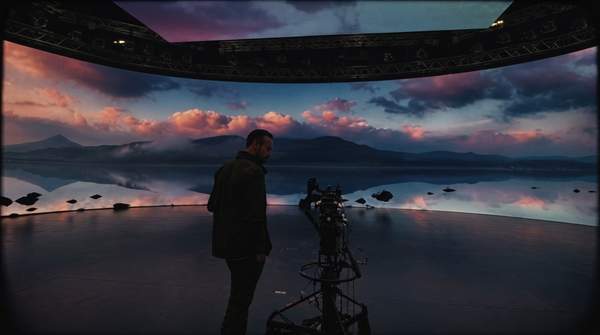
An AI filmmaking outfit, Gossip Goblin, led by Zack London, has amassed over 500 million views using readily available tools like Midjourney. Simultaneously, Christopher Nolan's Tenet deployed the 15kg, 65mm Logmar Magellan film camera, announced in 2018. This stark dichotomy defines independent filmmaking today: a choice between high-craft, analog mastery for specific aesthetic goals, or rapid, AI-driven content generation for broad reach. The gap in production methodologies widens.
1. The Weight of Craft
The Logmar Magellan 65mm camera, announced in 2018, weighs 15 kg (33 lb) ready-to-shoot. It operates at 24 frames per second with a fixed 172.8-degree shutter, allowing meticulous control over image capture—a hallmark of high-fidelity analog filmmaking. The Magellan transports 65mm negative vertically using the 5-perf format, a design choice reflecting its commitment to classic film production standards. Its use in Christopher Nolan's Tenet confirms its role in high-end, artistic productions, demanding precise operation for a distinct cinematic aesthetic, according to Y.M.Cinema Magazine. This dedication to physical artistry, despite its demands, offers unparalleled image fidelity.
Best for: Auteurs and cinematographers prioritizing unparalleled image fidelity and a distinctive analog aesthetic.
Strengths: Superior image quality; tactile, authentic film look; established cinematic heritage. | Limitations: High cost; significant weight and size; specialized handling required; limited availability. | Price: Significant investment (not publicly disclosed).
2. Midjourney's Algorithmic Speed
Midjourney, a generative AI tool, powers Gossip Goblin's films. Its accessibility allows creators to bypass traditional production bottlenecks, focusing on iterative artistic direction. This platform enables rapid iteration of visual ideas, letting filmmakers like Zack London experiment with diverse aesthetics without physical production demands. Its ease of use lowers the barrier to entry for visual storytelling, but also introduces questions of algorithmic aesthetic and ethical sourcing.
Best for: Digital artists, independent content creators, and AI filmmakers seeking to rapidly prototype and produce visual narratives.
Strengths: High accessibility; rapid content generation; diverse stylistic outputs; low barrier to entry. | Limitations: Algorithmic aesthetic can be criticized; potential for ethical concerns regarding source material; creative control can feel indirect. | Price: Subscription-based, generally affordable for individual creators.
3. Google's Nano Banana
Google's Nano Banana, another AI tool used by Gossip Goblin, reflects the growing diversity of accessible AI solutions in independent production. This tool contributes to an ecosystem enabling rapid, digital-first content creation. Its inclusion in Gossip Goblin's toolkit reflects a trend where off-the-shelf AI applications facilitate high-volume content. This approach prioritizes digital reach over traditional physical production demands.
Best for: Experimental filmmakers and creators exploring new forms of storytelling with readily available AI resources.
Strengths: High accessibility; integrates with existing digital workflows; supports rapid iteration. | Limitations: Specific capabilities not detailed; potential for generic output without skilled direction; reliance on platform updates. | Price: Likely integrated into Google's developer ecosystem or subscription-based.
Precision Engineering Meets Algorithmic Creativity
The contrast between these two filmmaking paradigms is stark, revealing fundamental differences in creative process, accessibility, and initial reception.
| Feature | High-Craft Analog (Logmar Magellan) | Accessible AI Filmmaking (Gossip Goblin, Midjourney, Seedance, Google's Nano Banana) |
|---|---|---|
| Creative Process | Meticulous, physical capture of light on film; precise mechanical operation; emphasis on controlled, tangible artistry. The camera registers the center of the frame being exposed to maintain stable negative positioning, according to Y.M.Cinema Magazine. | Algorithmic generation of visuals and narratives; rapid iteration through prompts and adjustments; focus on conceptual input and digital output. Zack London uses off-the-shelf AI tools, including Midjourney, Seedance, and Google's Nano Banana, to create his films, according to The Guardian. |
| Accessibility | Extremely high barrier to entry; requires specialized training, significant financial investment, and access to unique equipment and processing facilities. | Very low barrier to entry; utilizes readily available software and platforms, often with subscription models, making content creation widely accessible. |
| Initial Reception | Revered for artistic integrity, cinematic depth, and historical legacy; often appeals to niche, cinephile audiences. | Critics disparage AI movies as 'automated slop' or 'cheating', citing concerns over industrial-scale copyright theft, according to The Guardian. |
The Future of Authorship and Industry Adoption
Despite critics labeling AI films 'automated slop', LA talent agents and major studios show burgeoning interest. The industry prioritizes rapid content generation and massive reach over established artistic integrity, fundamentally reshaping career paths. Financial incentives quickly outweigh traditional artistic purism, according to The Guardian.
Zack London of Gossip Goblin believes sufficient authorship is key to avoiding copyright issues in AI-generated content. This fuels the debate surrounding intellectual property and creative control. Gossip Goblin's 500 million views prove audience engagement, not traditional production values or specialized equipment, is the new arbiter of independent film success. Companies clinging solely to high-fidelity analog craft, like Christopher Nolan's use of the Logmar Magellan, risk being outpaced by agile AI-powered outfits. By 2026, traditional filmmakers who do not adapt to AI tools may struggle to compete for audience attention with high-volume, digitally native content.