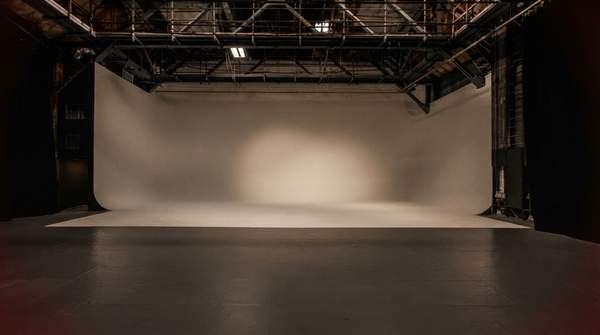
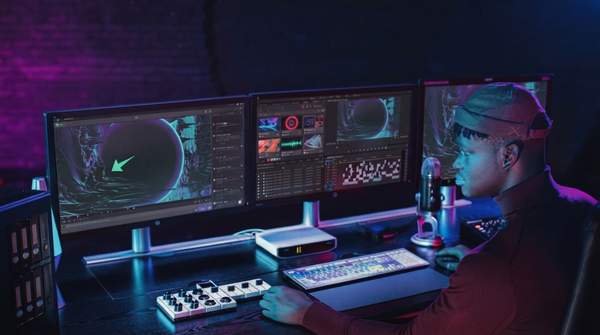
The Apple TV series The Mandalorian was primarily created on Unreal Engine using virtual backgrounds on LED screens, fundamentally altering film production. This method rendered complex visual environments in real-time, providing actors with immersive sets without extensive physical builds or location travel (iac). Traditional filmmaking demands immense budgets and logistical complexity, often placing high-quality visuals out of reach for independent creators. However, emerging technologies enable high-quality production with significantly reduced costs and timelines, creating new opportunities. Consequently, independent film production is likely to see a surge in innovative, visually rich content as these technologies become widespread. Creators like Smile Seenu (The New Indian Express) are already exploring next-generation filming with AI and virtual production, confirming that high-quality filmmaking is democratizing, empowering new storytellers to bypass traditional gatekeepers.
1. AI (Artificial Intelligence)
Best for: Automating repetitive tasks, generating virtual assets, enhancing post-production workflows, and optimizing resource allocation.
AI reduces production time and costs, enabling large-scale visuals with limited resources (Cinemaexpress). It also maintains quality while reducing expenses, complementing human creativity (iac). This dual benefit means AI can democratize access to sophisticated filmmaking tools, extending capabilities from script analysis to visual effects creation for independent projects.
Strengths: Significant cost and time reduction | Enables complex visuals with fewer resources | Enhances creative possibilities | Limitations: Requires specialized knowledge | Ethical considerations | Still developing for some advanced tasks | Price: Varies by software and service; many open-source options available.
2. Virtual Production
Best for: Creating immersive digital environments, reducing location shooting needs, and facilitating real-time creative decisions on set.

Virtual production reduces time and costs while enabling large-scale visuals with limited resources (Cinemaexpress). This approach, proven by The Mandalorian, saves time and money compared to traditional location shooting (iac). Its seamless integration of physical and digital elements allows filmmakers to achieve cinematic scope previously reserved for blockbusters, democratizing high-end visuals.
Strengths: Significant cost and time savings | High creative control over environments | Real-time feedback for cast and crew | Limitations: High initial setup cost | Requires skilled technical teams | Complex integration challenges | Price: Varies significantly based on scale and technology.
3. Unreal Engine
Best for: Real-time 3D creation, virtual sets, previsualization, and photorealistic rendering in film and games.
Unreal Engine was central to The Mandalorian's virtual backgrounds on LED screens (iac). This powerful platform enables filmmakers to create entire movies, lowering the barrier to entry for high-quality visual production by offering robust tools for scene composition and lighting.
Strengths: High-fidelity real-time rendering | Extensive toolset for virtual production | Large community support | Limitations: Steep learning curve | Requires powerful hardware | Licensing fees for commercial projects | Price: Free for most uses, royalty fee for commercial products over a certain revenue threshold.
4. LED Screens (for Virtual Backgrounds)
Best for: Creating dynamic, immersive virtual sets that react to camera movement in real-time, eliminating green screen limitations.
LED screens, used with Unreal Engine for The Mandalorian (iac), project backgrounds that save time and money over traditional location shooting. This technology provides realistic lighting and reflections for actors, fundamentally changing on-set production by offering immediate visual feedback and reducing post-production complexity.
Strengths: Eliminates green screen spill | Provides realistic interactive lighting | Reduces post-production costs | Limitations: High rental or purchase cost | Complex setup and calibration | Pixel density and refresh rate considerations | Price: High rental costs per day or significant purchase investment.
5. Unity
Best for: Interactive experiences, real-time 3D content, and virtual production with a focus on ease of use and broad platform support.
Unity enables filmmakers to create entire movies, lowering the barrier to entry for independent creators (iac). Its versatile environment for linear and interactive cinematic experiences, coupled with broad asset and plugin support, empowers creators to explore new narrative forms beyond traditional linear film.
Strengths: User-friendly interface | Strong for interactive content | Broad platform compatibility | Limitations: Can be less photorealistic than Unreal Engine out-of-the-box | Requires C# scripting for advanced features | Recent changes to pricing model | Price: Free for personal use, subscription tiers for professional teams.
6. Blender
Best for: 3D modeling, sculpting, animation, rendering, and compositing, particularly for independent artists and studios seeking open-source solutions.
Blender enables filmmakers to create entire movies, lowering the barrier to entry for cinematic production (iac). As a comprehensive, free, and open-source 3D content creation suite with strong community support, it offers an accessible pathway for independent filmmakers to achieve professional-grade visuals without significant software investment.
Strengths: Completely free and open-source | Comprehensive 3D toolset | Strong community support | Limitations: Steep learning curve for beginners | Performance can be less optimized than commercial alternatives | Interface can be dense | Price: Free.
7. Maya
Best for: High-end 3D animation, modeling, simulation, and rendering, widely used in major film and visual effects studios.
Maya enables filmmakers to create entire movies, lowering the barrier to entry for cinematic production (iac). As an industry-standard for complex character animation and visual effects, its robust toolset and integration with other Autodesk products mean it continues to define the benchmark for high-fidelity digital content creation in professional pipelines.
Strengths: Industry-standard for animation and VFX | Powerful modeling and rigging tools | Robust simulation capabilities | Limitations: High cost | Steep learning curve | Can be resource-intensive | Price: Subscription-based, annual and monthly options available.
8. Previs Pro
Best for: Previsualization and blocking scenes on mobile devices, allowing filmmakers to plan shots and camera movements efficiently.
Indie filmmakers are using Previs Pro in 2026 for mobile previsualization (Google). This application aids in planning shots and camera movements before physical production, streamlining the creative process for blocking scenes. Its accessibility on mobile devices democratizes professional-grade planning, enabling more precise and efficient productions for independent creators.
Strengths: Mobile accessibility | Intuitive for shot planning | Cost-effective previsualization | Limitations: Limited rendering capabilities | Not a full-production tool | Dependent on device performance | Price: Subscription-based or one-time purchase, varies by platform.
Cost vs. Creativity: The Virtual Advantage
| Feature | Virtual Production (with LED Screens) | Traditional Location Shooting |
|---|---|---|
| Cost Efficiency | Significantly reduced; eliminates travel, permits, and extensive set construction. | High; requires permits, travel, lodging, physical set builds, and location fees. |
| Time Savings | Substantial; real-time environment changes, fewer logistical delays. | Variable; dependent on weather, travel, location availability, and setup times. |
| Creative Control | High; environments can be altered instantly, offering flexibility for directors and cinematographers. | Limited; constrained by existing locations, weather, and physical set limitations. |
| Flexibility | High; one stage can host multiple diverse environments. | Low; requires moving entire crew and equipment for each new location. |
| Environmental Impact | Lower; reduced travel and waste from physical sets. | Higher; requires more travel and physical waste.ignificant travel emissions and material waste from temporary sets. |
Virtual tools and LED screens save time and money compared to traditional location shooting (iac). These efficiencies make sophisticated filmmaking techniques accessible to projects with limited resources. Independent filmmakers are no longer constrained by location or budget, but only by creative vision, effectively leveling the playing field against established studios (iac).
The Inevitable Shift to Virtual
The Mandalorian's success proves virtual production delivers blockbuster visuals efficiently (iac). This compels traditional studios to re-evaluate their production pipelines, signaling an irreversible shift from resource-intensive methods toward virtual production (iac). This shift compresses the entire film production lifecycle. AI integration will amplify these efficiencies for independent creators. The primary barrier to cinematic production is shifting from immense capital investment to creative vision and technical acumen, empowering new storytellers. By late 2026, a significant number of independent productions, like those explored by Smile Seenu, will likely have adopted virtual production methods, solidifying this industry transformation.
What's Next? AI's Role in Future Filmmaking
How is AI streamlining pre-production in 2026?
AI tools in 2026 automate script breakdowns, generate early concept art, and optimize shooting schedules. This allows filmmakers to visualize complex scenes and identify potential challenges earlier, reducing costly reshoots.
What are the environmental benefits of virtual production?
Virtual production significantly reduces filmmaking's carbon footprint. It minimizes travel and reduces physical set construction and disposal, lowering energy consumption and waste. This makes production more sustainable for independent projects.
How will AI impact post-production workflows in the coming years?
AI advances will further virtual production by reducing post-production costs while maintaining quality (iac). AI can automate tasks like rotoscoping, color grading, and visual effects generation. This will accelerate delivery timelines and make high-quality finishing accessible to smaller budgets.