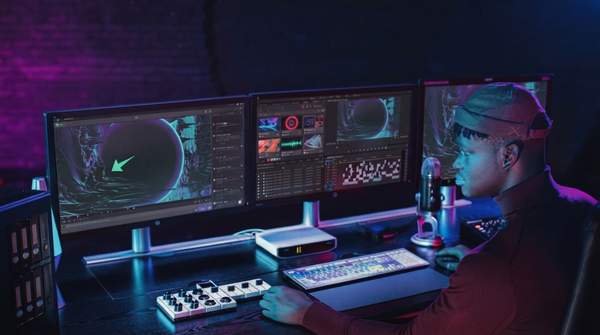
A dialogue editor's job is to take the raw, uneven recordings captured on set and turn them into a clean, consistent dialogue stem that the re-recording mixer can blend with music and effects. As Brian Fuller's course materials on dialogue editing describe it, the objective is to "improve performance clarity, enhance creative messaging, balance levels, and conform to technical parameters" by organizing, editing, and mixing the film's dialogue. The work sits in the middle of the post-production pipeline, after picture editing and before the final mix, and nearly every later stage depends on it.
The Dialogue Editor's Core Mission
Dialogue is rarely captured perfectly. A single scene may contain many recordings, and production dialogue is rarely represented by one clean microphone track. The dialogue editor's mission is to resolve those inconsistencies before the material reaches the re-recording mixer, so that the audience hears a seamless performance rather than a patchwork of takes.
That mission is both technical and dramatic. Vancouver Film School's guide to the role captures the tension: "A technically clean line can be the wrong line. It may lack the breath that gave the performance urgency. Its distance may contradict the camera position. Noise reduction may remove the location along with the noise." The editor must therefore judge each decision against the performance and the picture, not just against a noise floor.
Stage 1: Organizing and Synchronizing Production Audio
The workflow begins with organization. The dialogue editor receives the production audio—often multiple microphone channels per scene—and assembles it into a working session synchronized to picture. Fuller's workflow describes this as project organization within the editing software, building toward a sequence with one combined track of dialogue running the entire length of the film.
Organization is also where assistant-level work happens. Vancouver Film School notes that an assistant dialogue editor is often trusted with material before being trusted with major performance decisions; responsibilities may include assembling production sound, expanding microphone channels, checking synchronization, organizing sessions, locating alternate takes, and tracking ADR requirements. Getting this foundation right matters because, as Fuller puts it, the post-production workflow is cumulative—a missed step tends to delay everything after it.
Stage 2: Cleaning, Restoring, and Selecting Dialogue
Once the session is organized, the editor cleans and selects. Fuller's workflow includes audio restoration and replacing unusable takes with alternate takes or ADR. The craft draws on production recording, critical listening, synchronization, session organization, restoration, ADR, and mixing, as the Vancouver Film School curriculum outline makes clear—understanding the earlier recording stages helps the editor interpret what arrives from the set.
Selection is as important as cleaning. An isolated line can be technically correct and dramatically wrong if the editor has not considered whether another character responds, or whether the chosen take matches the rhythm of the surrounding lines. The editor's job at this stage is to ensure the dialogue flows naturally across cuts, scene boundaries, and microphone changes.
Stage 3: Leveling, Balancing, and Perspective Mixing
With clean takes in place, the editor balances them. Fuller's materials describe a layered approach: mix and keyframe to boost levels and remove peaking, working from the individual clip, to the track—combining the lavalier for intelligibility with the boom for environmental perspective—to the character submix, adjusting characters in relation to each other.
Perspective is the distinctive judgment here. Fuller's guidance is that levels should account for microphone perspective and apparent distance from camera: long shots should generally sound farther away than close-ups. This is what keeps dialogue spatially believable, so that the soundtrack matches what the viewer sees rather than contradicting it.
Stage 4: ADR Preparation and Integration
When production dialogue cannot be salvaged, the editor turns to Automated Dialogue Replacement—recording lines in a studio and syncing them to the actor's lip movements. ADR preparation begins back in the organization stage, where requirements are tracked, and continues through the edit as replacement lines are integrated.
Integration demands both technical and performative precision. As Paul Maunder notes in his techniques piece for Production Expert, time-alignment tools can synchronize ADR with the actor's lip movements and emotional delivery. But synchronization alone is not the finish line: Vancouver Film School cautions that "a perfectly synchronized replacement can still feel disconnected from the lines around it." The editor must match the replacement to the acoustic character and pacing of the neighboring production lines.
Stage 5: Preparing the Dialogue Stem for the Final Mix
The final stage is delivery. The editor consolidates the cleaned, balanced dialogue into a stem—a combined dialogue track running the length of the film, organized and labeled so the mixer can navigate it. Fuller's workflow describes testing the edits' seamlessness by adding a temporary room-tone track to each scene, to be replaced in a later phase by Foley, effects, and atmospheres.
How the handoff happens depends on the facility. Writing for Forte, Simone Lovera describes the dialogue editor's session and the sound design session typically merging before the premix; in large facilities the phases run in parallel, while in independent work the same engineer may build both. The original AAF from picture editorial is preserved as a safety copy, so what editorial delivered remains answerable throughout the project.
Collaboration in the Sound Post-Production Team
The dialogue editor works inside a team of specialists. LucidLink's guide to audio post-production lists the key roles as supervising sound editors, dialogue editors, Foley artists, sound effects editors, and mixers, each focused on one part of the audio puzzle. The supervising sound editor provides overall direction and coordination for the team.
The dialogue editor's most consequential relationship is downstream. The re-recording mixer balances the dialogue stem with music and sound effects in the final mix, which means the editor must understand what should be solved in editorial and what the mixer needs to control later—a division of labor the Vancouver Film School training outline explicitly highlights. Upstream and sideways, Foley and sound design land back in the main session as organized, labeled, routed tracks, and understanding the stages surrounding the edit—recording, effects, Foley, ADR, mixing, delivery—places dialogue editorial inside a complete production pipeline rather than an isolated repair task.
The Dialogue Editing Workflow: A Sequential Model
Tracing the path of dialogue audio through post-production, the workflow builds in five cumulative stages, each dependent on the one before it:
| Stage | Objective | Key Tasks | Collaboration |
|---|---|---|---|
| 1. Project setup | Foundational organization of all material | Assemble production sound, expand microphone channels, sync to picture, organize the session, locate alternate takes | Receives picture and audio from editorial; assistant may handle setup |
| 2. Cleaning and selection | Clarity and natural performance flow | Audio restoration, remove peaking, replace unusable takes with alternates or ADR | Tracks ADR requirements for later stages |
| 3. Leveling and perspective | Consistent levels and believable spatial character | Keyframe problem peaks and troughs; combine lav and boom; adjust characters in a submix; match level to camera distance | Conforms to technical parameters set for the mix |
| 4. ADR integration | Seamless replacement of unusable lines | Time-align studio recordings to lip movements and emotional delivery; match neighboring lines' acoustic character | Coordinates with ADR recording and voice direction |
| 5. Stem delivery | A mix-ready dialogue stem | Consolidate to one combined dialogue track; test seamlessness with temp room tone; export and merge sessions before premix | Hands off to the re-recording mixer under the supervising sound editor |
The model's value is its cumulative logic: organization enables cleaning, cleaning enables leveling, and leveling enables a stem the mixer can trust. Skipping or rushing a stage compounds downstream, which is why the sequence matters as much as the individual techniques.
Ensuring Dialogue Clarity for the Final Mix
A dialogue editor must meticulously organize, clean, and balance all production dialogue, including integrating ADR, to deliver a technically sound and creatively consistent dialogue stem. The work is judged not by how much noise was removed but by whether the performance survives the process intact.
The measurable indicator of success is the delivered stem itself: free of distracting noises, consistent in level and perspective, and seamlessly integrated with any ADR—ready for the re-recording mixer to blend with music and sound effects. When the mixer can raise the dialogue against the score without exposing seams, the dialogue editor's contribution to the final soundtrack is complete.
Sources
- Dialogue Edit – Brian Fuller — Brianfuller
- Dialogue Editor — Vancouver Film School
- 5 Techniques For Dialogue Editing In Film And TV — Production Expert
- Audio Post Production Workflow: The 7 Phases — FORTE AI
- Audio post-production: a complete guide to professional sound — LucidLink