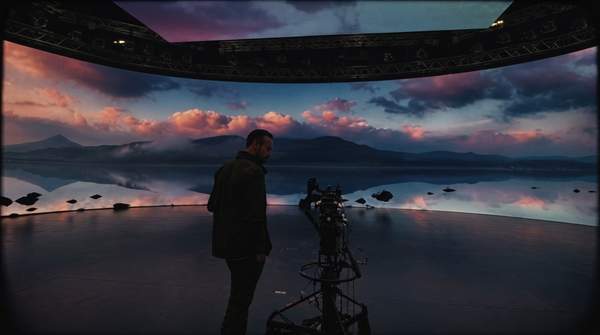
The precise direction of a key light on an actor's face measurably affects viewers' subliminal emotional responses. Early Posterior Negativity (EPN) measurements confirm these deep-seated reactions, revealing lighting's direct psychological impact. Scientific evidence from pmc establishes lighting as a powerful, subconscious conduit to emotional states, not merely an aesthetic choice.
Despite this profound influence on human emotion and narrative, critical lighting decisions frequently finalize late in production. Significant on-set adjustments are often necessitated. Such delays introduce a high-stakes gamble for a film's emotional core, forcing reactive creative choices.
Productions that prioritize and integrate lighting design earlier in the creative process are likely to achieve more cohesive emotional impact and narrative clarity. This proactive approach can avoid costly last-minute compromises and strengthen storytelling.
More Than Just Brightness: The Emotional Core of Cinematic Light
Filmmakers scientifically engineer audience emotional responses through deliberate lighting choices. An artistic decision is transformed into a precise psychological lever, as confirmed by EPN findings. Lighting functions beyond simple visibility, directly shaping audience feelings.
Pmc's findings indicate lighting evokes specific moods, from optimism to tension, by manipulating subconscious reactions. Light is established as a primary, non-verbal language for communicating atmosphere. A scene's emotional resonance often depends on these subtle yet powerful manipulations.
Guiding the Eye, Shaping the Story: Lighting's Narrative Power
Cinematic lighting actively participates in storytelling by subtly directing viewer attention. It controls information flow, influencing what the audience perceives as important or hidden. This focus manipulation builds suspense or emphasizes critical plot points.
Engineered emotional responses inherently guide narrative understanding. Scene lighting can highlight a character's internal state or foreshadow future events. Strategic use of light and shadow reinforces the story's emotional arc and narrative progression.

The Cinematographer's Craft: Blending Art with Technical Precision
The cinematographer maintains intimate involvement in all lighting design discussions. This is crucial because lighting choices directly impact technical camera settings. Shutter speeds and camera sensor settings require careful calibration.
Effective cinematic lighting demands a nuanced understanding of camera mechanics and close collaboration. The cinematographer translates creative vision into reality, aligning technical parameters with artistic intent. This deep involvement positions lighting as a highly technical art, blending creative vision with precise execution, according to ohiostate.
The On-Set Reality: When Vision Meets Last-Minute Adjustments
Final lighting decisions frequently occur late in production, after sets are built, costumes made, and makeup established. Consequently, significant adjustments often become necessary directly on set, creating high-pressure scenarios.
Late-stage decision-making reveals a tension between lighting's profound, pre-conceived impact and its reactive implementation. Reliance on these on-set adjustments, despite their measurable impact on subliminal emotion, suggests many films' emotional cores are forged in reactive environments, contrasting with deliberate, integrated pre-production planning.
Common Questions About Cinematic Lighting
What are the basic film lighting techniques?
Fundamental film lighting techniques include key, fill, and back light, forming the three-point lighting system. Key light provides main illumination, fill light softens shadows, and back light separates the subject from the background, adding depth. These elements are essential for visual depth, as explained by Rosco Spectrum.
What is three-point lighting in film?
Three-point lighting is a standard setup using a key, fill, and back light to illuminate a subject. The key light is the brightest source, the fill light reduces harsh shadows, and the back light creates a rim of light around the subject. This system enhances realism and visual appeal, offering control over mood and depth.
How to create a dark mood with lighting in film?
Creating a dark mood often involves low-key lighting, characterized by high contrast and significant shadows. Filmmakers reduce or eliminate fill light, allowing shadows to dominate the frame and obscure details. This technique, frequently used in horror cinematography as discussed by Theasc, generates tension and mystery.
By late 2026, productions streamlining lighting design workflows and prioritizing early integration of specialists will likely gain a significant competitive edge through more deliberate emotional sculpting and enhanced audience engagement.