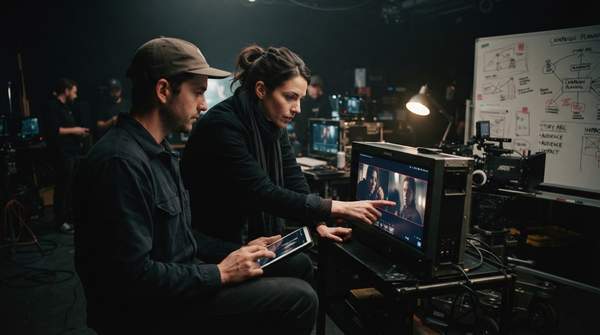
At System1, a new AI-powered tool evaluates up to 100 long-form advertising assets in minutes, a speed that belies a growing counter-trend in ad creative. Test Your Ad Screen, as reported by Marketingreport One, offers rapid, AI-powered ad screening, accelerating feedback loops for creative teams and allowing for unprecedented testing volume.
AI is making ad evaluation faster and more scalable, but brands increasingly use human-centric messages to connect with consumers. This tension marks a strategic divergence: efficiency meets emotional appeal.
The future of effective advertising will likely be a hybrid approach, where AI optimizes delivery and testing, while human creativity drives emotional connection and trust with a wary public.
The Human Touch Strikes Back
Brands increasingly deploy human-centric advertising messages to counter public distrust and anxiety around AI, reports Marketing Brew. The strategic pivot acknowledges widespread public sentiment regarding rapid technological advancements. The shift to overt references to humanity in advertising capitalizes on a cultural moment where people feel a lack of control due to AI adoption, allowing brands to re-establish emotional connection and trust with wary consumers.
AI's New Frontier in Ad Testing
System1’s Test Your Ad Screen evaluates up to 100 long-form advertising assets in minutes, with results typically available within 24 hours, according to Marketingreport One. This rapid, scalable insight democratizes sophisticated ad testing, making quick feedback accessible to a wider range of marketers.
Who Benefits, Who Struggles
AI reshapes ad infrastructure and discovery, fundamentally shifting campaign construction and dissemination, states Ad Age. Yet, the advertising market faces threats from generative AI tools, reports Cnbc. This tension implies AI offers new delivery avenues but also disrupts traditional models, demanding strategic re-evaluation. Companies deploying AI-generated code often trade velocity for control, a risk many have yet to recognize.