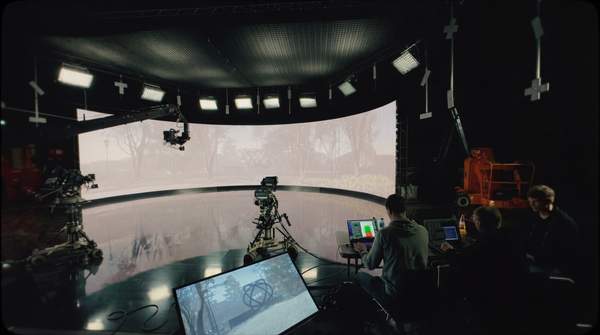
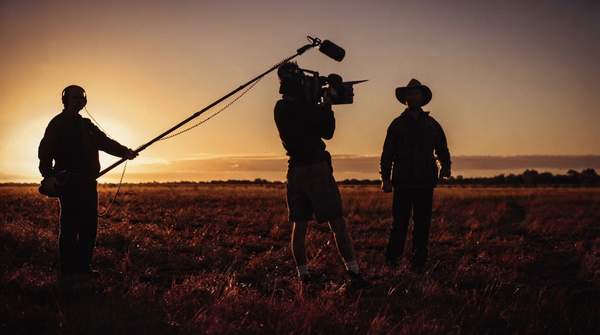
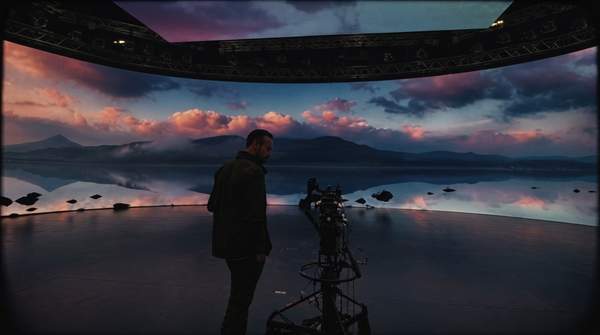
A new AI film studio, Promise, which was backed by Google and Disney in 2023, now utilizes AI models to generate entire film backgrounds, special effects, and synthetic performers, according to The Guardian. The utilization of AI models to generate entire film backgrounds, special effects, and synthetic performers dramatically slashes production times and associated costs, fundamentally altering traditional filmmaking workflows. Filmmaking has historically been an expensive, resource-intensive endeavor, but new AI tools and lean production techniques are making high-quality features achievable for micro-budgets and in mere days.
AI film studios like Promise reduce the necessity of traditional studios' vast sound stages and financing. The reduction in necessity of traditional studios' vast sound stages and financing shifts power, making creative vision, not capital, the primary currency for filmmakers, bypassing traditional gatekeepers. The film industry is poised for an explosion of independent, diverse storytelling as financial and logistical barriers to entry erode, potentially shifting power from large studios to individual creators.
1. AI-powered Production for Visuals
Best for: Filmmakers seeking to reduce reliance on physical sets and extensive VFX teams.
Hybrid AI films are 20% to 50% cheaper, according to The Guardian. Promise, an AI film studio backed by Google and Disney, exemplifies this by using AI models for backgrounds, special effects, and synthetic performers. For instance, the film 'Touch Grass' utilized the Seedance 2.5 AI model for its visual elements. The use of AI models for backgrounds, special effects, and synthetic performers democratizes high-end visual production, allowing micro-budget projects to achieve cinematic scope previously reserved for large studios.
Strengths: Significant cost and time reduction; expands creative possibilities beyond physical limitations; accessible for small teams. | Limitations: Requires technical proficiency in AI tools; aesthetic quality can vary; ethical considerations for synthetic performers. | Price: Varies by AI model and service, but significantly cheaper than traditional methods.

2. Micro-budget Filmmaking Approach
Best for: Aspiring filmmakers with limited financial resources aiming to produce feature-length content.
Micro-budget productions, defined as films made for under $50,000 (lunacyu), demonstrate extreme cost-efficiency. Glen Schultz produced a feature for $10,000, and Mark Duplass claims a feature can be made for $1,000. This approach can slash a $1 million budget to $100,000 (noamkroll). The financial accessibility of micro-budget productions empowers a wider range of voices to tell their stories, potentially diversifying cinematic narratives.
Strengths: Low financial barrier to entry; fosters creativity through constraints; prioritizes storytelling over spectacle. | Limitations: Requires extreme resourcefulness; limited access to high-end equipment or talent; distribution challenges. | Price: Under $50,000, potentially as low as $1,000.
3. Lean Production Timelines
Best for: Teams focused on maximizing efficiency and minimizing overheads during principal photography.
Production timelines can be dramatically short, ranging from 6 to 12 days (lunacyu). One filmmaker completed three movies in 12 days each, proving rapid production schedules are feasible. Compressed production schedules fundamentally alter the economic model, allowing for more frequent projects and quicker market response.
Strengths: Reduces labor and equipment rental costs; maintains crew energy and focus; enables quicker project turnaround. | Limitations: Demands meticulous pre-production and organization; limited flexibility for unexpected issues; intense on-set pressure. | Price: Indirect cost saving through reduced daily rates.
4. Conceptualizing Contained Stories
Best for: Writers and directors aiming to create compelling narratives without extensive location or set budgets.
StudioBinder identifies the 'contained story' as the most powerful tool for no-budget filmmaking. This strategy prioritizes readily available locations, actors, and props, eliminating expensive set pieces or special effects. Prioritizing readily available locations, actors, and props shifts focus from spectacle to narrative depth, proving that compelling stories do not require vast resources.
Strengths: Significantly reduces location, set design, and prop costs; encourages creative problem-solving within limits; often leads to character-driven narratives. | Limitations: May restrict genre and scope; requires strong writing to maintain audience engagement within confined settings. | Price: Minimal, relies on existing resources.
5. Free or Open-Source Software for Post-Production
Best for: Editors and post-production supervisors operating with zero software budget.
Free or open-source software, such as DaVinci Resolve, eliminates significant post-production licensing costs (StudioBinder). These tools provide professional capabilities without financial barriers. The availability of free or open-source software levels the playing field for independent filmmakers, enabling professional-grade polish on any budget.
Strengths: Zero software licensing costs; powerful features comparable to industry standards; large online communities for support. | Limitations: Steeper learning curve for new users; may lack some niche integrations or plugins; hardware demands can be high. | Price: Free.
6. Digital Cameras and Editing Software
Best for: Filmmakers leveraging consumer-grade technology for professional-quality output.
Filmmakers like Sean Baker prove high production value is achievable with accessible technology; his critically acclaimed film 'Tangerine' was shot entirely on an iPhone (StudioBinder). The use of accessible technology for high production value blurs the line between amateur and professional equipment, prioritizing creative vision over expensive gear.
Strengths: Drastically reduces equipment rental costs; familiar technology for many users; portable and discreet for guerrilla filmmaking. | Limitations: Image quality may not match high-end cinema cameras in all conditions; limited lens options; requires careful lighting and sound planning. | Price: Cost of a smartphone or consumer digital camera.
7. Crowdfunding Platforms
Best for: Independent filmmakers seeking direct financial support from their audience or community.
Crowdfunding platforms like Kickstarter and Indiegogo allow filmmakers to raise funds directly from their audience (StudioBinder). This bypasses traditional financing and connects creators with supporters. Crowdfunding fosters a direct relationship between creators and their audience, democratizing film financing and empowering niche projects.
Strengths: Direct audience engagement; retains creative control; can build a community around the project. | Limitations: Requires significant marketing and outreach effort; no guarantee of funding success; platform fees apply. | Price: Percentage of funds raised (platform fees).
8. Utilizing Free/Updated Budget/Schedule Templates
Best for: Production managers and line producers needing structured financial and logistical planning tools.
Free, updated Excel budget/schedule templates are available, including new accessibility line items for film crews, participants, and audiences (documentary.org). A sample $1.3 million documentary budget illustrates comprehensive planning capabilities. Free, updated Excel budget/schedule templates standardize professional planning, making complex financial management accessible even for independent productions.
Strengths: Provides a professional framework for financial planning; helps track expenses and adhere to budget; ensures comprehensive logistical considerations. | Limitations: Requires careful data input and management; template may need customization for specific project needs. | Price: Free.
9. Two-Camera Shooting for Efficiency
Best for: Directors and cinematographers looking to maximize coverage and reduce shooting days.
A filmmaker who shot three movies in 12 days each often used talented B camera operators (lunacyu). This strategy enables simultaneous coverage from different angles, accelerating the shooting process. Two-camera shooting not only boosts efficiency but also provides valuable experience for emerging cinematographers, fostering new talent.
Strengths: Reduces shooting time; captures more coverage per take; provides opportunities for emerging talent. | Limitations: Requires additional camera equipment and crew; more complex lighting and sound management; can be challenging to coordinate. | Price: Cost of an additional camera package and operator.
10. Rehearsal-Heavy Upfront Scheduling
Best for: Directors prioritizing actor performance and efficient on-set execution.
Scheduling rehearsal-heavy days, dedicating the final 2-2.5 hours to shooting, optimizes on-set time (lunacyu). This ensures setup and logistics are coordinated before rolling. Scheduling rehearsal-heavy days underscores the value of pre-production, proving that upfront investment in preparation yields significant on-set efficiency.
Strengths: Maximizes productive shooting time; improves actor performance and blocking; reduces costly reshoots due to errors. | Limitations: Requires actors and crew to be availablelable for extensive rehearsals; can feel slow initially; relies on efficient logistical coordination. | Price: Indirect cost saving through reduced shooting days.
AI's Role in Production Efficiency
AI is not just an enhancement; it's a fundamental re-architecture of the production pipeline, making previously impossible feats accessible to small teams and fostering a new wave of creative independence.
| Technique | Primary Benefit | Cost Impact | Time Impact | Key Example/Feature |
|---|---|---|---|---|
| AI-Generated Assets (Promise) | Replaces physical sets and complex VFX | 20% to 50% cheaper; 30% to 40% cost saving | Dramatically slashed production times | Promise using Seedance 2.5 for backgrounds, effects, synthetic performers; 'Touch Grass' film |
| Traditional Micro-budget (Duplass) | Utilizes existing resources | As low as $1,000 for a feature | Variable, but often lean (6-12 days) | Conceptualizing ideas not reliant on expensive set pieces; readily available locations, actors, props |
If these technological and strategic shifts continue, the film industry will likely see a significant decentralization of production, empowering independent creators to challenge traditional studio dominance.