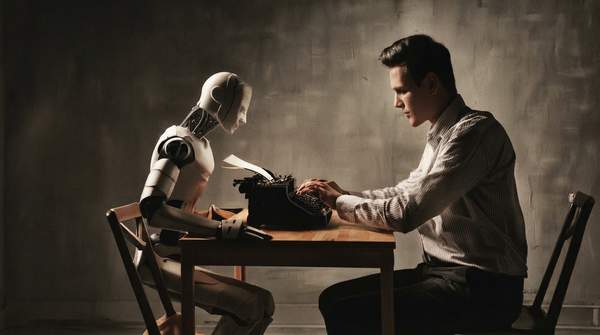
India's Copyright Office rejected an application to register artwork created by the AI system DABUS, stating that AI cannot be recognized as a 'natural person' or 'juristic person' under law, according to The Economic Times. India's Copyright Office's decision to reject artwork created by DABUS highlights a fundamental flaw in current intellectual property law: it is designed for human creators, leaving AI-generated works in a legal limbo that stifles innovation or encourages uncompensated exploitation. The inability to define legal personhood for AI systems creates significant hurdles for artists who might leverage these tools and for the broader creative economy.
AI's ability to generate valuable art is rapidly advancing, but the legal frameworks defining ownership and compensation for its training data remain deeply contested. Tension arises as AI platforms routinely ingest vast datasets of copyrighted human-made content without explicit permission or payment, directly challenging established notions of intellectual property and fair use. The resulting ethical dilemma regarding AI training on creator work in 2026 is reshaping how artists and industries view their creative output.
The current legal and ethical ambiguities will likely lead to a protracted period of litigation and legislative reform, ultimately reshaping the economic landscape for creative work. The process of litigation and legislative reform is not merely about adapting old laws to new technology; it is about confronting the active devaluation of human creativity by systems designed to profit from stolen labor, often without clear recourse for original artists.
The fundamental question of who owns AI-generated art and its training data is already challenging established legal precedents worldwide. The challenge of who owns AI-generated art and its training data extends beyond individual pieces of art to the very economic models that sustain creative industries. When AI systems are trained on millions of copyrighted songs, images, and texts, the value generated by these systems often bypasses the original creators entirely. This creates a vacuum where advanced technology thrives on a foundation of uncompensated intellectual property, disrupting traditional revenue streams and artistic recognition.
The legal landscape for AI-generated content is so ambiguous that major players in the creative industry are simultaneously suing AI platforms for copyright infringement and entering into partnerships with them, indicating a profound lack of a unified strategy and a hedging of bets against an uncertain future. The simultaneous lawsuits and partnerships by major players indicate deep uncertainty within industries grappling with AI's disruptive potential, forcing them to weigh potential legal victories against the perceived inevitability of technological integration. The rapid evolution of AI capabilities consistently outpaces the slow pace of legal and ethical consensus, creating a complex environment where creators, developers, and policymakers struggle to find common ground.
The Copyright Gauntlet: Creators Fight Back
Some record labels have initiated lawsuits against AI music generation platforms, such as Suno, according to The New York Times. Lawsuits initiated by record labels against AI music generation platforms, such as Suno, represent a direct challenge to the practice of training AI models on copyrighted musical works without explicit consent or compensation. The commercial viability of AI-generated content is directly linked to its uncompensated reliance on existing human-created works, sparking a wave of legal challenges from individual artists and major industry players alike.
Anthropic obtained training data from both purchased books and illegally downloaded books from pirate sites, as reported by TechCrunch. Anthropic's obtaining training data from both purchased books and illegally downloaded books reveals a stark reality: some AI companies have directly bypassed traditional licensing and compensation mechanisms, relying on mass appropriation of copyrighted material. The mass appropriation of copyrighted material fuels the argument that AI development, particularly in its early stages, has been built on potentially illicit foundations, creating a significant ethical dilemma for the entire sector.
Based on The New York Times' reporting, the music industry's simultaneous lawsuits and partnerships with AI music generators reveal a desperate hedging strategy, indicating that even major players are unsure whether to fight or embrace a technology built on potentially illicit foundations. The music industry's simultaneous lawsuits and partnerships with AI music generators, as reported by The New York Times, represent a legal offensive by creators and rights holders that aims to establish precedent, asserting that AI models must respect intellectual property rights and compensate artists for the use of their work. The outcome of these cases will significantly influence future AI development and the economic models supporting creative content.
Strategic Alliances and Lobbying Power
Other record labels have entered into partnerships with AI music generation companies, according to The New York Times. The music industry's dual approach, where some record labels pursue legal action while others forge alliances with AI music generation companies, highlights its deeply conflicted stance on AI's disruptive potential. The strategic embrace of AI by some industry players, even while others litigate, reveals a complex calculation of future market share and technological advantage, acknowledging that outright resistance might not be the most viable long-term strategy.
At least one record label has pursued both legal action and partnerships with AI music generators, further illustrating this internal industry conflict, The New York Times reports. The hedging strategy of pursuing both legal action and partnerships with AI music generators suggests that major players are not only unsure whether to fight or embrace AI but are actively exploring both avenues to secure their position in an evolving creative economy. Proactive engagement, even amidst legal battles, demonstrates a recognition that AI is not merely a threat but also a tool that could potentially unlock new revenue streams or efficiencies.
AI companies are not passively waiting for legal frameworks to catch up; they are actively lobbying governments to weaken existing copyright laws to legitimize their current data acquisition practices, according to The Guardian. AI companies' aggressive lobbying effort, as seen with the Australian government, reveals a proactive push to shape policy in their favor, attempting to retroactively validate the use of copyrighted material for training AI models. The aggressive lobbying implies a significant political battle is underway, with AI companies pushing hard against established government policy, indicating the high stakes involved in legitimizing AI training data acquisition.
The Policy Divide: Innovation vs. Rights
The Australian government previously ruled out granting a legal exemption for AI companies to mine content for training models, according to The Guardian. The Australian government's stance of ruling out a legal exemption for AI companies highlights a tension within governmental bodies, where the desire to foster technological innovation through AI investment clashes with the imperative to protect the rights of traditional creative industries. The struggle to define AI's legal and ethical boundaries reflects a deeper societal debate about the value of human creativity versus technological progress, leading to policy paralysis and inconsistent stances on copyright reform.
There are divisions within the Australian Labor party regarding copyright reform, with some ministers favoring AI investment and others prioritizing creative rights, The Guardian notes. Divisions within the Australian Labor party regarding copyright reform mirror the broader industry divisions, making it challenging to establish clear and consistent policies. The fundamental disconnect between advanced AI capabilities and outdated legal definitions is creating significant hurdles, as evidenced by copyright offices rejecting AI-generated art based on the inability of an AI to be a 'person,' even as that art sells for thousands.
Even within governmental bodies, there is a deep internal conflict between fostering technological innovation through AI investment and protecting the rights of traditional creative industries, leading to policy paralysis and inconsistent stances on copyright reform. The policy divide between fostering technological innovation and protecting creative rights is not unique to Australia; it is a global phenomenon where governments grapple with how to balance promoting emerging technologies that promise economic growth against safeguarding the intellectual property of their creative sectors. The complexity of this balancing act means that comprehensive, globally consistent legal frameworks for AI training data are unlikely to emerge quickly, prolonging the current period of uncertainty for creators.
Towards a New Creative Economy
Anthropic has received final approval for its $1.5 billion settlement with authors and publishers over copyright infringement, according to TechCrunch. Anthropic's $1.5 billion settlement with authors and publishers, reached despite the company having illegally downloaded books for training, sets a dangerous precedent. The settlement suggests that large-scale copyright infringement can be retroactively legitimized through financial settlements rather than prevented by law, potentially incentivizing AI companies to use copyrighted material first and negotiate compensation later.
The significant financial settlements and ongoing legal battles are shaping the future of creative work.legal battles indicate that AI companies will increasingly face pressure to compensate creators, potentially leading to new licensing models or revenue sharing agreements. The $1.5 billion settlement Anthropic reached with authors and publishers, despite having illegally downloaded books for training, suggests that large-scale copyright infringement can be retroactively legitimized through financial settlements rather than prevented by law. This outcome could reshape the economic landscape for creators, shifting from a model of individual ownership and control to one where collective licensing and compensation funds become more prevalent.
The India's Copyright Office's rejection of AI-generated artwork registration underscores a fundamental flaw in current intellectual property law: it is designed for human creators, leaving AI-generated works in a legal limbo that stifles innovation or encourages uncompensated exploitation. This situation forces a re-evaluation of what constitutes 'authorship' and 'creativity' in the digital age. As AI models become more sophisticated, the distinction between human and machine-generated art will blur, necessitating new legal definitions that accommodate synthetic creativity while protecting original human input. The future landscape for copyright will likely involve a hybrid approach, combining stricter enforcement against unauthorized data scraping with new frameworks for fair compensation and collaboration between human artists and AI tools. By late 2026, many creators will need to navigate new licensing models for AI-assisted work, potentially through collective bargaining organizations that aim to secure fair remuneration from AI developers.