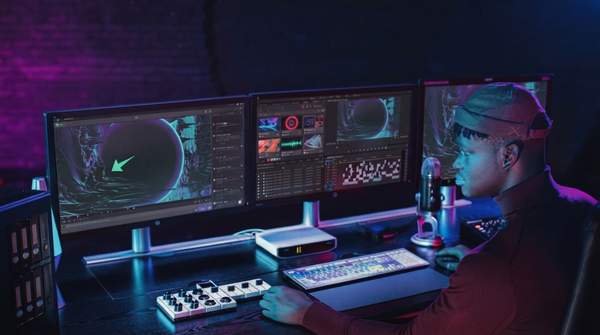
On a typical film set, a Digital Imaging Technician's crucial duty involves transferring raw footage to at least three separate drives, often twice daily, to prevent catastrophic data loss. This meticulous process safeguards countless hours of production work and artistic vision against technical failures, highlighting the high stakes in digital filmmaking.
The DIT is commonly viewed as a simple data manager, but they are deeply involved in complex image manipulation and workflow systemization, directly impacting final visual quality. This perception overlooks their critical technical and creative contributions.
Productions that invest in and properly leverage a DIT's full capabilities are likely to achieve higher technical standards and smoother post-production, avoiding costly errors and creative compromises.
The Unsung Architect of Digital Cinema
A Digital Imaging Technician (DIT) works closely with the cinematographer on workflow, systemization, camera settings, signal integrity, on-set color correction, and other image manipulation, according to MasterClass. While often seen as a liaison between production and post-production, according to StudioBinder, their core responsibility involves managing the image pipeline and camera, not just downloading data, states Codex. The DIT is a central figure orchestrating the technical and creative flow of digital images from capture to post-production, ensuring visual consistency and quality from the first shot.
Safeguarding Every Pixel: Data Integrity and On-Set Image Control
The DIT ensures original camera data and metadata are backed up at least twice daily, with checksum verification, according to MasterClass. This rigorous process prevents data loss. Beyond immediate backups, the DIT also backs up data on LTO tape for long-term storage and creates a transfer data carrier for post-production, MasterClass reports. Additionally, the DIT monitors picture exposure, sets up a daily Color Decision List (CDL) for consistent color, and creates 'lookup tables' (LUTs) for post-production. These tasks establish the desired visual aesthetic on set. Such rigorous data management and color calibration preserve raw footage and establish a consistent visual foundation for the project.

Shaping the Visual Narrative: DIT as Creative Partner
The DIT actively influences the footage's aesthetic outcome. They function as the Director of Photography's (DP) technical proxy for digital image quality, translating artistic intent into precise camera settings and color profiles. This includes creating temporary color grades and custom LUTs that reflect the DP's vision, carried through to post-production. The DIT's dual function as a meticulous data security expert and an on-set image scientist means they not only preserve what was shot but actively shape what can be seen and used in post-production, bridging the technical gap between raw sensor data and a director's vision.
The Bridge Builder: Translating Vision from Set to Screen
DITs assist the DP by ensuring digital image manipulations—like camera settings, resolution, aspect ratio, codecs, and frame rates—meet the DP's vision, according to StudioBinder. This technical interpretation aligns captured footage with the intended creative output. DITs also assemble dailies by syncing sound and applying temporary color correction to raw footage, StudioBinder reports. This preparation provides immediate feedback for the director and cinematographer, establishing a consistent look for editorial. The DIT's ability to interpret and implement the DP's aesthetic choices, combined with their role in preparing dailies and managing data flow, makes them indispensable for maintaining creative continuity and efficiency.
What skills does a Digital Imaging Technician need?
A Digital Imaging Technician requires a comprehensive understanding of camera systems, color science, data management protocols, and post-production workflows. Proficiency in specialized software for color grading and data verification is also crucial, according to ScreenSkills.
How much does a Digital Imaging Technician make?
Salaries for Digital Imaging Technicians vary significantly based on experience, project scale, and location. According to ScreenSkills.com, DITs can earn between £300 and £600 per day in the UK, reflecting their specialized expertise and critical role on set.
What is the difference between a DIT and a cinematographer?
A cinematographer primarily focuses on the artistic and creative aspects of lighting, composition, and camera movement to achieve the director's vision. In contrast, a DIT specializes in the technical integrity of the digital image, managing the workflow, color science, and data security from capture to post-production, ensuring the cinematographer's vision is technically preserved and accurately translated.
By Q3 2026, film studios actively integrating DITs into pre-production planning will likely see a 15% reduction in post-production color correction costs due to enhanced on-set image consistency.