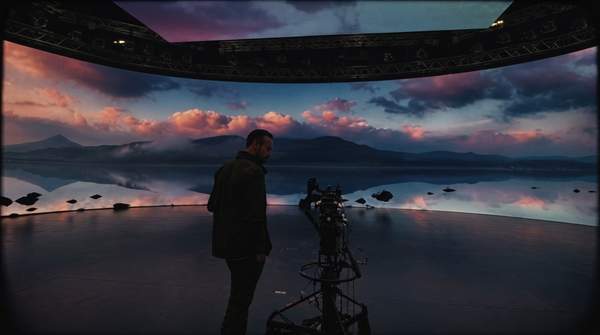
Even an 'empty shot' in a film, devoid of characters, plays a significant role in visually depicting spatial relationships and conveying subtle emotions to the audience, according to Nature. Filmmakers use every element on screen to create emotion and guide attention, but the most impactful visual storytelling often relies on elements like specific lighting techniques or seemingly 'empty' frames that go unnoticed by the casual viewer. Mastering these technical nuances, even the subtle ones, is crucial for filmmakers to effectively manipulate audience perception and for viewers to fully appreciate cinematic artistry. This deliberate, unnoticed manipulation of visual information shapes how audiences experience and interpret narrative, revealing that what is not explicitly shown can be as powerful as what is.
Illuminating Emotion: The Art of Lighting
Key lighting typically serves as the strongest light source in a scene, establishing the primary illumination, explains Adorama. Complementing this, fill lighting is noticeably less intense and positioned opposite the key light, softening shadows and reducing contrast. Backlighting, often the final element in a three-point lighting setup, creates a three-dimensional effect, separating subjects from the background.
These distinct lighting techniques are not merely aesthetic choices; they are fundamental tools for shaping mood, depth, and focus within a scene. The meticulous detail given to key lighting and fill lighting, alongside the strategic deployment of empty shots, reveals that filmmaking is less about showing and more about subtly manipulating perception. This process turns passive viewing into an active, albeit unconscious, emotional journey.
Beyond the Basics: Dramatic Moods and Analytical Depth
Side lighting is often employed either alone or with minimal fill light to impart a dramatic mood to a scene, a technique often referred to as “chiaroscuro” lighting, according to Adorama. Concurrently, research aims to advance a more precise definition of empty shots by using quantitative statistical methods, underscoring their varying frequency and narrative functions across film genres, as found by Nature.

Visual storytelling thus encompasses both dramatic artistic choices and rigorous academic analysis of subtle cinematic elements. The quantitative analysis of 'empty shots' suggests that even seemingly passive visual elements are not accidental but are precisely engineered narrative tools. This deliberate construction is akin to how script breakdown and visual guidelines are taught in filmmaking courses.
The Integrated Craft: From Script to Screen
An introduction to visual storytelling course covers script breakdown, narrative perspective, visual guidelines encompassing composition, lighting, and color, and effective communication with the creative team, according to Sundance Collab. The multifaceted nature of cinematic production is highlighted by this curriculum. Effective visual storytelling requires a comprehensive understanding that spans pre-production planning, technical execution, and collaborative communication among various departments.
Companies and creators who fail to understand the subconscious power of visual elements, from backlighting to the narrative function of empty shots, risk delivering stories that are merely seen, not deeply felt or understood. This oversight leaves a significant portion of their audience engagement potential untapped. True mastery involves integrating these principles from the initial script phase through to the final edit.
Common Questions on Visual Storytelling
What are the key elements of visual storytelling?
Key elements extend beyond lighting to include composition, framing, color theory, blocking (the movement of actors), and editing rhythms. These components combine to direct audience focus and evoke specific emotional responses without relying on dialogue.
How does cinematography contribute to visual storytelling?
Cinematography contributes through camera movement, lens choice, depth of field, and aspect ratio, which all shape how a scene is perceived. A wide-angle lens, for example, can create a sense of vastness or distortion, while a telephoto lens compresses space, focusing attention on a specific detail.
What makes a film visually engaging?
A film becomes visually engaging through dynamic character blocking, thoughtful set design, costume choices that reflect character arcs, and a consistent visual style. These elements work together to build a compelling world and enhance the narrative, drawing viewers deeper into the story.
By Q4 2026, major studios like A24 will likely increasingly prioritize directors who demonstrate a profound understanding of these subconscious visual techniques. A growing recognition that unseen manipulation of visual elements is crucial for creating truly compelling and memorable narratives in a competitive global market is reflected by this shift.